Jump To
Your bathroom is the room most likely to quietly develop water damage while you’re not paying attention. For homeowners across Colorado’s Western Slope, from Aspen to Rifle to Carbondale, preventing bathroom water damage takes a bit more effort than generic home maintenance advice covers. High-altitude conditions add complexity that most guides skip. This post walks through the practical steps that actually make a difference here.
Why Bathrooms Are One of the Riskiest Rooms in Your Home
Bathrooms concentrate more water-related fixtures into a small space than any other room. Toilets, sinks, tubs, showers, and supply lines all share close quarters, and any one can start leaking without obvious symptoms. Tile looks fine until the subfloor underneath is rotting. Paint bubbles a little. Grout goes slightly gray. Easy to dismiss.
By the time visible signs appear, there’s often a lot more damage happening behind the scenes. According to the EPA, mold can begin growing on damp surfaces in as little as 24 to 48 hours. Bathrooms are ideal mold territory: warmth, moisture, and limited air circulation. Routine attention is what keeps that from becoming a real problem.
Already seeing soft floors, staining, or a musty smell?
Those are signs of active moisture damage. Our IICRC-certified team at RemediH2O serves Aspen, Silt, Rifle, Glenwood Springs, and communities throughout the Roaring Fork Valley.
The High-Altitude Moisture Problem Most Guides Miss
Standard home maintenance advice rarely accounts for elevation. If you live in Aspen, Snowmass, or anywhere along the Roaring Fork Valley, that’s a real gap. Higher altitude means thinner, drier outdoor air, but your bathroom doesn’t dry out faster after a shower. It often works the other way.
Temperature swings between a hot shower and the rest of your home cause condensation to form fast on cold surfaces: tile walls, windows, the toilet tank. Without a properly sized exhaust fan, that moisture has nowhere to go. Forced-air heating also causes wood framing and subfloor materials to expand and contract through Colorado winters, gradually opening small gaps in caulk and grout. Water finds those gaps.
Bathroom Water Damage Prevention Checklist
Most bathroom water damage is preventable with regular maintenance. Here’s what to do and how often.
Monthly
- Check under the bathroom sink for drips, moisture rings, or soft flooring
- Inspect the toilet base for water at floor level (often a sign of a failing wax ring)
- Look at caulk around the tub and shower for cracking, separation, or discoloration
- Run your hand along supply lines to feel for moisture
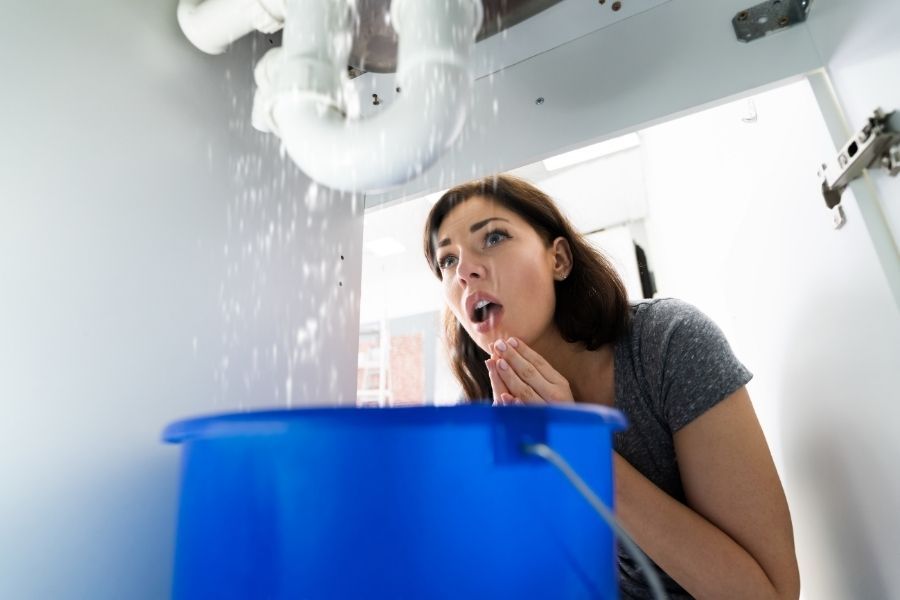
A quick look under the sink every month can catch a slow drip before it turns into a bigger problem.
Every 3 to 6 Months
- Test the exhaust fan: hold a square of toilet paper to it while running. It should hold.
- Check the caulk around the toilet base and re-caulk any gaps
- Inspect the ceiling below a first-floor bathroom for any staining
Annually
- Recaulk the tub and shower surround fully if the caulk is more than a few years old
- Have a plumber look at braided supply lines older than five to seven years
- If your bathroom has had a leak or smells musty after cleaning, get a professional mold assessment
Ventilation Tips for High-Altitude Bathrooms
Your exhaust fan is the most important moisture control tool in your bathroom, and most are undersized or underused. A fan should move at least one CFM per square foot of bathroom area. A 50-square-foot bathroom needs a 50 CFM fan minimum.
What makes a real difference:
- Run the fan during and for 20 minutes after every shower. Most people turn it off when they leave. Too soon.
- Vent to the exterior, not the attic. Attic venting causes the same moisture damage, just out of sight.
- Install a timer switch or humidity sensor to run the fan automatically.
- Crack a window when weather allows for faster moisture clearance.
Homeowners in Carbondale and Basalt who’ve dealt with recurring ceiling mold often find a fan upgrade alone solves the problem. If mold has already taken hold, surface cleaning won’t reach what’s growing inside the wall cavity.
Common Bathroom Leak Sources at a Glance
| Leak Source | How to Spot It | DIY Fix? |
|---|---|---|
| Toilet wax ring | Water at toilet base, soft floor | DIY-possible; call a plumber if floor is soft |
| Tub or shower caulk | Cracked caulk, stained grout near base | Yes, regular recaulking is a great DIY task |
| Supply line under sink | Moisture in cabinet, ring stain on cabinet floor | Yes, braided supply lines are easy to replace |
| Shower pan liner | Staining or soft spots on ceiling below shower | No, requires tile removal to repair |
| Exhaust fan duct | Mold near fan housing, dripping from fan | Check connections; call a pro if mold is present |
Warning Signs You Shouldn’t Ignore
A Smell Before You See Anything
A persistent musty odor, even after cleaning, is one of the most reliable early signs of hidden moisture. That smell is active mold inside walls, floors, or ceiling cavities. If it’s there, something is wet out of sight. This pattern shows up regularly in homes across Rifle, New Castle, and Eagle where exhaust fans weren’t moving enough air for years.
Spongy Floors Near Fixtures
If the floor gives slightly near the toilet, tub, or vanity, take it seriously. Soft subfloor has likely been wet for months, and you’re probably looking at subfloor replacement at that point. Catching the leak earlier is always the smaller fix.
Ceiling Stains in the Room Below
Brown or yellow ring staining on the ceiling below a bathroom points to a leak above. Check the toilet base and shower pan in the bathroom above. Sometimes it’s a simple wax ring. Sometimes it’s more.
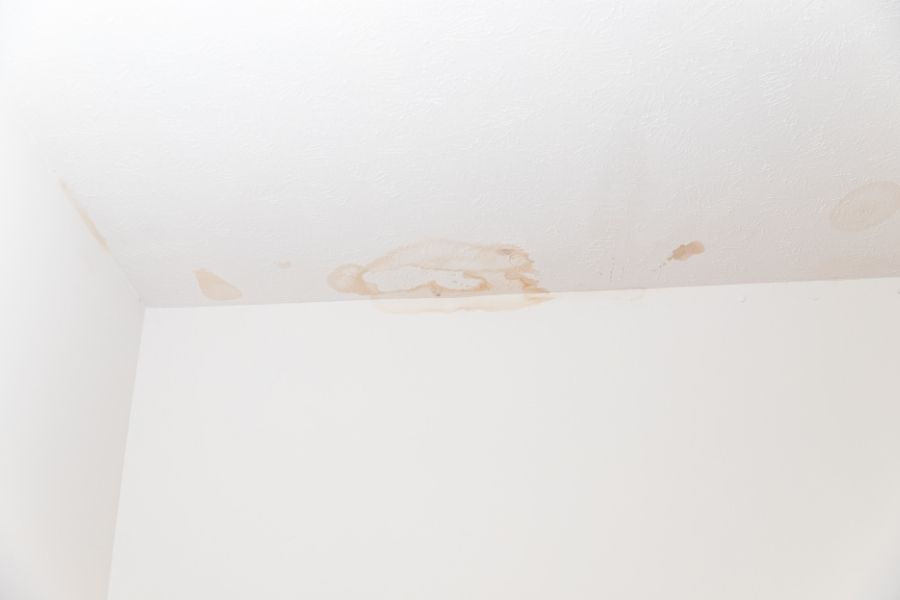
Ring staining like this on a ceiling below a bathroom is a reliable sign of an active or recent leak. It’s worth investigating before the damage spreads to the room below.
When you can’t find the source, our team at RemediH2O uses professional moisture meters and thermal imaging to trace water through walls and floors. Read about signs of water damage behind walls, how black mold forms after water damage, or check our Silt, CO restoration services page if you’re local to our home base.
Not sure what you’re looking at?
Our IICRC-certified team at RemediH2O serves the Roaring Fork Valley and Western Slope, with over 25 years of combined experience and 24/7 availability.
(970) 715-6990 | Available 24/7
Frequently Asked Questions
Why do bathrooms at high altitude dry out more slowly after a leak?
Lower air pressure at elevation slows evaporation in enclosed spaces. Without proper ventilation, moisture from showers lingers much longer, giving mold a better chance to take hold before you notice anything is wrong.
How often should I check my bathroom for signs of water damage?
Monthly is ideal. Check under the sink, around the toilet base, and along the caulk lines. A musty smell often appears before visible damage does.
Can a slow bathroom leak cause mold even without standing water?
Yes. A pinhole drip or failing caulk doesn’t need to create puddles. Moisture seeping into drywall at 20 to 40 percent relative humidity is enough for mold to start growing within 24 to 48 hours.
When should I call a professional instead of handling it myself?
If the wet area is larger than 10 square feet, you smell mold but can’t find the source, or water has been sitting more than 48 hours. Hidden moisture in walls needs specialized drying equipment to resolve properly.