Jump To:
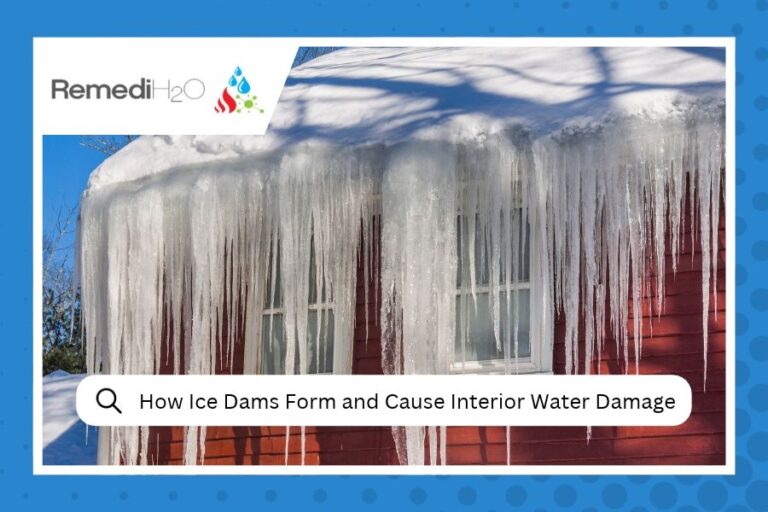
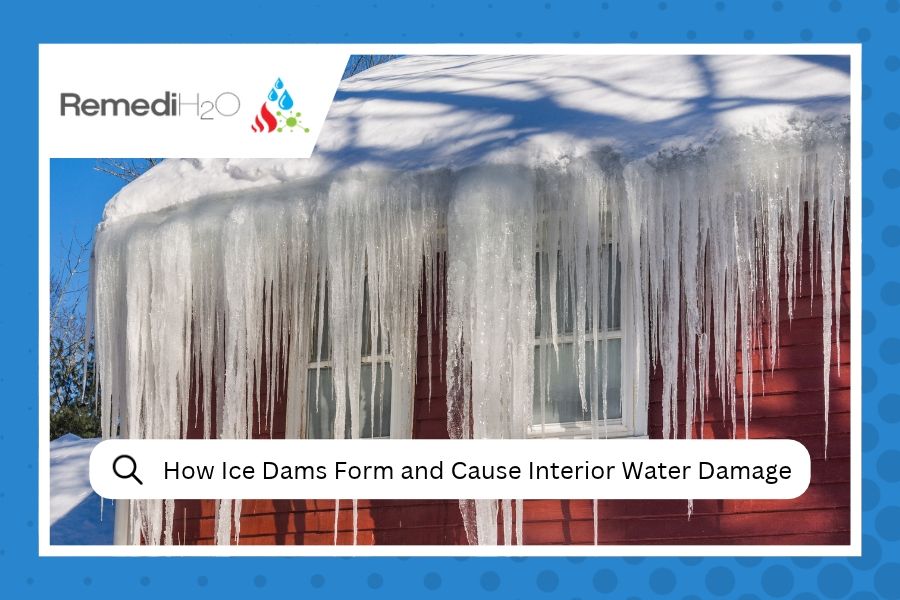
Ice dams form when heat escaping through your roof melts snow, and that meltwater refreezes at the cold edge of the roofline. The ridge of ice traps more water behind it, which then creeps under shingles and into your attic, ceilings, and walls. That’s how ice dam water damage starts, usually quietly and well before anyone notices a drip.
Our IICRC certified team at RemediH2O sees this every winter in Aspen, Snowmass, Vail, and across the Roaring Fork Valley. Big snow, sunny afternoons, and frigid nights make a perfect recipe for ice dams. Here’s how they work and how to stop them.
How Do Ice Dams Form on Mountain Roofs?
An ice dam needs three things: snow on the roof, a warm upper roof, and a cold lower edge. Warm air from your living space leaks into the attic and heats the roof deck. Snow melts up high, runs down, and freezes again over the unheated eaves. Each cycle makes the dam a little taller.
The Ice Dam Cycle at a Glance
| 1 | Heat escapes into the attic and warms the roof deck. |
| 2 | Snow on the upper roof melts, even on cold days. |
| 3 | Meltwater refreezes over the cold eaves and gutters. |
| 4 | New meltwater pools behind the ice and works under shingles. |
Mountain homes get hit harder for a few reasons. Vaulted ceilings, recessed lights, and attic hatches all leak warm air. Deep snowpack sits on roofs for months, too, so the melt and freeze cycle never really takes a break.
Seeing a Brown Stain on the Ceiling?
Don’t wait for spring. Wet insulation and drywall don’t dry on their own in winter, and our crew is on call 24/7.
6 Ways Ice Dams Cause Interior Water Damage
Ice dams push water sideways and uphill, places roofs were never designed to handle. Shingles shed water flowing down. They can’t stop water sitting in a pool and backing up under them. Once it’s past the shingles, gravity takes over and the water follows framing, wiring, and pipes into your home.
1. Water Backs Up Under the Shingles
Pooled water seeps through nail holes and seams in the roof deck. The decking soaks it up first, which is why early leaks stay hidden.
2. Attic Insulation Gets Soaked
Wet insulation compresses and stops insulating. Ironically, that lets even more heat escape, which feeds the ice dam. It’s a vicious little loop.
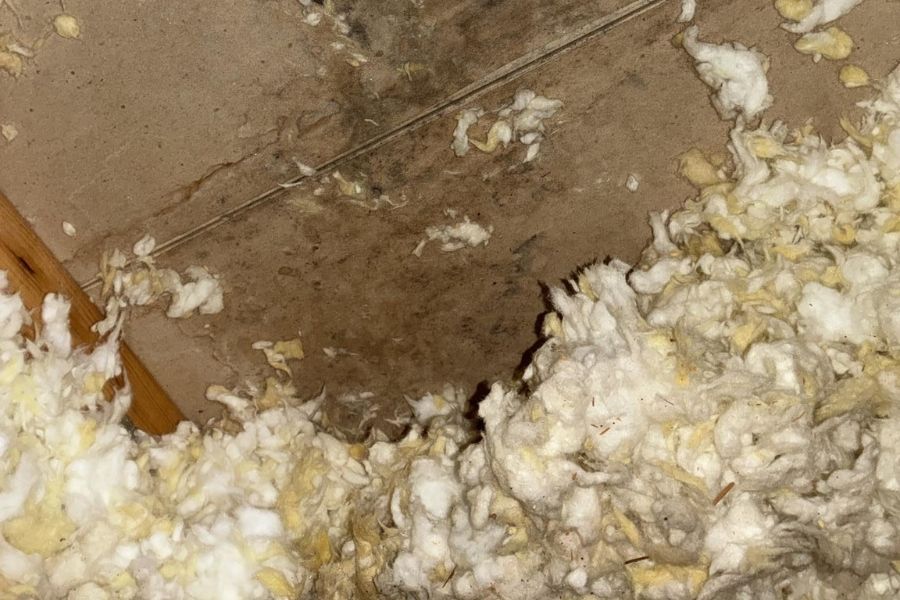
Soggy attic insulation like this stops holding heat, which only feeds the ice dam above.
3. Ceilings Stain, Bubble, or Sag
Yellow or brown rings near exterior walls are the classic tell. Sagging drywall means water is pooling above it, so keep people and pets out from under that spot.
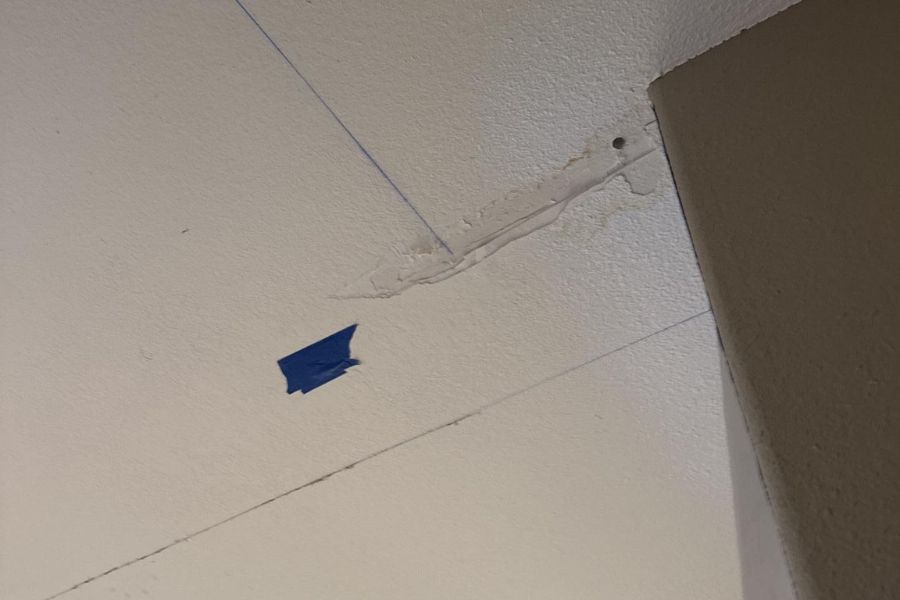
Peeling paint and staining near the ceiling’s edge are classic signs of an ice dam leak.
4. Water Runs Down Inside the Walls
Meltwater often travels down wall cavities without showing up on the ceiling at all. Peeling paint and soft baseboards are clues. Our guide to spotting water damage behind walls covers what else to look for.
5. Windows and Door Frames Leak
Water that reaches the top of a window header can drip out around the trim. Homeowners often blame the window when the roof is the real culprit.
6. Mold Moves In
A warm attic plus damp wood is mold’s favorite combo. Growth can start within a day or two of wetting, so slow ice dam leaks are prime candidates for attic mold remediation later on.
What Are the Warning Signs of an Ice Dam Leak?
Most ice dam leaks show warning signs outside before they show up inside. A quick walk around the house after a big storm can save you a lot of drywall. Use this checklist from the ground, and please don’t climb onto an icy roof.
| Where to Look | What You’ll See |
|---|---|
| Roof edge | Thick ice ridge or large icicles |
| Gutters | Packed with ice, water spilling over |
| Exterior walls | Ice or water stains on siding |
| Ceilings | Stains or bubbling paint near outside walls |
| Attic | Damp insulation, frost, or a musty smell |
How Can You Prevent Ice Dams This Winter?
The real fix is keeping your roof deck cold so snow melts evenly instead of in patches. That means stopping warm air from reaching the attic and venting the attic properly. Snow removal helps in the short term, but it treats the symptom and not the cause.
- Seal air leaks around attic hatches, recessed lights, and vent pipes.
- Add insulation so the attic floor holds heat in the house.
- Check that soffit and ridge vents aren’t blocked.
- Clear gutters of leaves and debris before the first big snow.
- Watch for a heavy storm followed by sunny days, prime ice dam weather. The National Weather Service winter safety page tracks storm alerts.
- Pull snow off the lower few feet of roof with a roof rake, from the ground.
For the rest of your house, our winter water damage prevention checklist covers pipes, sump pumps, and more.
What Should You Do If an Ice Dam Is Leaking Into Your Home?
Protect your belongings, catch the water, and get the wet materials dried fast. The leak itself is a roofing problem, but the soaked insulation, drywall, and framing are a drying problem. Both need attention, and the inside clock starts ticking immediately.
- Move furniture and electronics away from the drip.
- Catch water with buckets and towels.
- Poke a small hole in a bulging ceiling to drain it, standing clear.
- Take photos for your insurance claim.
- Skip chipping the ice with a hammer. It damages shingles.
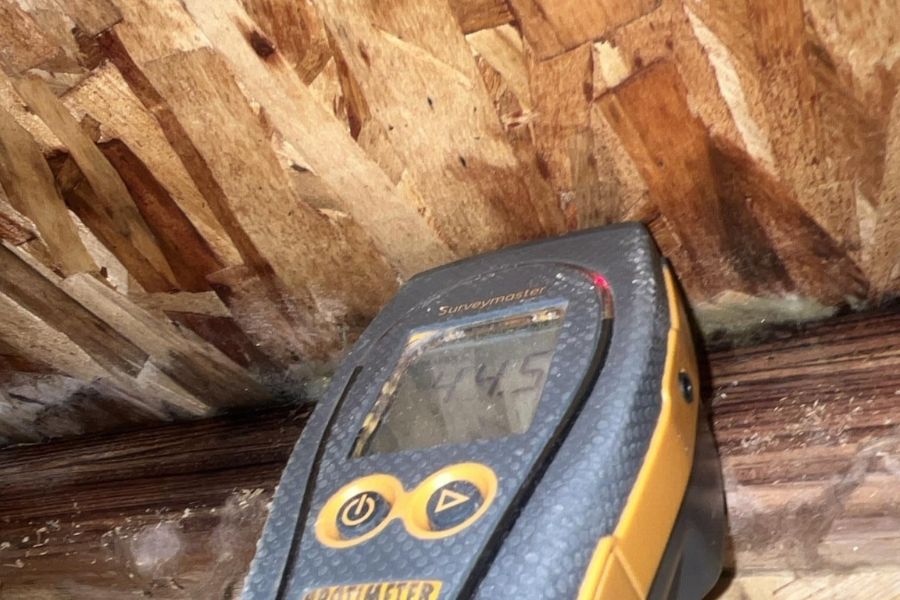
Moisture readings show us exactly how far the water spread, even where the ceiling looks dry.
We follow the IICRC S500 water damage standard, which means measuring moisture instead of guessing. Here’s more on how moisture testing works. We handle the inside cleanup and drying, and we’ll tell you honestly when you need a roofer for the outside.
Our team covers homes from Snowmass Village water damage calls to Glenwood Springs, Eagle, and Silt.
Ice Dam Leak? We’re Here Day or Night.
RemediH2O offers free estimates and works directly with your insurance company. Our crew is on call 24/7, holidays included.
Ice Dam FAQs
Does homeowners insurance cover ice dam water damage?
Many policies cover sudden interior water damage from ice dams, though the ice removal itself often isn’t covered. Coverage varies, so check your policy and document everything with photos.
Are heat cables worth it for ice dams?
Heat cables can keep channels open in trouble spots. They don’t fix the underlying heat loss, though, so pair them with air sealing and ventilation.
How long does it take to dry out after an ice dam leak?
Most jobs take a few days with professional dehumidifiers and air movers. Wet insulation usually has to be removed, since it rarely dries well in place.
Can I remove an ice dam myself?
Raking snow from the ground is fine. Climbing an icy roof or hacking at ice is risky and can tear up shingles, so leave that to a roofing pro.