Attic mold tends to hide quietly for months, sometimes years, until someone finally goes up there for holiday decorations. If you own a home in Delta, Hotchkiss, Cedaredge, or anywhere along Colorado’s Western Slope, there’s a real chance your attic is dealing with moisture challenges you’ve never thought about. Our team at RemediH2O handles professional mold remediation across this region, and attic jobs come up far more often than homeowners expect. High-altitude humidity swings, temperature extremes, and older housing stock create near-perfect conditions for mold growth right above your heads. This post breaks down what’s going on, how to catch it early, and what real remediation looks like.
Noticed dark stains, musty smells, or peeling wood in your attic?
Don’t wait. Attic mold spreads fast and often goes unnoticed until the damage is significant.
Why Attics Are Mold Hotspots at High Altitude
Delta sits at roughly 4,960 feet. Cedaredge and Hotchkiss push higher. At these elevations, temperature swings of 30 degrees or more in a single spring day are normal, and that’s a big deal for attics. Warm air from your living space carries moisture upward through insulation gaps, light fixtures, and ceiling penetrations. When it hits the cold underside of your roof deck, it condenses. Do that repeatedly through a Colorado winter and spring, and you’ve got exactly what mold needs.
According to the EPA’s guide on mold and moisture, mold only needs three things: moisture, organic material, and the right temperature range. Wood sheathing provides two of those on its own. You’re really just managing the moisture.
The Altitude-Moisture Cycle in Western Slope Attics
Temperature Swings
30°F+ daily swings in spring cause rapid condensation on roof sheathing
Warm Air Rises
Humid indoor air escapes upward through ceiling gaps into the attic
Condensation Forms
Vapor hits cold wood surfaces and turns liquid. Wood stays damp.
Mold Colonizes
Spores land on damp wood within 24-48 hours. Growth begins fast.
7 Warning Signs of Attic Mold in Delta Area Homes
Most homeowners never check their attic, which is exactly why mold there goes undetected for so long. These are the signs worth watching for, whether you’re in Delta, Paonia, Orchard City, or anywhere in the North Fork Valley.
- Musty smell in upstairs rooms or closets. If a bedroom sharing a ceiling with the attic smells like old basement, moisture may be migrating downward.
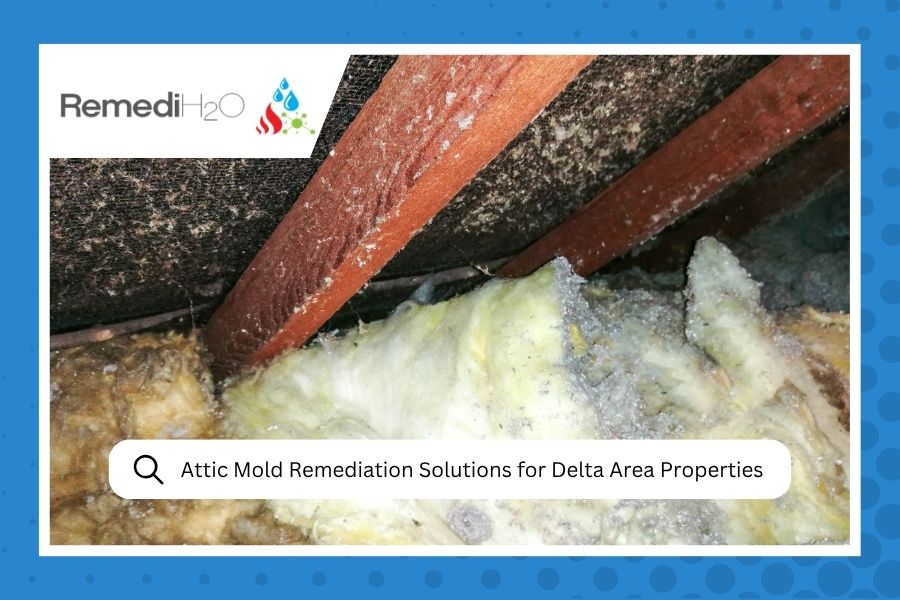
- Dark staining on roof sheathing or rafters. Black, green, or gray patches on the underside of your roof mean mold has already colonized.
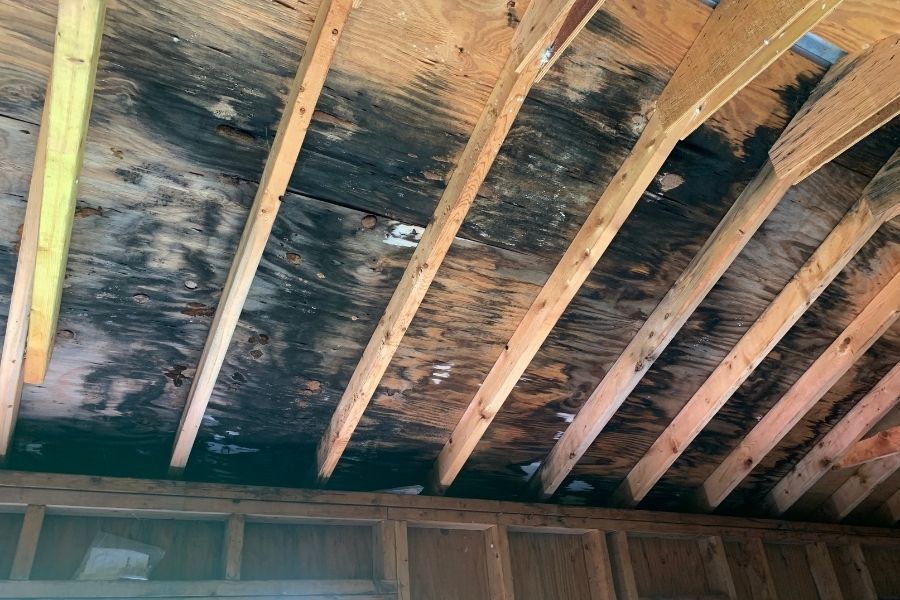
Dark staining on roof sheathing is one of the clearest visual signs that mold has already taken hold in an attic.
- Peeling or bubbling paint on ceilings. Moisture pushing through from above affects paint adhesion. Bubbling near light fixtures or ceiling fans is a red flag.
- Ice dams forming at roof edges in winter. Ice dams signal poor attic insulation and ventilation, the same conditions that trap moisture and feed mold.
- Unexplained allergy symptoms at home. Mold spores circulate through HVAC systems. Sneezing more at home than anywhere else, especially with windows closed, is worth investigating.
Found one or more of those? We’ve seen all of them in Delta County homes. Catching them early makes a real difference in what remediation costs.
What’s Actually Causing the Mold Up There
Knowing the source matters as much as knowing the symptom. Attic mold doesn’t appear randomly. There’s always a root cause, and fixing it is just as important as removing the mold. Treat the growth without correcting the moisture, and it’ll be back.
| Root Cause | Common In | Typical Fix |
|---|---|---|
| Poor attic ventilation | Pre-2000 construction | Ridge vent or power vent |
| Exhaust fans vented inside | Homes built before 1990 | Re-route ductwork outside |
| Ceiling air sealing gaps | Older housing stock | Spray foam at penetrations |
| Roof leak or ice dam damage | Post-winter inspections | Roof repair before remediation |
Inadequate Attic Ventilation
Proper airflow is the biggest defense against attic mold. Without enough intake vents at the soffits and exhaust vents at the ridge, moisture has nowhere to go. Older homes in Delta and Cedaredge often have venting that doesn’t meet current standards, particularly if the attic had insulation blown in over existing vents.
Bathroom or Kitchen Exhaust Fans Vented Into the Attic
Exhaust fans are supposed to vent outside. But in older homes, those ducts sometimes terminate inside the attic instead. Every hot shower sends humid air directly into your attic space. It’s a steady moisture deposit that adds up fast, and one of the most common causes we find in homes built before 1990.
Air Sealing Failures in the Ceiling
Every gap in your ceiling, around recessed lights, attic hatches, and plumbing penetrations, is a pathway for warm indoor air to reach cold attic surfaces. High-altitude homes experience bigger temperature differentials, which means stronger convection pushing that air upward more aggressively than in lower-elevation climates.
Roof Leaks After Snow and Freeze-Thaw Cycles
When snow sits on a roof for days, ice forms at the eaves while the upper roof stays wet. That water finds the path of least resistance into attic decking, where it soaks into wood and never fully dries. We’ve seen attic mold tied directly to a small, unrepaired roof leak from two or three winters prior.
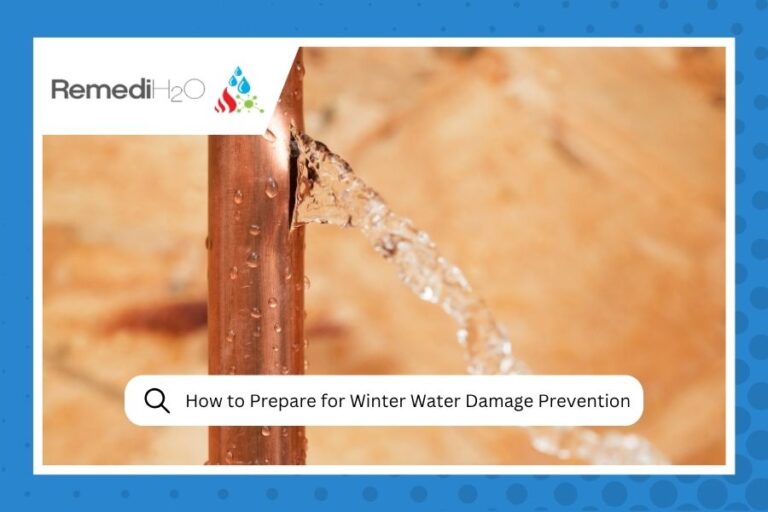
Related reading: How to Prepare Your Mountain Home for Winter Water Damage covers this type of moisture issue in depth.
Attic Mold Remediation: What the Process Looks Like
Professional attic mold remediation in Delta follows a structured process that’s quite different from scrubbing visible stains with bleach, which is the most common DIY attempt and rarely works for long. Surface treatment without containment almost always leads to regrowth. Here’s what a professional job actually involves.
Step 1: Inspection and Moisture Mapping
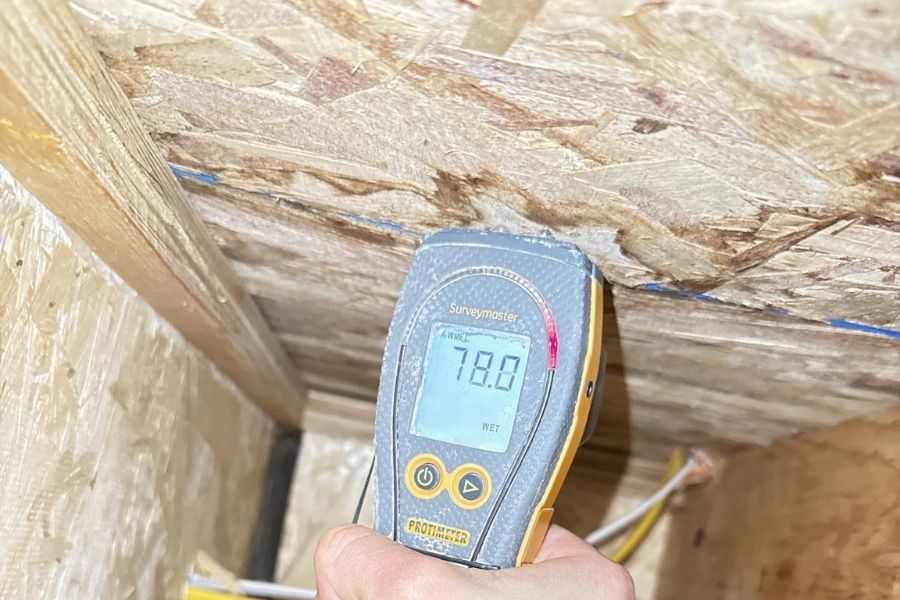
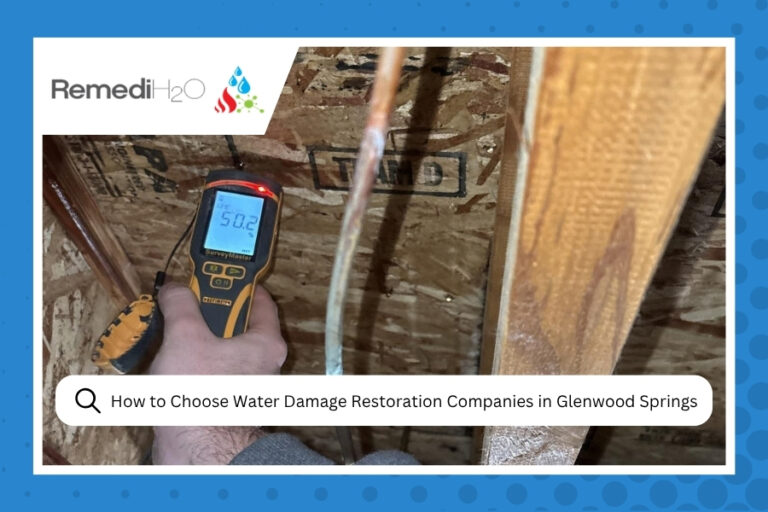
Moisture mapping identifies exactly where water is penetrating and pooling before any remediation work begins.
Before anything gets removed or treated, the full scope of contamination needs to be established. That means moisture readings on sheathing and rafters, visual assessment of contamination patterns, and identifying all moisture sources. Skipping this step means potentially missing hidden growth or fixing the wrong problem.
Step 2: Containment Setup
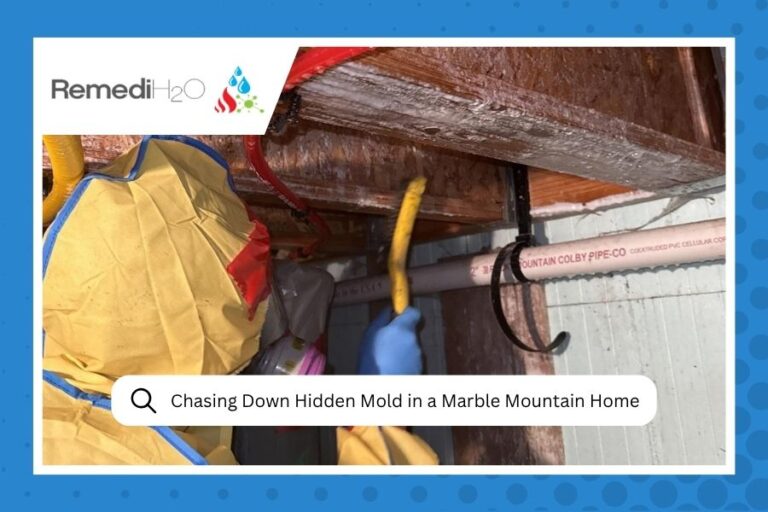
Attic mold remediation requires containment to prevent spores from spreading into living areas during work. That means negative air pressure systems, physical barriers at the attic access, and HEPA filtration running throughout the job. This step is non-negotiable per IICRC S520 mold remediation standards.
Step 3: Source Removal and Treatment
Depending on contamination levels, affected materials may need physical removal or can be treated with approved antimicrobial agents and HEPA-vacuumed. Heavily contaminated sheathing often requires replacement. Lightly affected areas with sound wood can sometimes be treated in place. Our IICRC-certified team assesses each situation individually rather than defaulting to the most expensive approach.
Step 4: Moisture Correction
This is the step DIY jobs skip, and it’s the most important one for lasting results. We work with homeowners to identify and correct the underlying moisture issue before wrapping up. Whether that means flagging improperly routed exhaust vents or recommending a roofer, that conversation has to happen. The Carbondale mold case study on our site shows how unresolved moisture problems can affect an entire home, not just the attic.
How to Keep Attic Mold From Coming Back
Remediation removes what’s there. Prevention keeps it from returning. Delta area homeowners should prioritize a few things given the regional climate.
Annual Attic Inspections
Get up there once a year, ideally in early spring. Look for staining, condensation traces, or frost patterns on the sheathing. Catching moisture issues before mold colonizes is dramatically cheaper than remediation after the fact.
Insulation and Ventilation Check After Roof Work
Any time a contractor works on your roof, confirm that ridge vents and soffit vents aren’t blocked by new insulation. This happens during re-roofing and insulation upgrade projects more often than it should.
Seal Your Attic Access
An attic hatch with no insulation and poor weatherstripping is an open vent between your living area and the attic. Insulated attic hatches or pull-down stair covers reduce air infiltration meaningfully.
Serving Delta, Cedaredge, Hotchkiss, Paonia, and the entire North Fork Valley
RemediH2O is your locally owned, IICRC-certified mold remediation team for Colorado’s Western Slope. We offer free estimates and 24/7 emergency response.
Call (970) 715-6990 for a Free Estimate
Control Indoor Humidity Year-Round
Keep indoor relative humidity below 50% when possible. In spring, when Delta gets moisture from snowmelt and rain, a whole-home dehumidifier makes a real difference. See our post on preventing mold as temperatures rise for year-round tips.
If a roof leak has already caused ceiling damage, our water damage restoration team handles that too. Moisture problems rarely stay in one place. Communities throughout Delta County, including Crawford, Orchard City, and Austin, share similar construction patterns and climate conditions.
Frequently Asked Questions About Attic Mold in Delta Area Homes
Can attic mold spread into the rest of my home?
Yes. Mold spores are microscopic and travel easily through air movement. Attic mold near HVAC equipment or ductwork poses the highest risk of spreading to living areas. That’s one reason professional containment during remediation matters.
Does altitude affect how quickly mold grows in attics?
Altitude doesn’t directly accelerate mold growth, but the climate conditions at higher elevations in Colorado do. Rapid temperature swings drive condensation cycles more aggressively than at lower elevations, and freeze-thaw roof patterns create seasonal moisture events that feed attic mold over time.
How much attic mold requires professional remediation?
EPA guidelines suggest that mold covering more than 10 square feet warrants professional help. In attics, that threshold is reached quickly because mold often spreads across large sections of sheathing before anyone notices. Safety and containment challenges make attic DIY remediation risky even for small areas.
Does homeowners insurance cover attic mold remediation in Colorado?
It depends on the cause. Mold from a covered event like a sudden roof leak often has policy coverage. Mold from long-term ventilation neglect is typically excluded. Document everything and contact your insurer early. For more detail, see our guide on mold remediation insurance coverage on Colorado’s Western Slope.