Winter on the Western Slope is lovely until a pipe bursts at 2 a.m. and floods your basement. Most cold-weather flooding is preventable with a little prep. This guide covers how to prepare for winter water damage prevention before the first hard freeze. If trouble strikes, our team at RemediH2O handles fast water damage restoration across Silt, Aspen, and the Roaring Fork Valley.
We’re a locally owned, IICRC-certified crew with over 25 years of combined experience. We’ve seen what one frozen pipe can do.
Why Winter Hits Mountain Homes Hard
Cold weather causes water damage three ways: frozen pipes that crack, ice dams that push melt water under your roof, and snowmelt that seeps into basements. Homes here sit through weeks of freezing temps, so the risk stacks up fast.
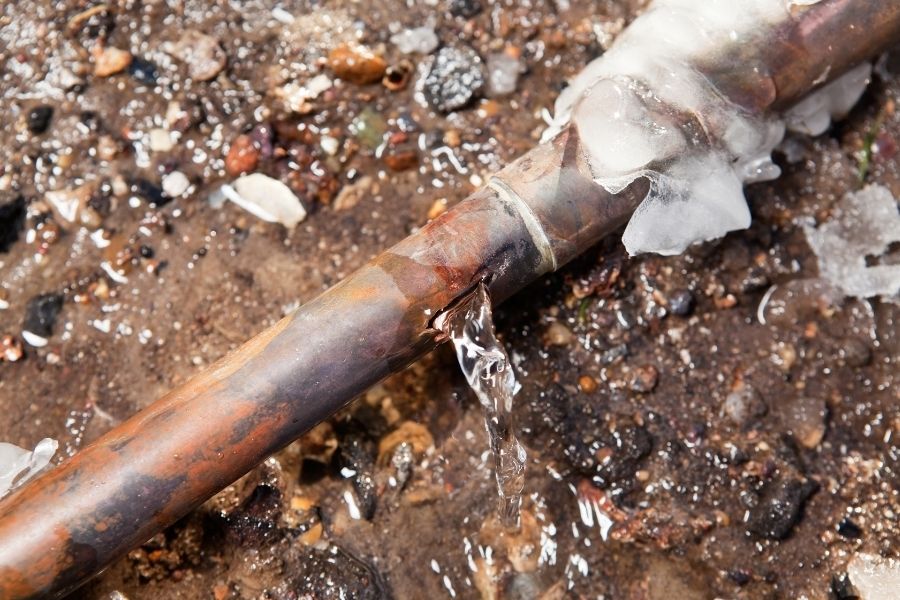
A single frozen pipe can crack and release hundreds of gallons a day.
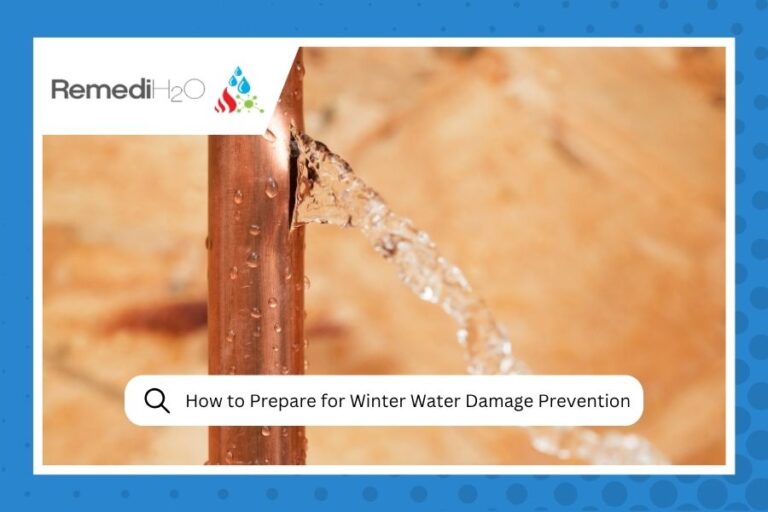
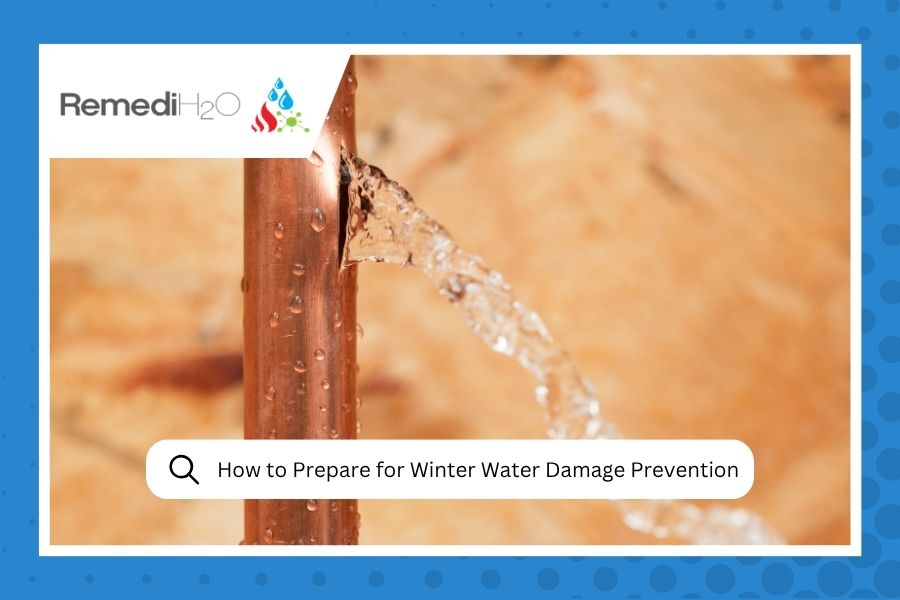
Water expands as it freezes. Inside a pipe, pressure builds until it splits. You won’t know until it thaws and sprays. A tiny crack can push out hundreds of gallons a day.
Our region has its own quirks. Many homes have basements and sump pumps, and lots of properties sit empty during ski season. Both raise the odds of a bad surprise, whether you’re near Glenwood Springs or Aspen.
Pipe already frozen or leaking? Don’t wait for it to thaw and flood. Our crew responds 24/7.
Your Pre-Season Winter Prep Checklist
The best time to winterize is before the first deep freeze, usually early fall here. Run through this checklist once and you’ll knock out the biggest risks in an afternoon. Print it and check off as you go.
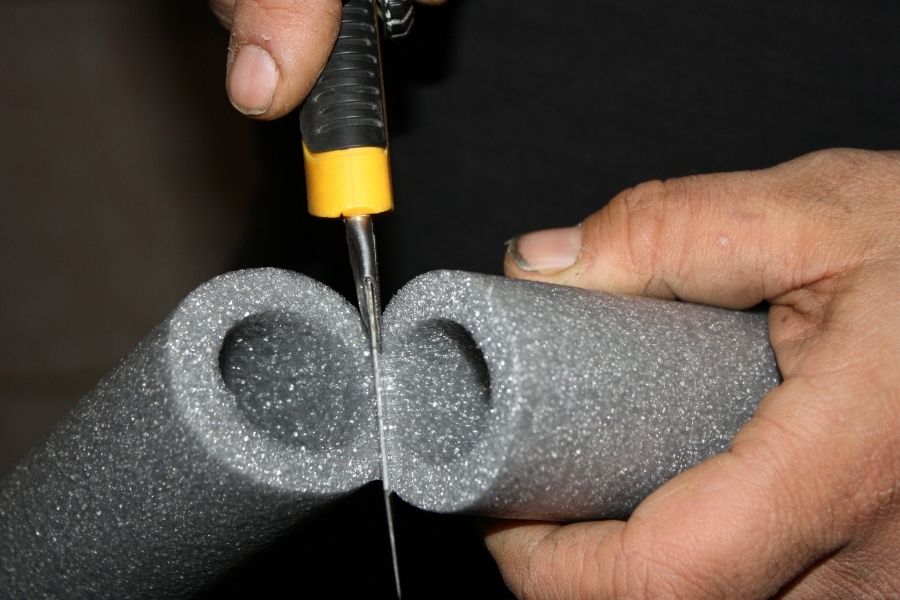
Insulating pipes in crawl spaces, attics, and garages is a simple way to prevent a freeze.
Outside the Home
- Disconnect and drain garden hoses, then shut off outdoor spigots
- Insulate exterior faucets with foam covers
- Clean gutters and downspouts so melt water drains away, not into your walls
- Check the roof for loose or missing shingles
- Trim heavy branches that could snap under snow and tear a gutter loose
Inside the Home
- Insulate pipes in unheated spaces: crawl spaces, attics, garages, and along exterior walls
- Seal drafts near pipes with caulk or spray foam
- Find your main water shutoff valve and make sure it turns easily
- Test your sump pump by pouring a bucket of water into the pit
- Service your water heater and check for early signs of corrosion
- Set the thermostat no lower than 55 degrees, even when you’re away
Smart Extras
- Install battery-powered water leak detectors under sinks and near the heater
- Add a backup battery to your sump pump in case the power drops
- Save a trusted restoration crew’s number in your phone
Knowing where your shutoff valve is sounds basic, but in an emergency it’s the one thing that saves your floors. The American Red Cross suggests every household practice finding and closing it ahead of time.
How to Keep Pipes From Freezing
Pipes freeze in unheated spaces once temps drop below 20 degrees. The fix is insulation, airflow, and a trickle of moving water. Simple habits go a long way.
On a cold night, do this:
- Let faucets on exterior walls drip slowly. Moving water resists freezing.
- Open cabinet doors under sinks so warm room air reaches the pipes.
- Keep the garage door shut if water lines run through it.
- Never drop the heat below 55, even overnight.
If a faucet stops running on a freezing morning, you likely have a frozen pipe. Keep it open and warm the pipe with a hair dryer, starting at the faucet end. Skip the open flame. A blowtorch turns a water problem into a fire problem.
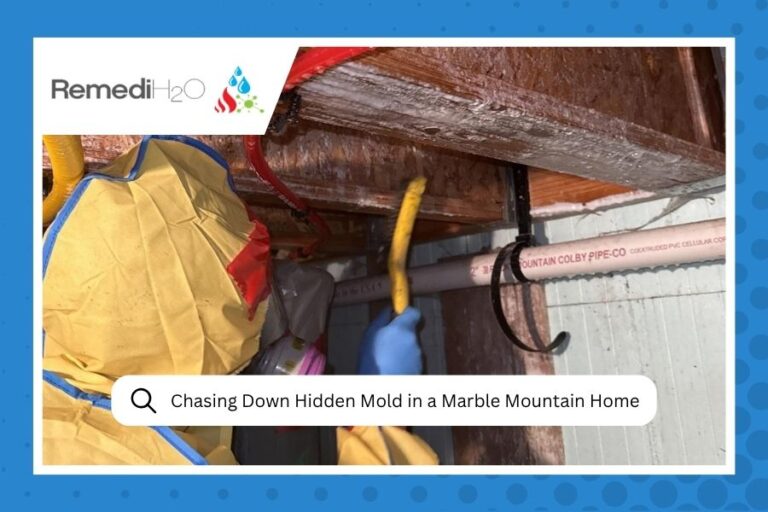
The EPA notes that mold can take hold within 24 to 48 hours of a moisture problem. Catching a leak early isn’t just about the water. It’s about what grows after. If you spot fuzzy patches or a musty smell, our mold remediation services can help.
Prepping a Home You’re Leaving for the Season
An empty house is where winter water damage does its worst, because nobody’s there to catch it. A few steps protect your property while you’re gone, especially for second homes in Aspen, Snowmass, and Vail.
- Shut off the main water supply and drain the lines by opening the lowest faucets
- Keep the heat set to at least 55 degrees so interior pipes stay warm
- Have a neighbor or property manager check in weekly
- Consider a smart thermostat and leak sensors you can monitor from your phone
We’ve walked into vacation homes where a drip ran for a month unnoticed. By then it’s not a plumbing repair, it’s a full restoration job. Ten minutes of prep beats that.
What to Do the Moment You Spot a Leak
If water is coming in, act fast. Shut off the main valve, cut power to the area if it’s safe, and move valuables out of the water. Then call for help. Every hour counts once materials get wet.
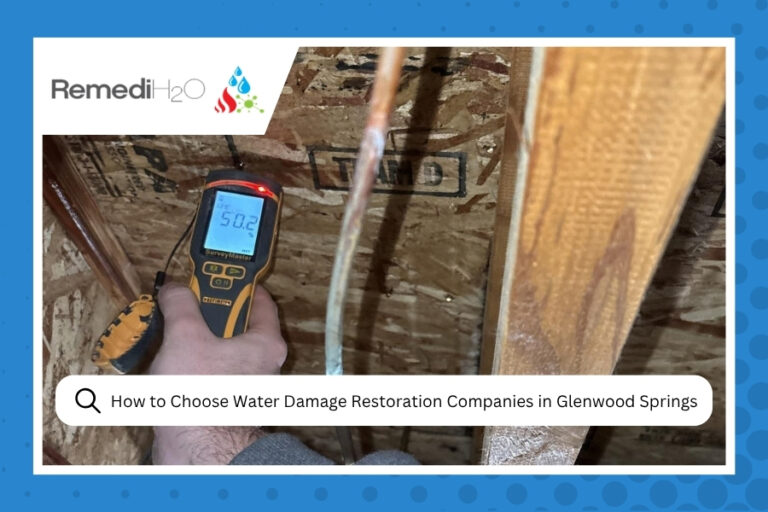
A small, clean spill on tile you can handle yourself. But once water soaks into drywall or subfloor, you need gear most homeowners don’t own. Moisture meters find water you can’t see. Miss it, and mold and rot follow.
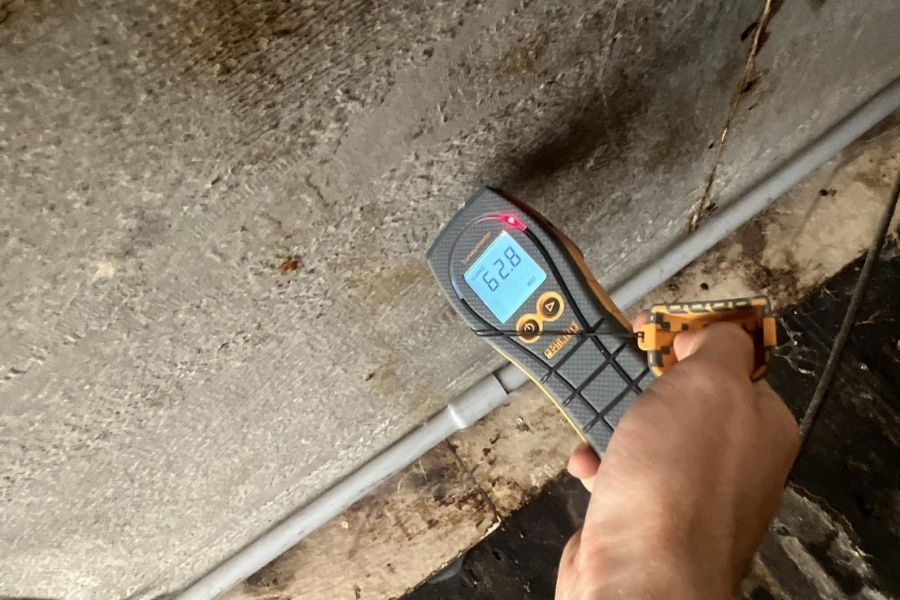
Professional moisture detection finds water hiding in drywall and subfloor.
That’s where we come in. Our techs are trained to IICRC standards, we work directly with your insurer, and we’re here around the clock. Whether it’s a burst pipe in Rifle or a flooded basement in Carbondale, we dry it right the first time. Our guide on how to stop water damage in 7 emergency steps and our tips on preparing your mountain home for winter can help you plan ahead.
The Bottom Line
A couple hours of fall prep saves thousands in repairs and a lot of January stress. Winterize your pipes, know your shutoff valve, and keep our number handy. If winter still finds a way in, our crew is one call away.
Frequently Asked Questions
At what temperature do pipes start to freeze?
Pipes are most at risk when the temperature drops below 20 degrees Fahrenheit, especially those in unheated spaces like crawl spaces, attics, and garages. Pipes along exterior walls freeze first because they get the least warmth from your home.
Should I leave my heat on if I go away for the winter?
Yes. Keep your thermostat set to at least 55 degrees while you’re gone. Shutting the heat off completely to save money is a common mistake that leads to frozen and burst pipes, which cost far more than a small heating bill.
Does homeowners insurance cover frozen pipe damage?
Most homeowners policies cover sudden burst pipe damage, but they often deny claims if you left the heat off or neglected obvious maintenance. Keeping your home heated and documenting your winter prep helps protect your coverage. We work directly with insurers to make the claim smoother.
How fast do I need to respond to a water leak in winter?
Act within the first few hours. Mold can start growing in 24 to 48 hours, and wet materials keep absorbing water the longer they sit. Shutting off the water and calling a restoration crew quickly limits both the damage and the cost.