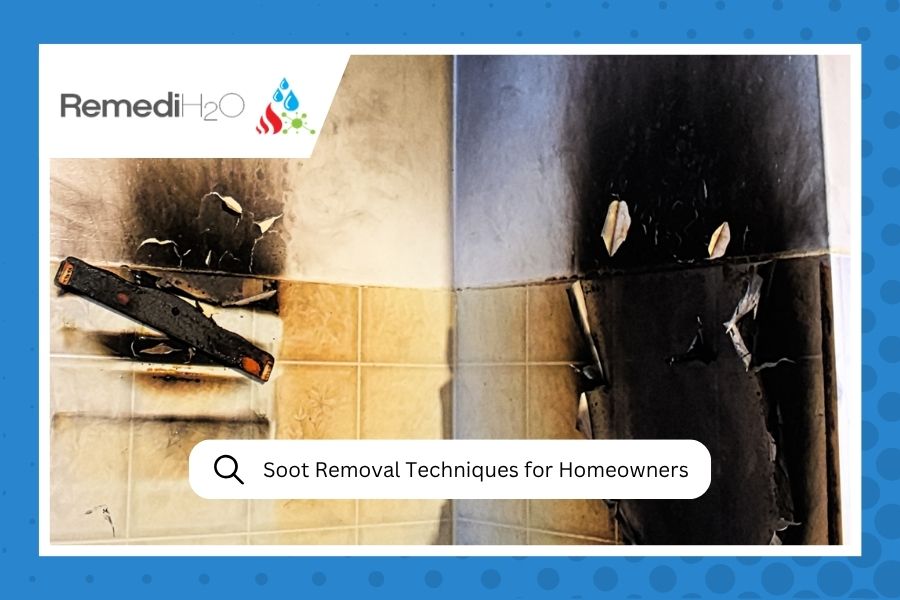
Soot Removal Techniques for Homeowners: DIY Steps and When to Call a Pro
Soot looks like a thin layer of dust, but it behaves nothing like ordinary dirt. Wipe it the wrong way and you’ll smear a gray streak across the wall that’s even harder to lift. Our team at RemediH2O handles fire cleanup across Colorado’s Western Slope and Roaring Fork Valley, and we offer professional soot and smoke removal when a job runs past what a homeowner can safely tackle. This article walks you through soot removal techniques that actually work, plus how to tell when it’s time to step back and let a pro take over.
What Is Soot and Why Is It So Hard to Clean?
Soot is the fine black or gray residue left behind when something burns without enough oxygen to burn cleanly. It’s mostly carbon, mixed with oils and acids. Those oils are exactly why a damp rag turns a light dusting into a stubborn smear.
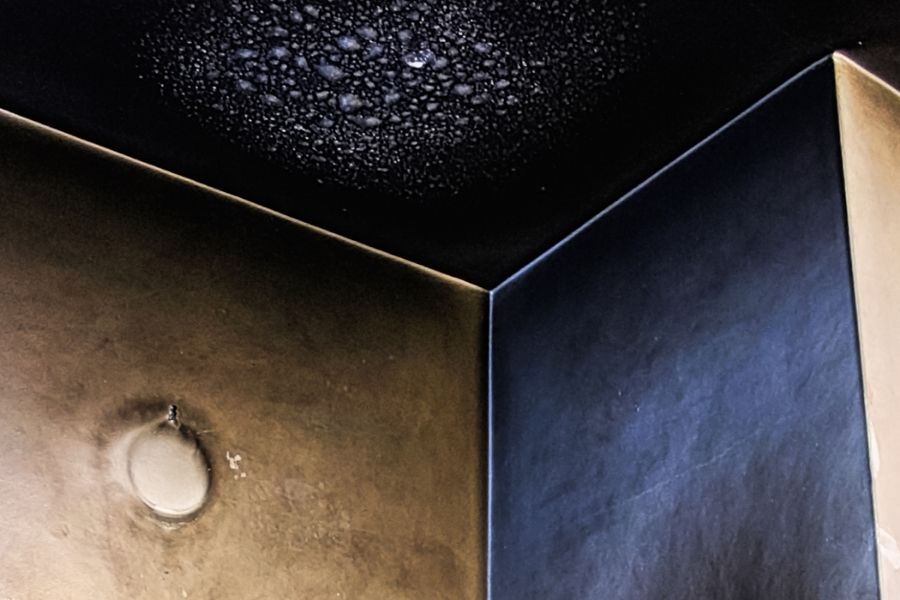
Heavy soot like this, blanketing walls and the ceiling after a fire, is well past a DIY sponge job.
The particles are tiny. Many are small enough to slip deep into lungs, which is why the EPA flags fine smoke particles as a respiratory concern. Soot also drifts. After even a small kitchen fire, we’ve found it clinging to closet walls two rooms away.
Not all soot is the same, either. Dry soot from paper or wood brushes off fairly well. Oily soot from a grease fire, and the sticky “protein” residue from scorched food, smears on contact and clings to everything it touches.
Surface matters as much as soot type. Painted drywall, raw wood, brick, glass, and metal each react differently to cleaners. A method that lifts soot off a sealed wall can strip the finish off an unsealed one. That’s why pros test a small hidden spot before treating a whole room, and why a single approach rarely works across an entire home.
How Do You Remove Soot Yourself?
For small, dry soot stains on hard surfaces, start dry and work from the top down. Never reach for water first. Water and most cleaners set soot into the surface, turning a quick job into a permanent stain. Here’s the order our techs follow on light cleanup.
A Simple Soot Removal Checklist
- Protect yourself. Wear an N95 mask, gloves, and safety glasses. Open windows and run a fan toward the outside.
- Vacuum first, gently. Use a HEPA vacuum and hold the nozzle just off the surface. Don’t drag a brush attachment across the wall, since that grinds soot in.
- Use a dry chemical sponge. Also called a soot sponge, this rubber block lifts dry soot without water. Wipe in one direction, then rotate to a clean side.
- Move to a degreaser only if needed. Once the loose soot is gone, a mild degreaser or a trisodium phosphate substitute can tackle what’s left on painted walls.
- Rinse and dry. Wipe with clean water, then dry the surface fully so moisture doesn’t invite mold.
Fabrics, upholstery, and electronics are a different story. Skip them. Cleaning soot off clothing usually pushes oils deeper, and powered-on electronics with soot inside can short out or worse.
Dealing with soot in Silt, Aspen, or anywhere on the Western Slope?
If the staining covers more than a wall or two, or the smoke smell won’t quit, we’re here 24/7. Our IICRC-certified crew responds fast across the Roaring Fork Valley.
DIY vs Professional Soot Cleanup: Which Do You Need?
Small, dry soot on hard surfaces is a reasonable weekend project. Anything involving oily residue, large areas, lingering odor, or fire-related water damage cleanup from firefighting belongs with a pro. The table below sorts it out quickly.
| Situation | DIY Friendly? |
|---|---|
| Light, dry soot on a painted wall | Yes, with the steps above |
| Greasy kitchen or protein soot | No, smears and spreads |
| Soot inside HVAC or ductwork | No, needs equipment |
| Smoke odor that keeps returning | No, requires deodorization |
When Should You Call a Professional?
Call a professional when soot has spread widely, when odor lingers after cleaning, or when a fire also left water behind. Pros bring HEPA air scrubbers, thermal foggers, and the training to treat each surface correctly. Guesswork on the wrong cleaner can ruin a finish for good.
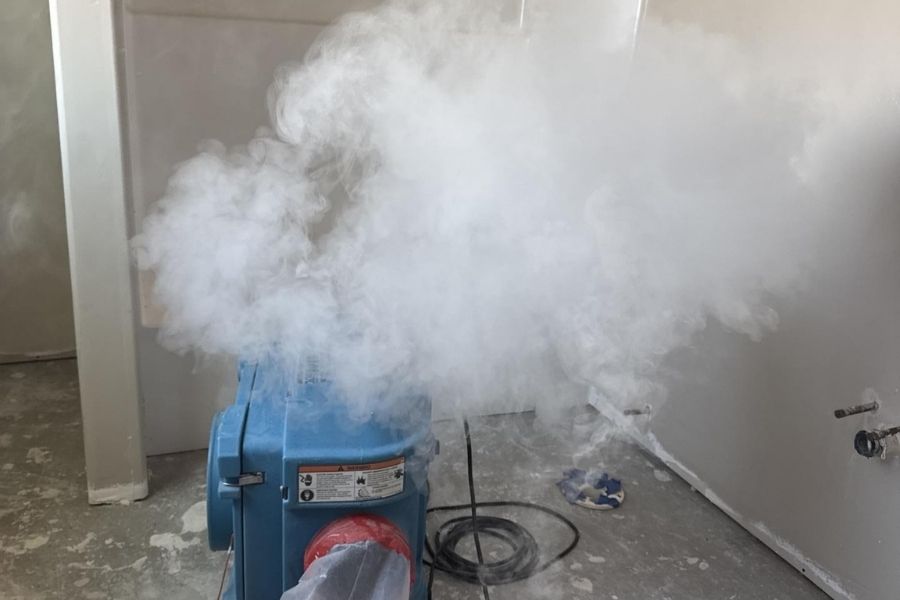
Thermal fogging in action, the step that neutralizes embedded smoke odor a surface wipe can’t touch.
There’s a standards reason, too. Restoration crews follow the IICRC S700 standard for fire and smoke damage, which spells out how soot type and surface dictate the method. That training is the difference between cleaning soot and chasing it around the house.
Hidden damage is the part most folks miss. Soot works its way into insulation, attic spaces, and the back side of cabinets where no rag can reach. Firefighting water soaks into drywall and subfloor at the same time.
That trapped moisture is the real risk. Within a day or two it can start growing mold behind the very surfaces you just wiped clean. Want to know what the full process looks like? Read our breakdown of what fire damage restoration includes before you decide to handle a major job alone.
A quick warning from our crew
If you can still smell smoke after a thorough cleaning, the residue is still active somewhere you can’t see. That lingering smell is your cue to bring in help. Wait too long and it settles permanently into walls, ceilings, and fabrics, which we see constantly in older homes around Glenwood Springs, Carbondale, and Rifle.
For more on what soot leaves behind, our guide to the hidden signs of smoke damage in mountain homes is worth a read. And once the cleanup is handled, securing your home after fire damage keeps the property safe while repairs get sorted out. Homeowners in Rifle and the surrounding Western Slope can reach us any hour.
Soot Removal FAQs
Can I use water to clean soot off my walls?
Not as a first step. Water and most household cleaners react with the oils in soot and drive the stain deeper into paint and drywall. Always remove dry soot with a HEPA vacuum and a dry chemical sponge before any liquid touches the surface.
Is soot dangerous to breathe?
Yes, soot particles are fine enough to reach deep into the lungs and can irritate the airways. Wear an N95 mask and gloves during any cleanup, keep the area ventilated, and don’t let kids or pets near the work zone.
Why does the smoke smell come back after I clean?
Returning odor means soot residue is still active in spots you can’t see, like inside HVAC ducts, insulation, or porous materials. Surface cleaning won’t fix it. Professional deodorization with thermal fogging is usually needed to fully remove the smell.
How soon should soot be cleaned after a fire?
As fast as possible, ideally within a day or two. Soot is acidic and keeps etching into metal, glass, and finishes the longer it sits. Quick action also limits how far the residue spreads through the home.