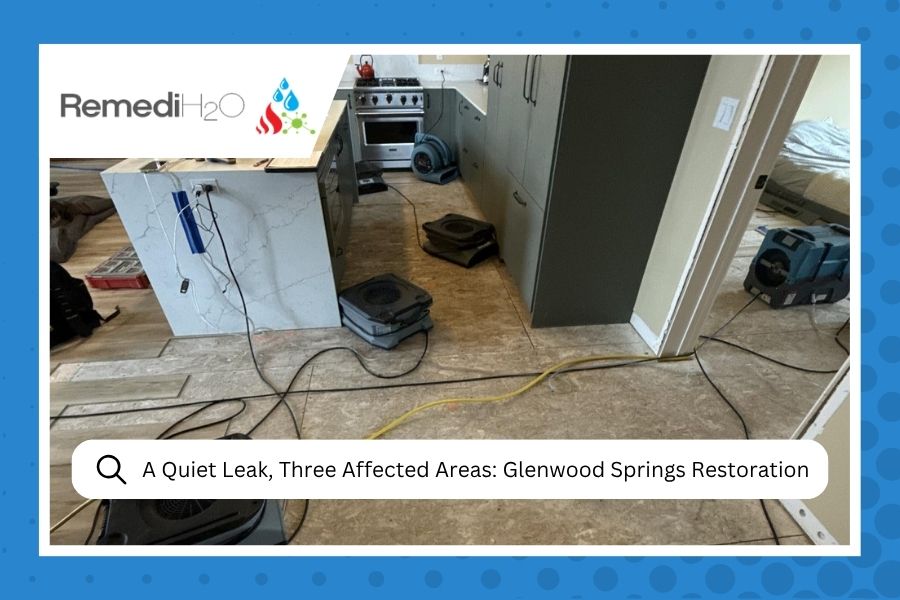
It started with a small drip behind the refrigerator. Nobody noticed right away, because that’s how supply line leaks work. They’re quiet. Slow. By the time a Glenwood Springs homeowner realized something was off, water had already crept under the luxury vinyl plank flooring in the kitchen, spread into the adjacent bedroom, and found its way down into the crawlspace below. Our team at RemediH2O got the call and arrived the same day.
We’ve handled a lot of water damage restoration jobs over the years, and refrigerator supply line leaks are sneakier than most. No dramatic flood. No obvious mess from the doorway. Just moisture quietly working through flooring, walls, and structural materials until the damage is much bigger than the original leak ever suggested.
What We Found When We Arrived
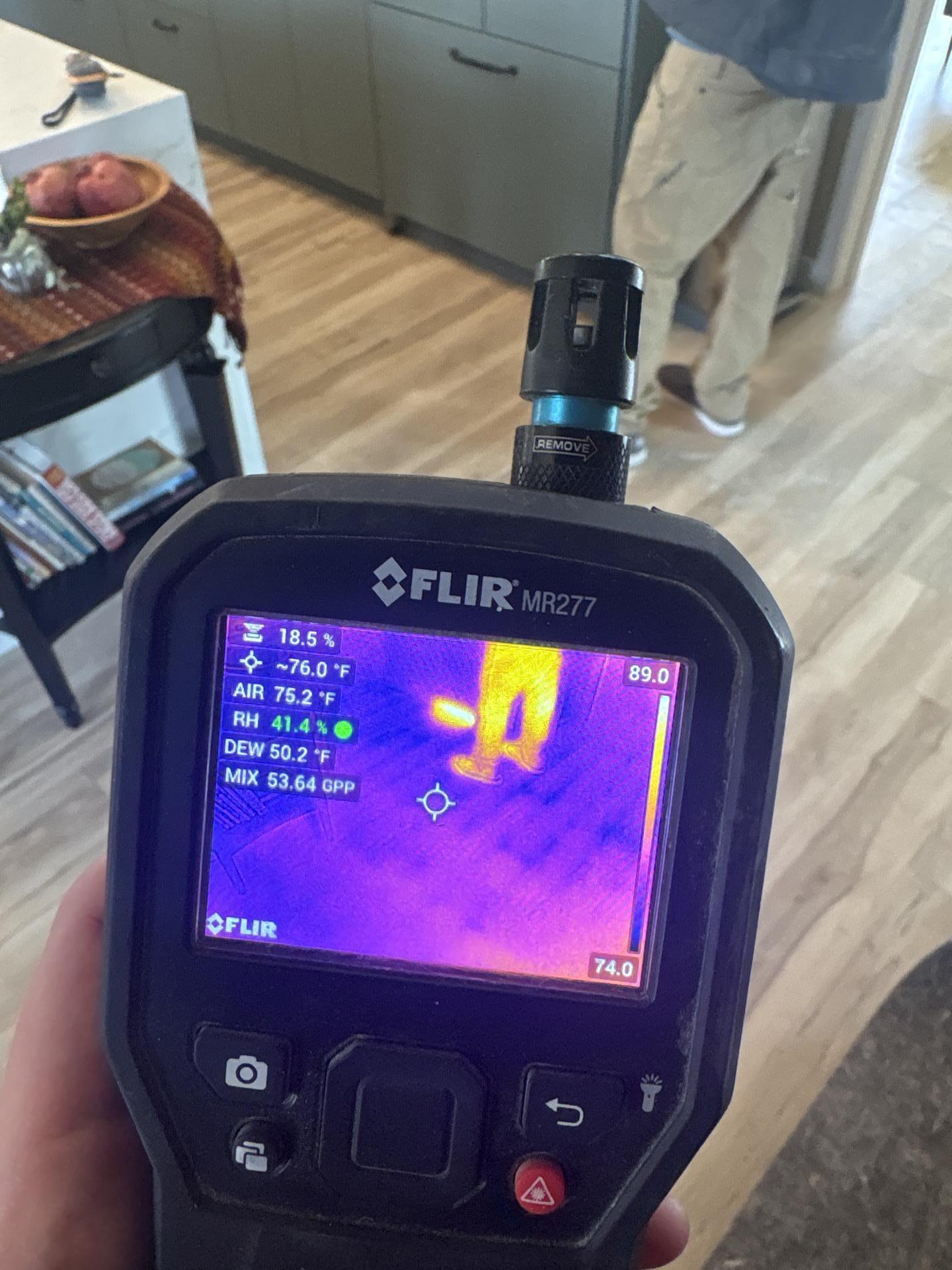
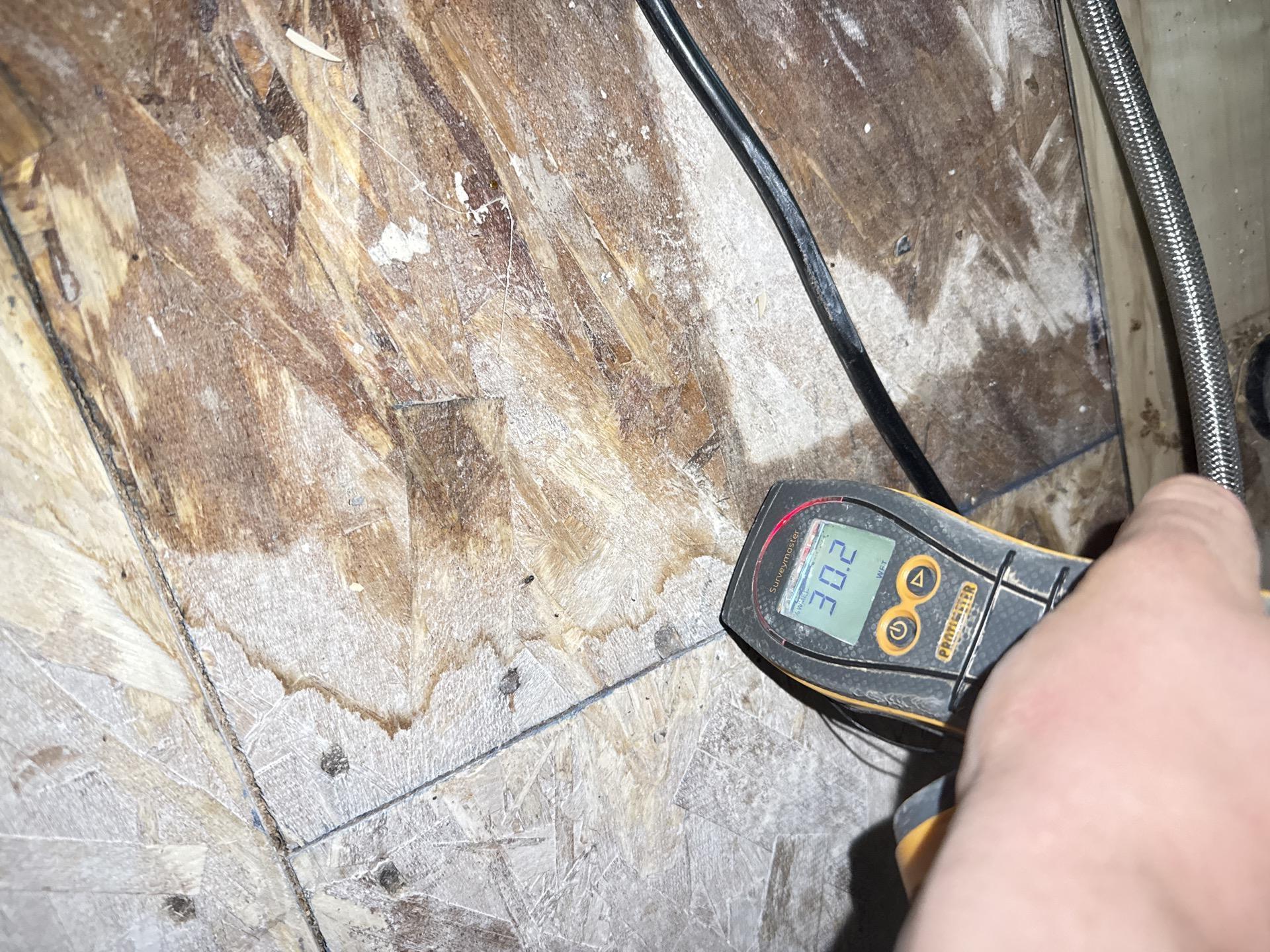
We started with a full inspection using moisture meters and thermal imaging. The kitchen flooring and lower drywall were wet throughout. The base cabinets had started to swell at the bottom edges, a sign that water had been sitting under them long enough to cause real structural stress. In the bedroom next door, the same story: elevated moisture in the flooring and lower drywall. Water doesn’t respect room boundaries.
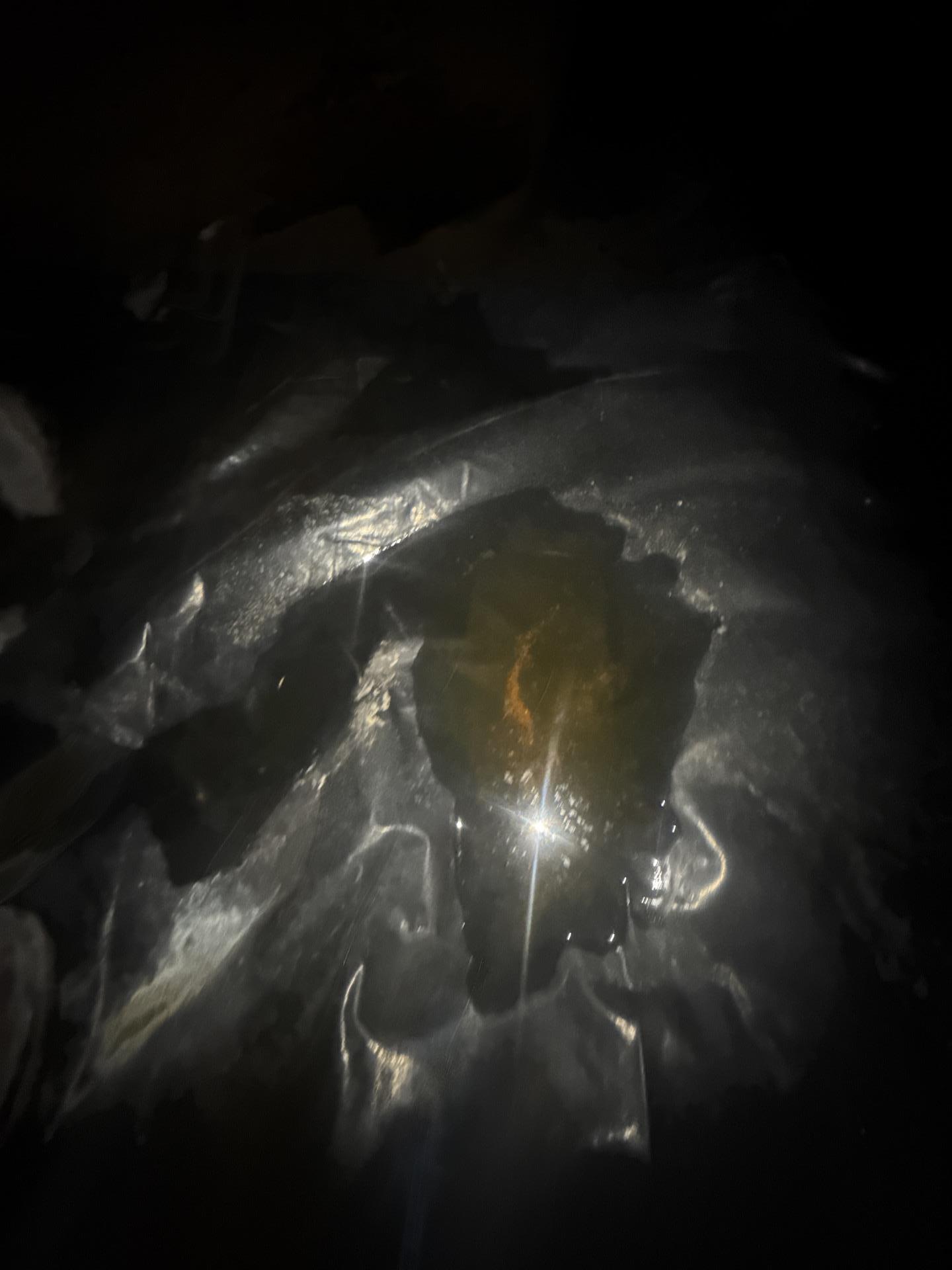
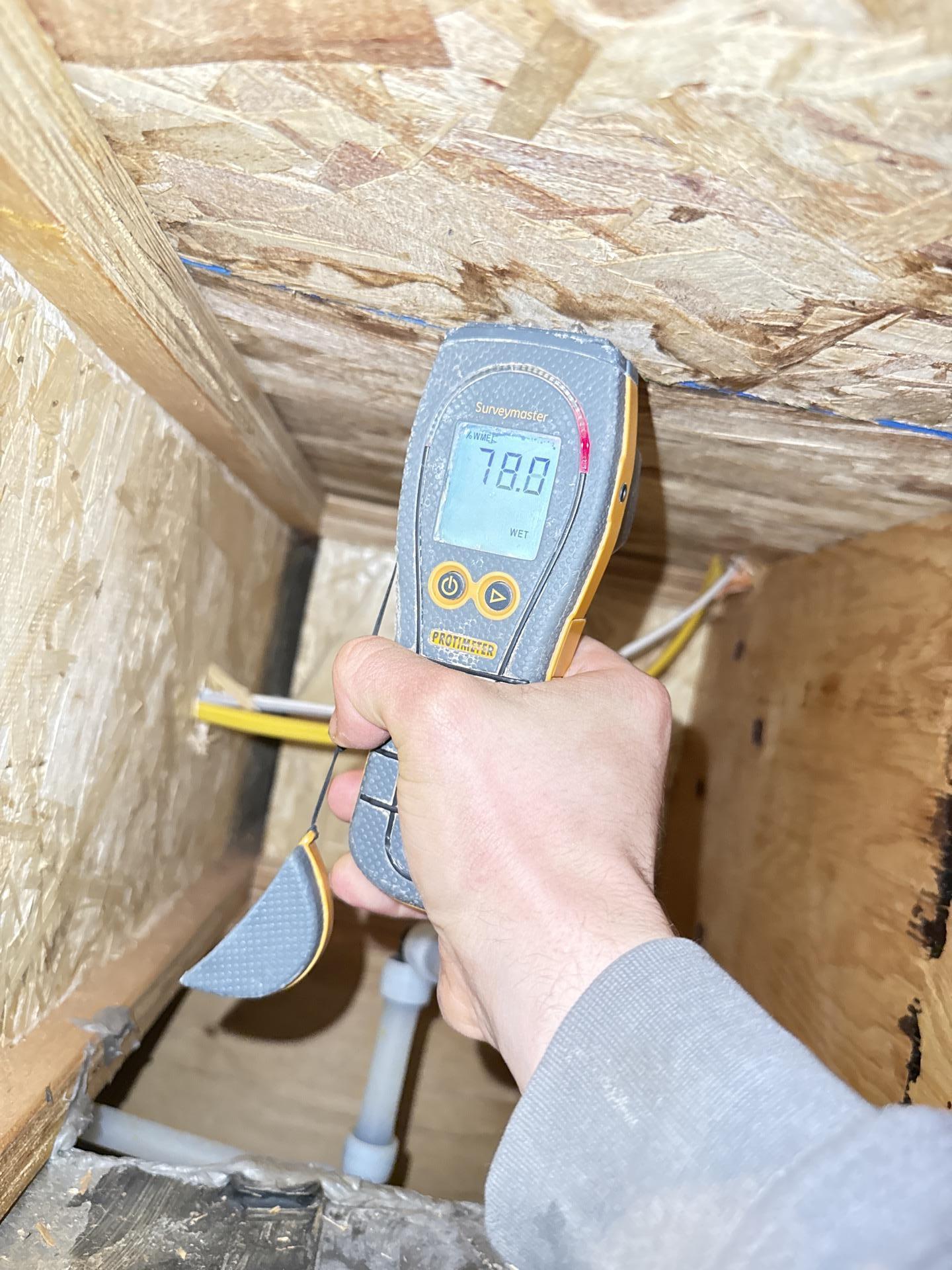
Down in the crawlspace, both the subflooring and structural framing showed elevated moisture, along with suspect microbial growth on the framing and the underside of the subfloor. No standing water at that point, which meant the leak had slowed or stopped. The moisture trapped in the materials was now the main concern. Notably, that microbial growth hadn’t originated from the refrigerator line. It was a pre-existing condition we’d need to address as part of the job.
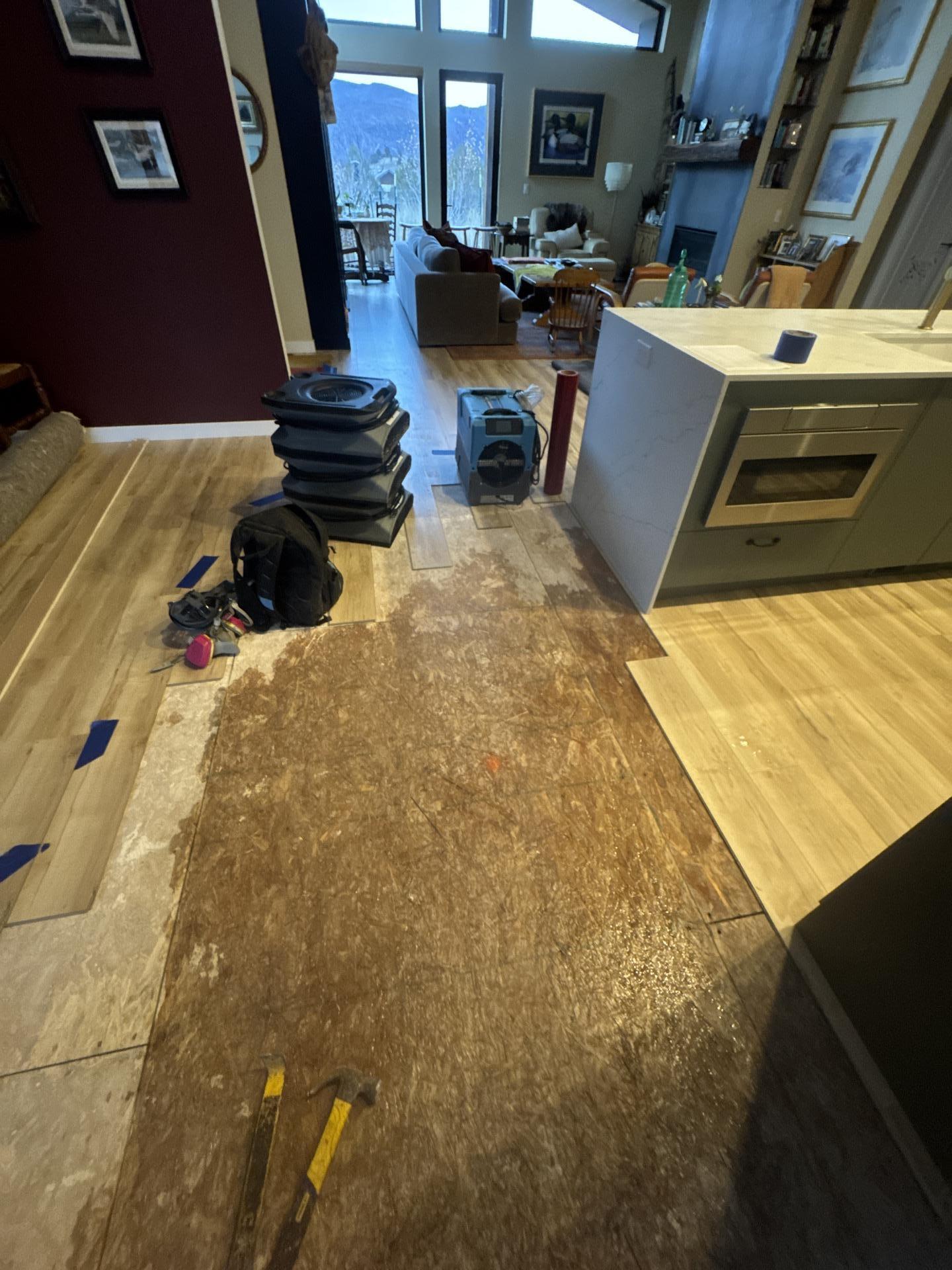
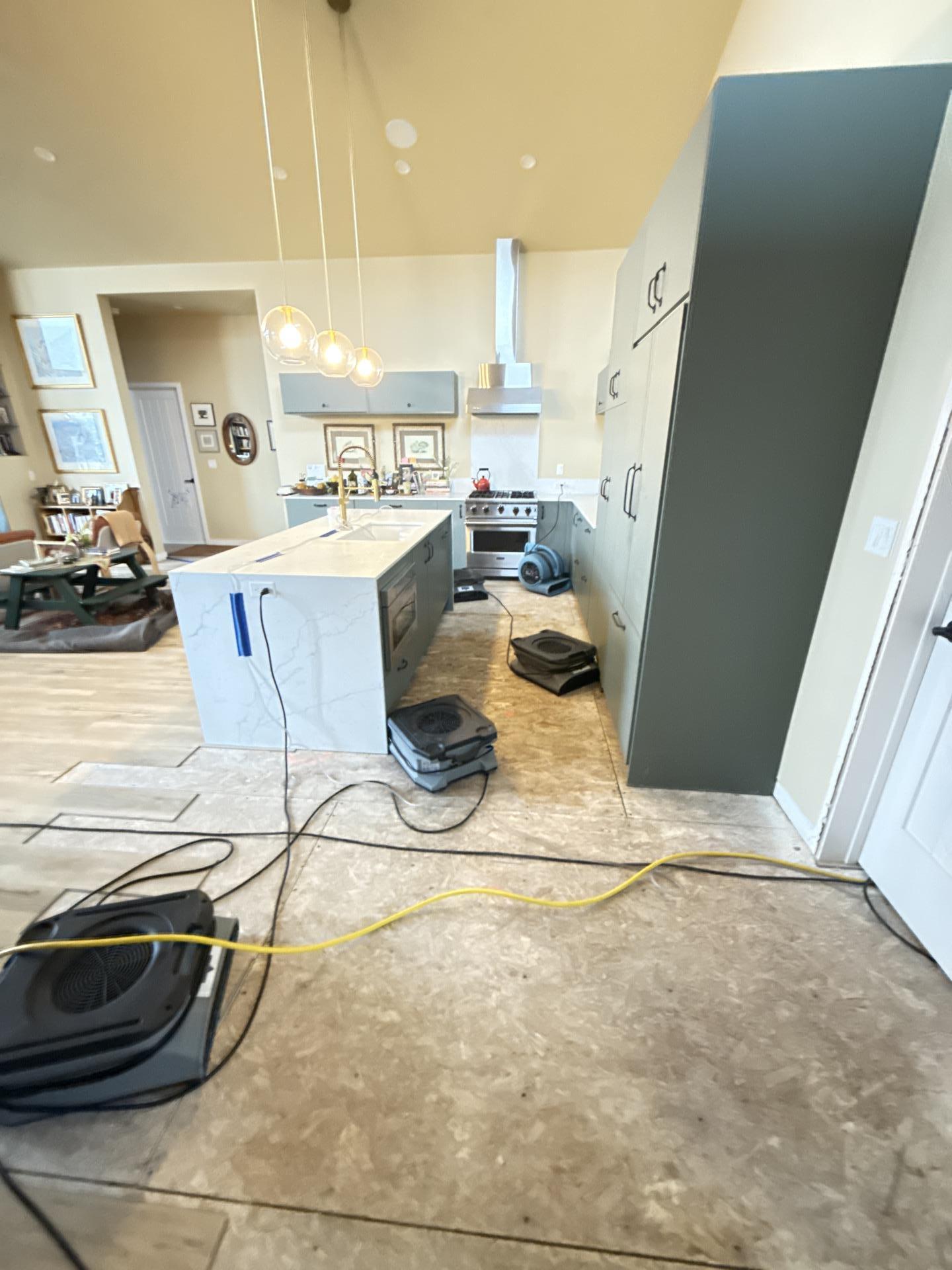
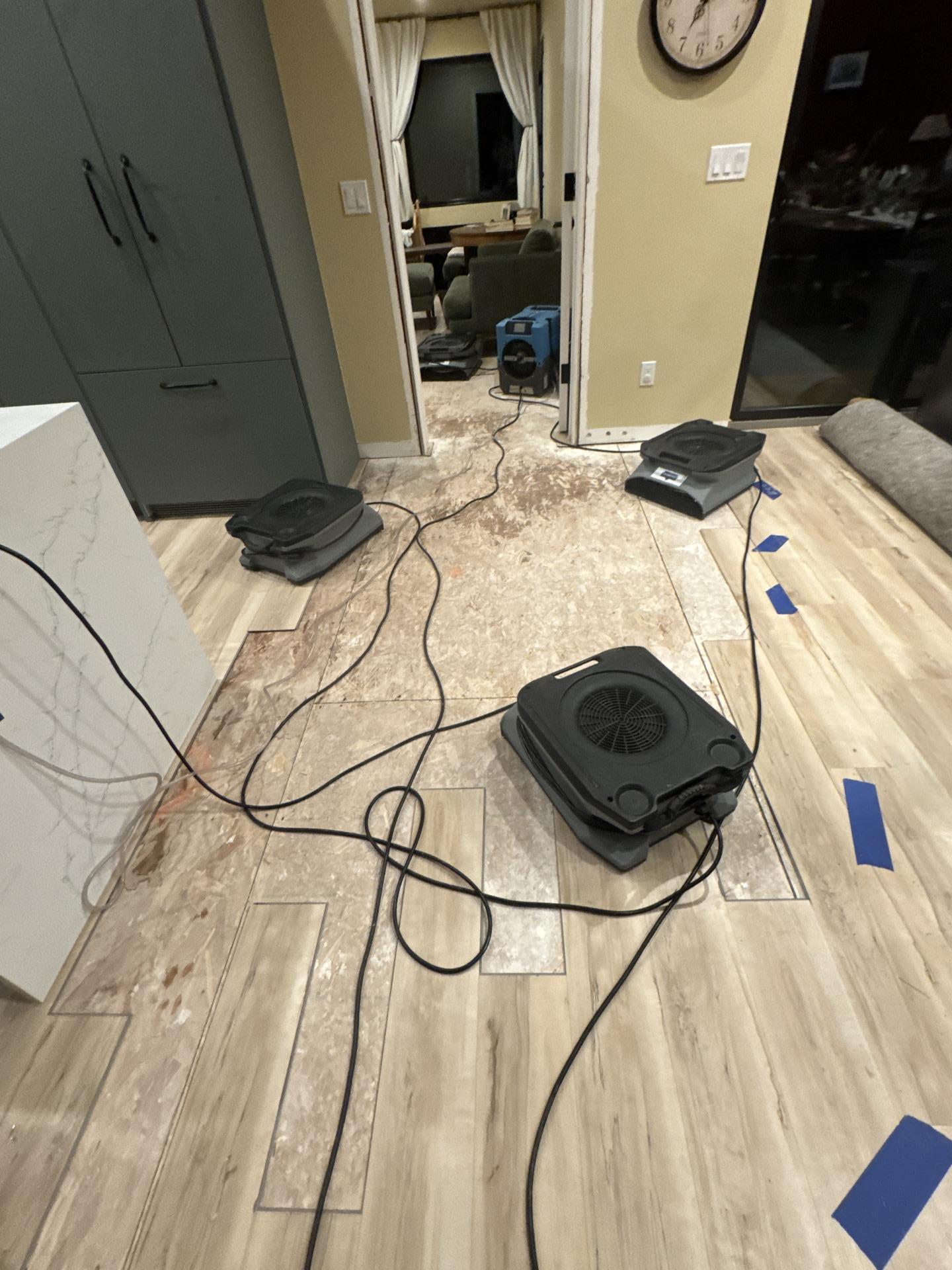
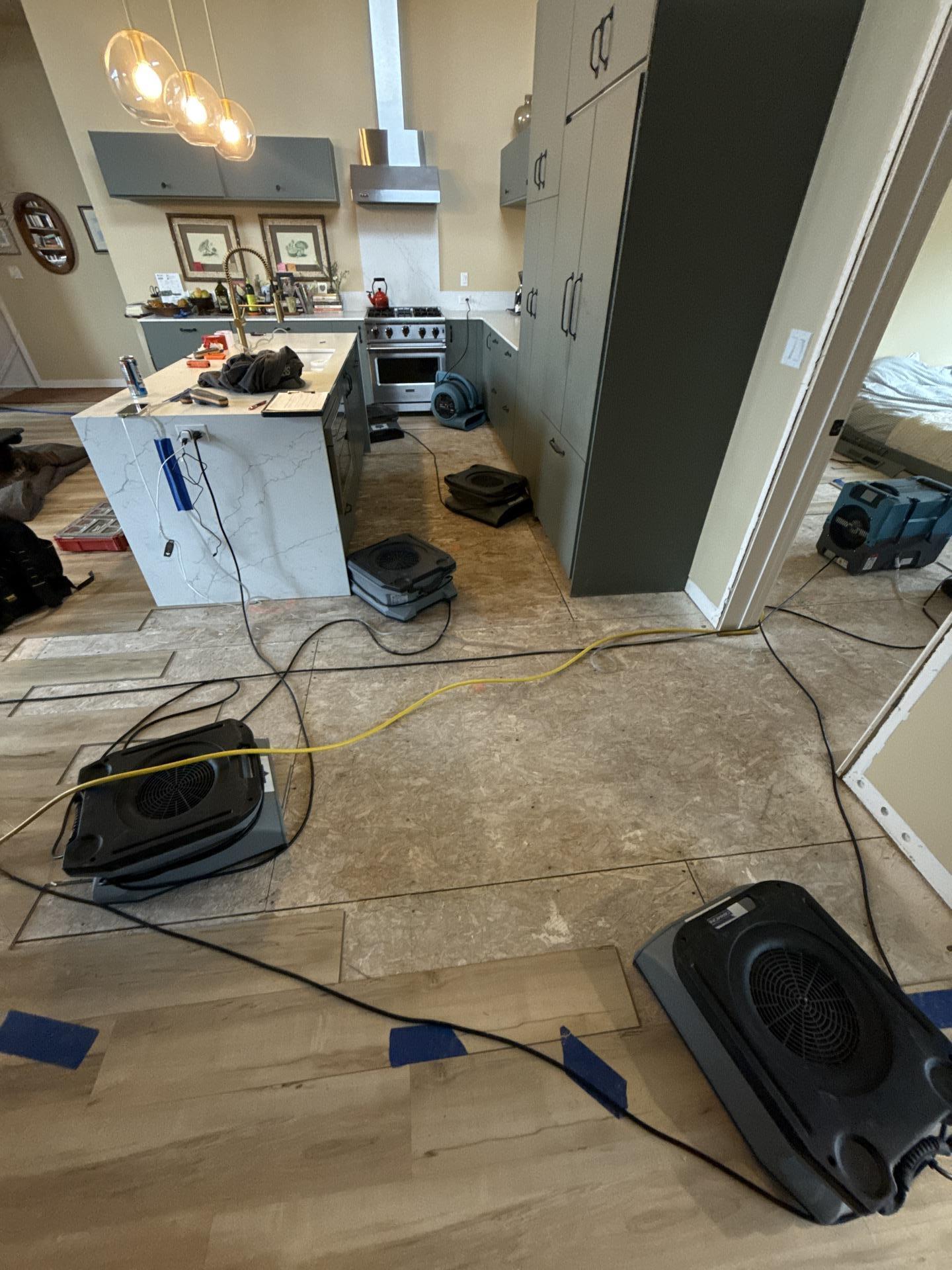
Our kitchen water damage restoration process:
 |  |  |
 |  |  |
Getting the Moisture Under Control
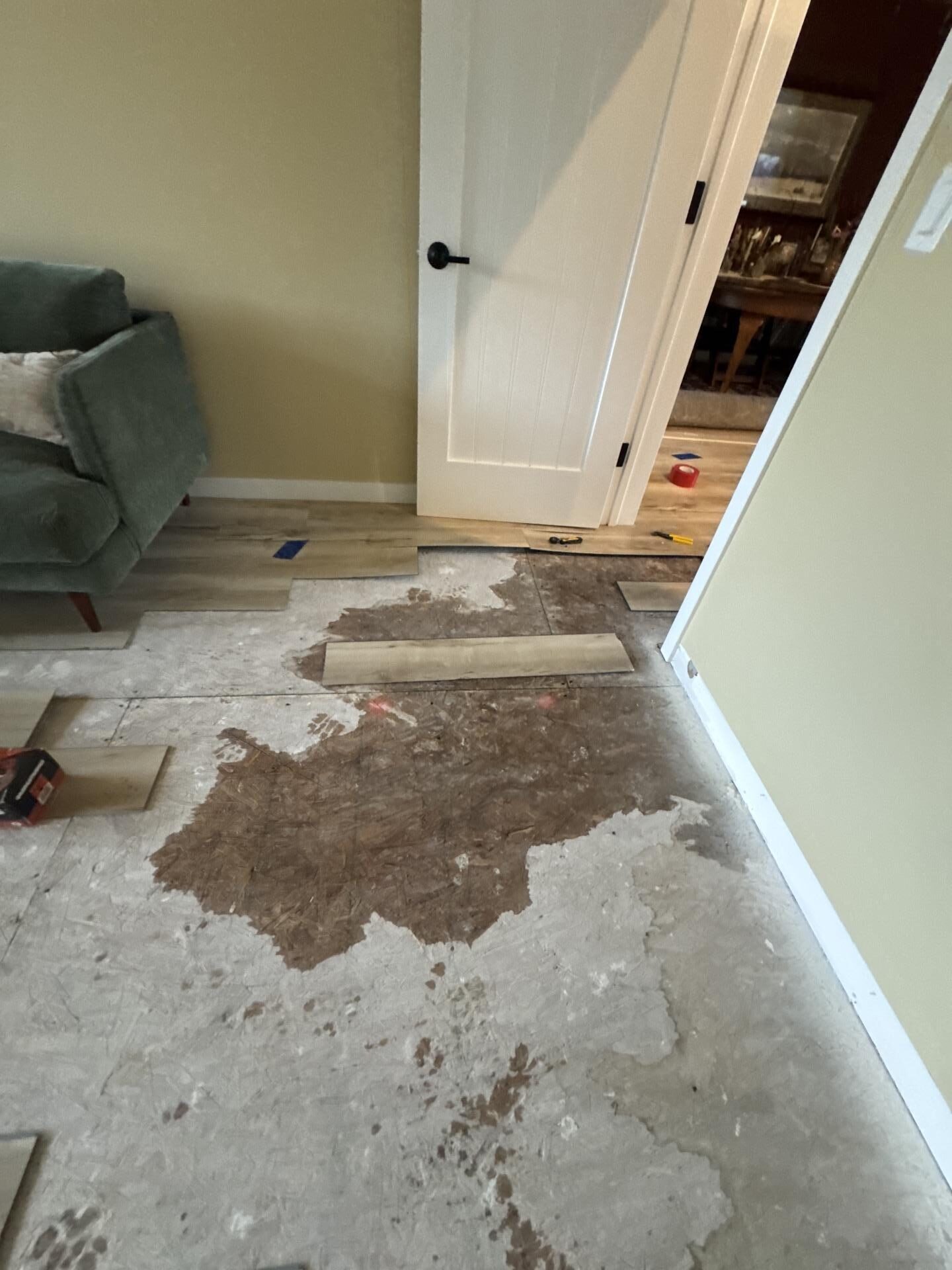
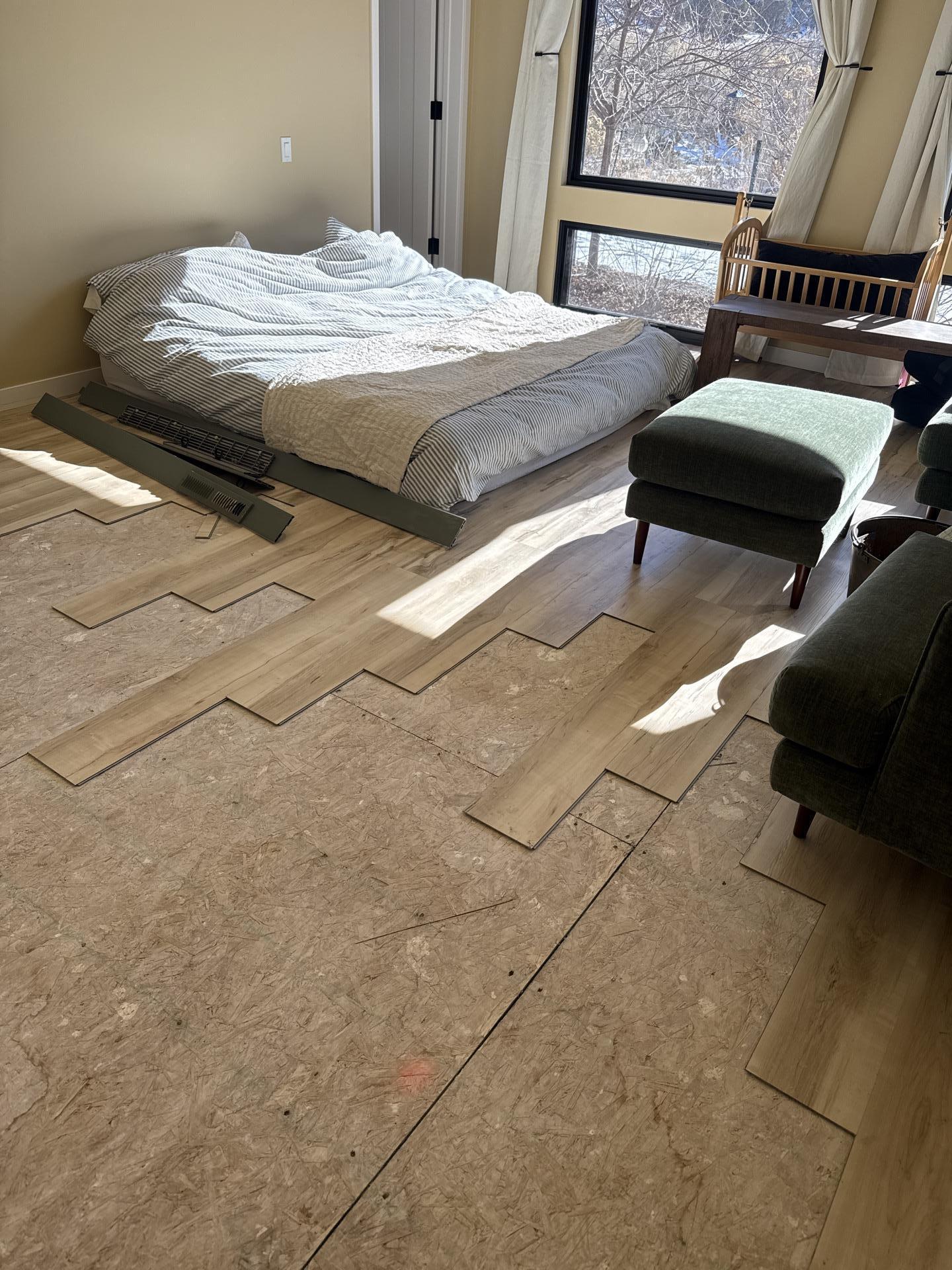
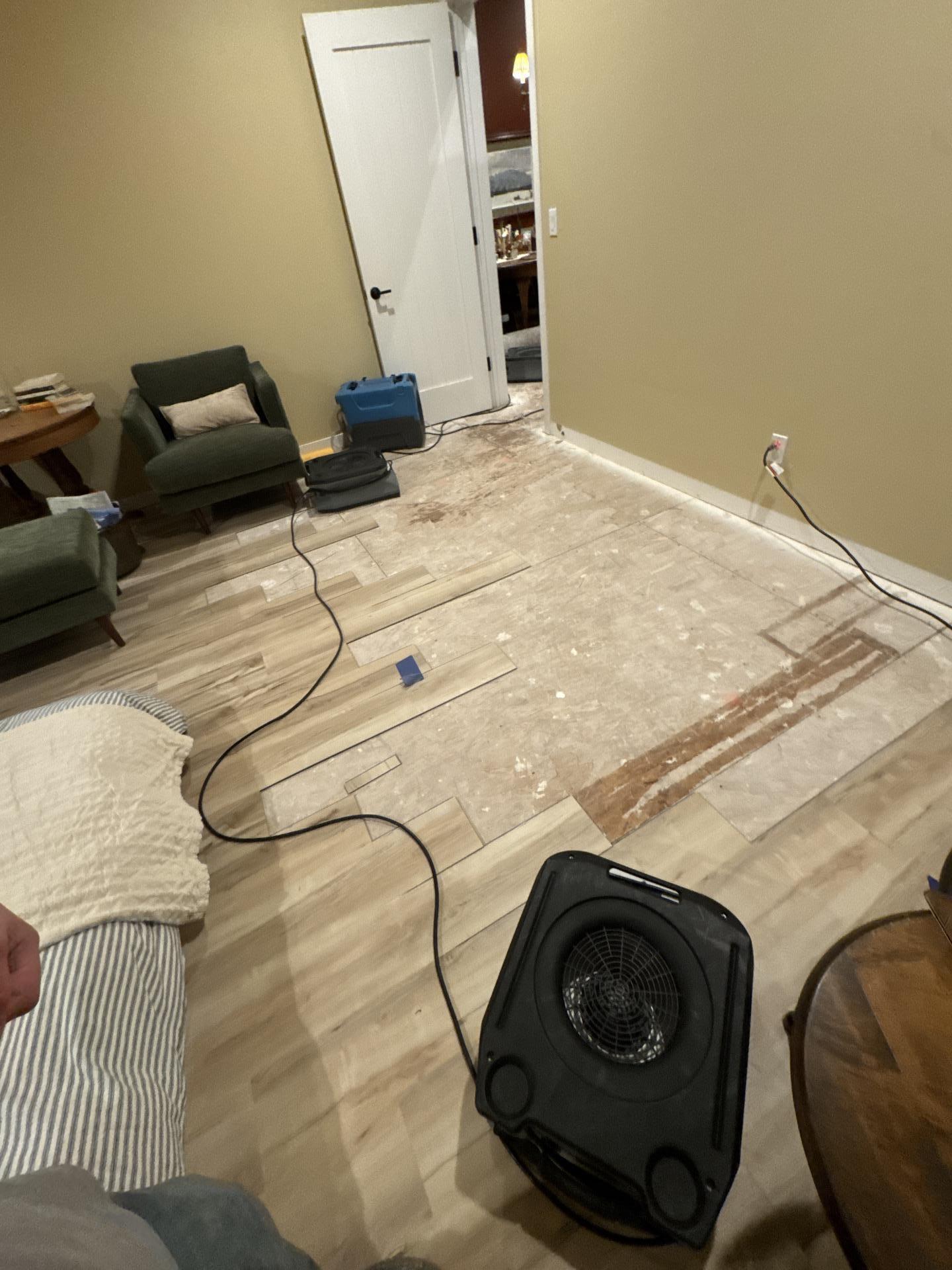
After moving contents out of the way, we removed toe kicks, baseboards, and the luxury vinyl plank flooring in both rooms. That last part surprises some homeowners since LVP is often marketed as waterproof. On the surface, it is. But water gets under it through the seams and edges, then sits trapped between the flooring and the subfloor. Removing it was the only way to let the materials below actually dry.
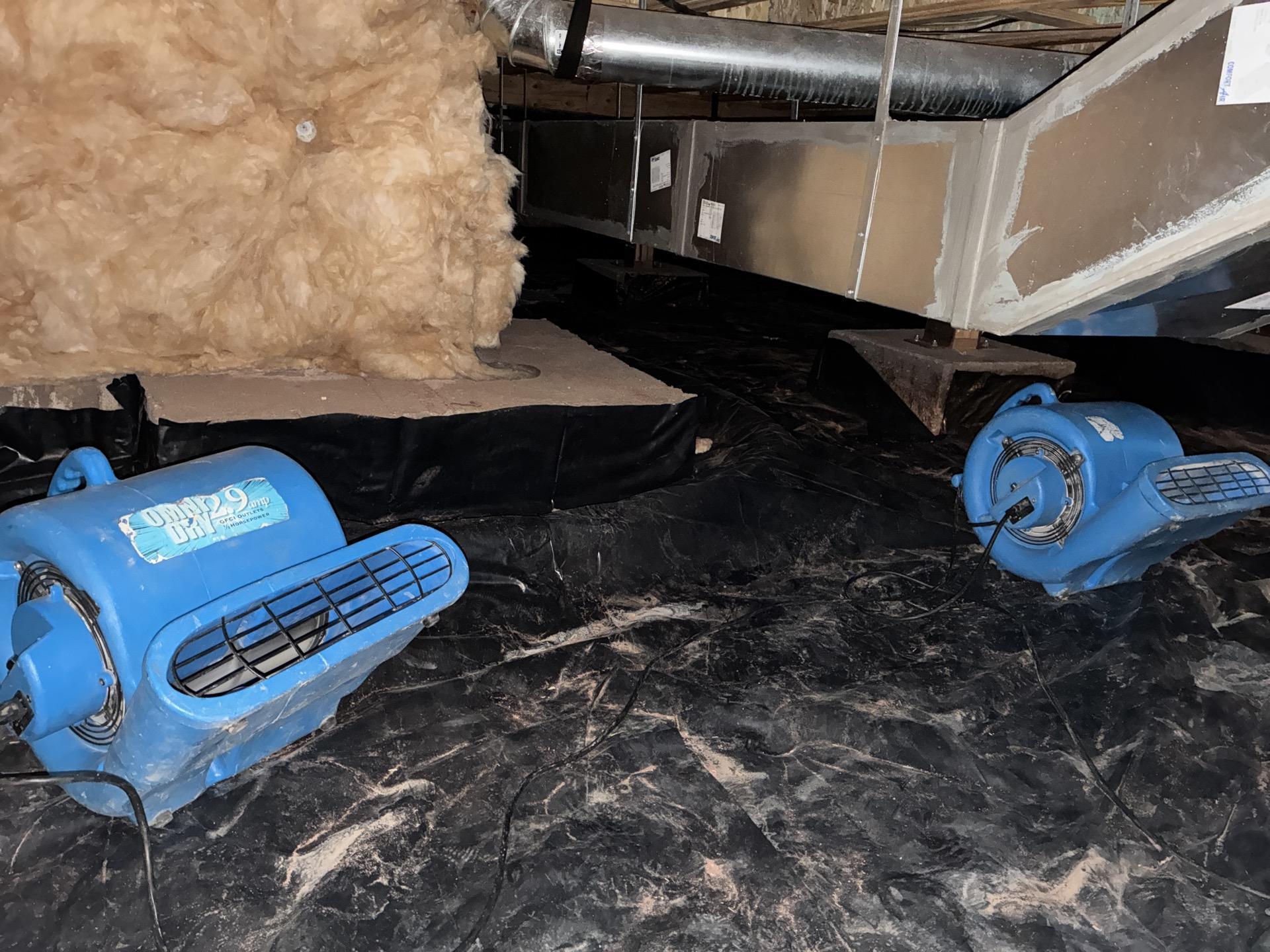
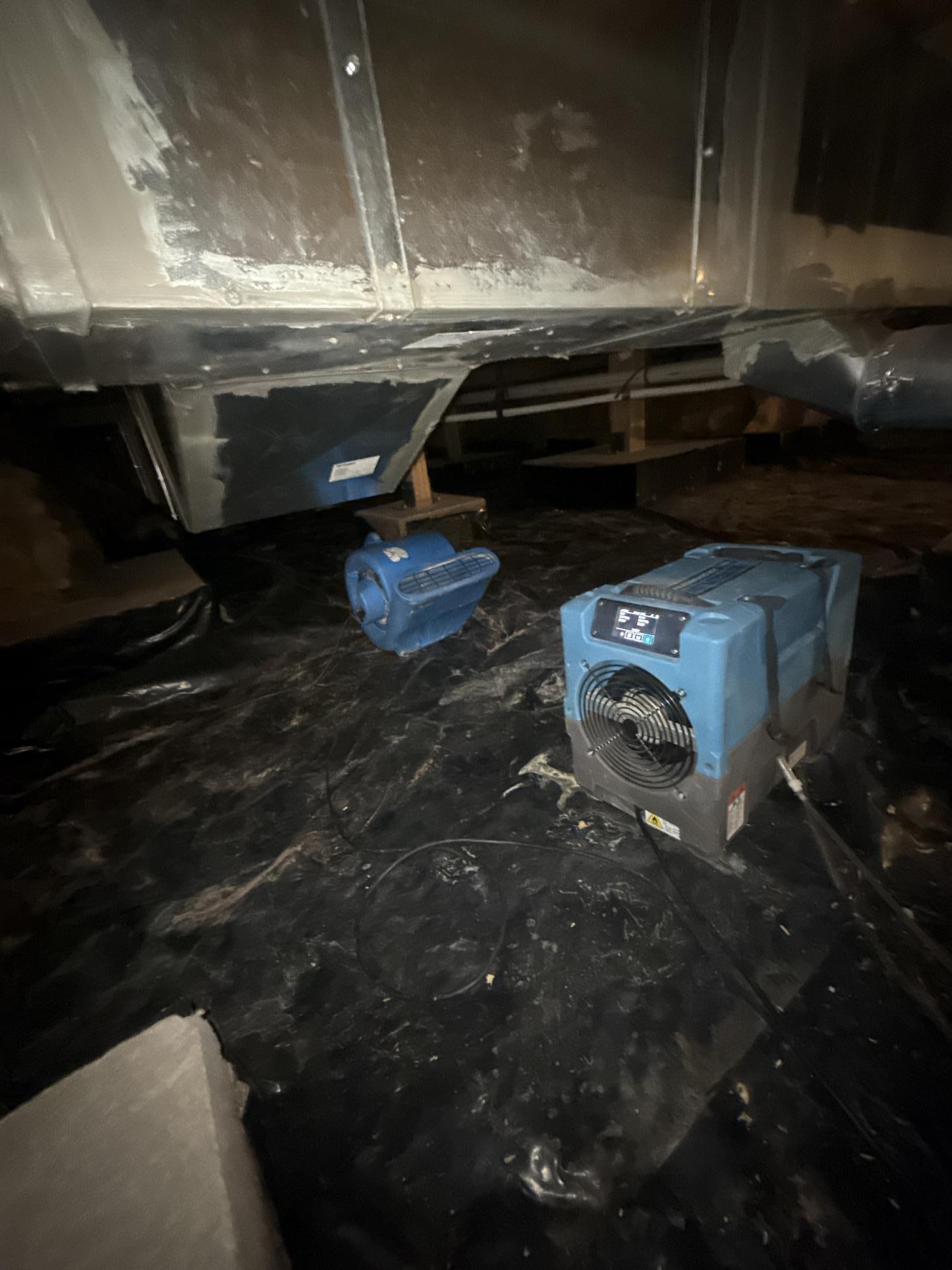
Dehumidifiers and air movers went in next. Air movers create evaporation from wet surfaces while dehumidifiers pull that moisture out of the air. That combination is what IICRC S500 standards call for in structural drying, and it’s the approach we follow on every job.
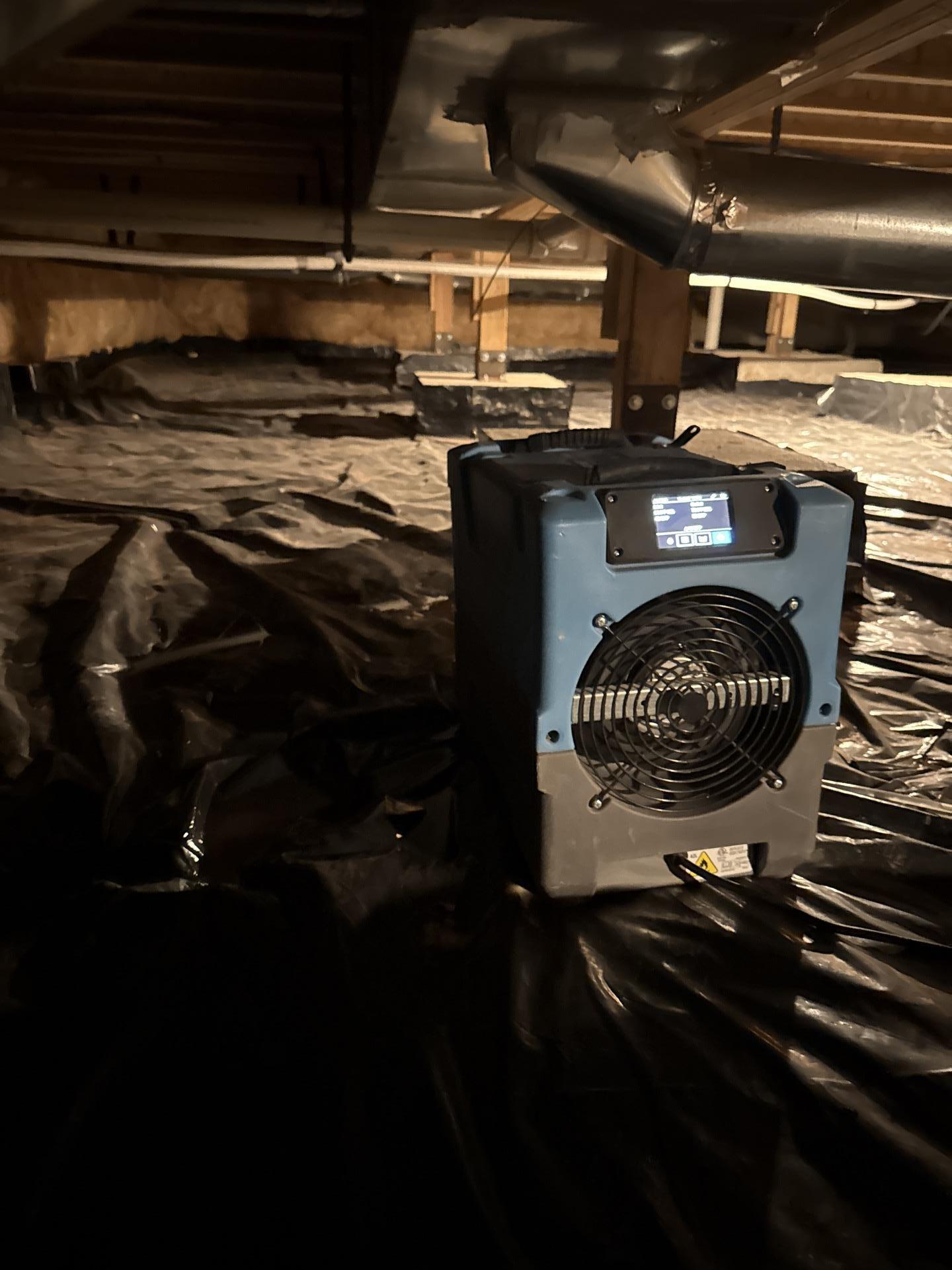
We also pulled additional flooring from under the kitchen cabinet bases and created small cavity openings in the bedroom wall near the refrigerator to duct airflow behind the wall. In the crawlspace, a peroxide-based antimicrobial was applied to the affected framing and subfloor. We scrubbed the growth off mechanically, followed by HEPA vacuuming to capture dislodged spores. That sequence matches the IICRC S520 protocol for cleaning structural materials with microbial contamination. Once the surfaces were clean, drying equipment went into the crawlspace as well.
Here’s what the bedroom mitigation looked like:
 |  |  |
Monitoring Until Everything Was Dry
We rechecked moisture levels across multiple visits, adjusting equipment placement where needed and documenting the trend toward dry readings. That ongoing monitoring is a core requirement under IICRC S500. It’s how you confirm the drying plan is working and catch anything lagging behind a wall or under the floor.
Once all structural materials across the kitchen, bedroom, and crawlspace hit dry standard, equipment came out and mitigation was complete. The EPA points out that fast moisture control is the most effective way to prevent mold from becoming a larger problem. Getting there quickly is exactly the goal.
Here’s the crawlspace water damage inspection and drying process:
 |  |  |
 |  |
A Quick Note on Refrigerator Line Leaks
If your refrigerator has a water or ice line, it’s worth pulling the unit out and checking behind and beneath it once in a while. Supply line leaks are slow enough that they rarely trigger an immediate alarm, but they can do a lot of damage before anyone catches them. Checking for soft flooring, discoloration, or moisture on the wall behind the unit takes five minutes and could save you from a job like this one.
Dealing With Something Similar in Glenwood Springs?
RemediH2O serves Glenwood Springs and the surrounding Western Slope communities with 24/7 emergency water damage response and crawlspace mold remediation. We work directly with your insurance company and follow IICRC standards on every job. For more reading, check out our posts on signs of water damage behind walls and how black mold forms after water damage, or read through another Glenwood Springs water damage recovery story.
Water Damage in Glenwood Springs? We’re Available 24/7.
From refrigerator line leaks to full crawlspace remediation, RemediH2O handles it all. IICRC-certified, locally owned, and insurance-friendly.