Frozen pipes cause some of the worst winter flooding we see across Colorado’s Western Slope. The good news? A little prep now can save you from a soaked ceiling in January. Our IICRC certified team at RemediH2O handles water damage restoration across Silt and Aspen, and most of the burst pipe calls we get were completely preventable.
Water expands as it freezes. Trapped inside a pipe, that pressure has nowhere to go, so eventually the pipe splits. Below is how to protect your home before the first cold snap, plus exactly what to do if a pipe freezes anyway.
Why frozen pipes are a serious winter risk here
At mountain elevations, pipes freeze faster and burst more often than most homeowners expect. A single crack can leak hundreds of gallons in a day. That water soaks drywall, flooring, and insulation long before you notice a stain on the ceiling.
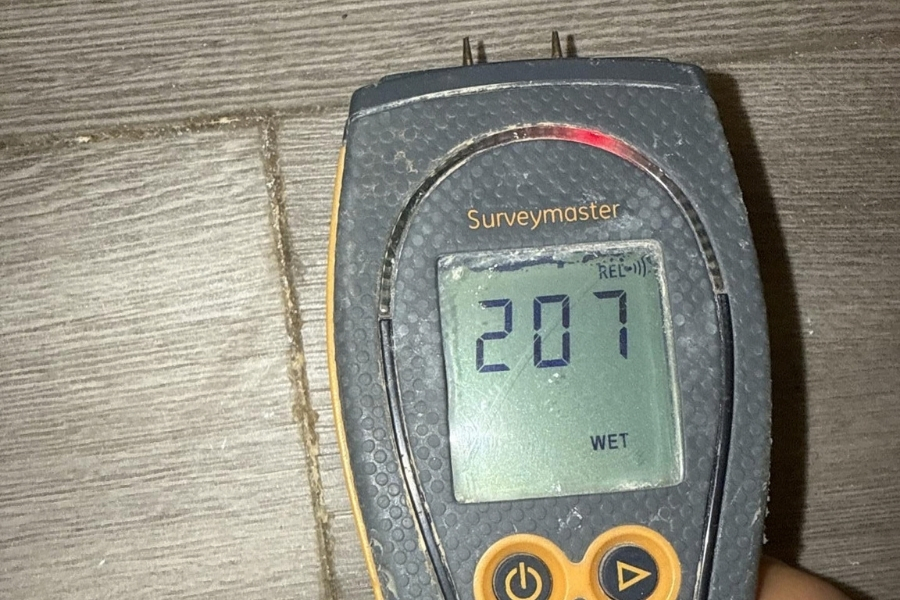
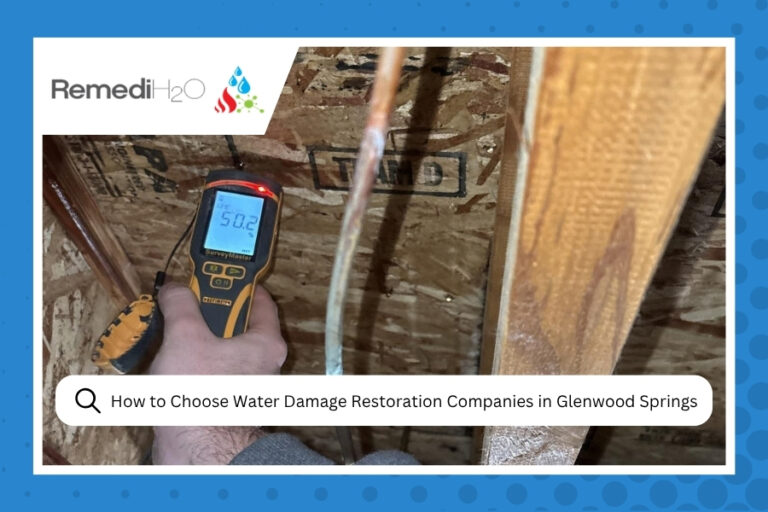
A moisture meter reveals water hiding under floors long before a stain shows on the surface.
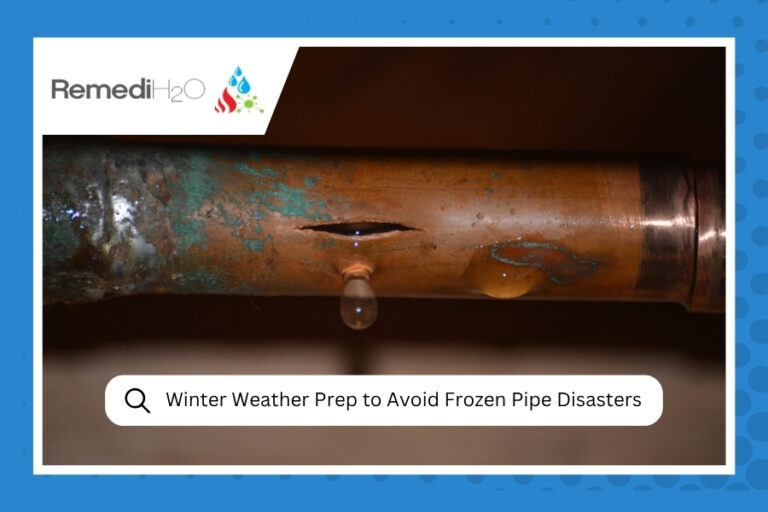
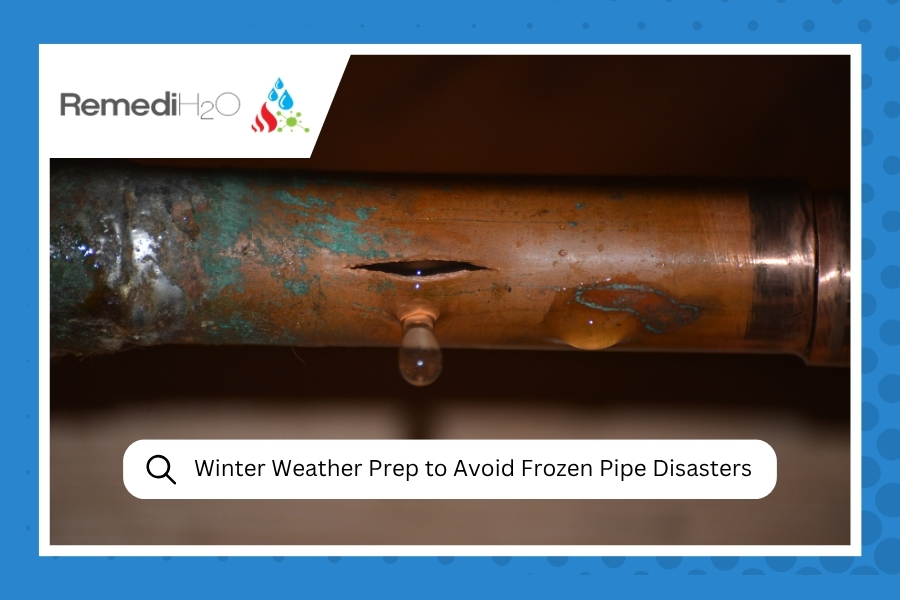
Here’s the part people miss. A pipe rarely bursts at the frozen spot itself. The ice forms a plug, then pressure builds between that plug and a closed faucet downstream. When the pipe fails, it fails where the pressure is highest, sometimes feet away from the ice.
Our valley makes this worse in a few ways. Overnight lows swing hard. Wind pulls heat out of exterior walls. And plenty of homes here sit empty for weeks while owners are away, with the heat turned down and no one to catch a small drip before it becomes a flood.
Pipe already leaking or burst? Don’t wait for the water to spread.
How to winterize your pipes before the first hard freeze
Winterizing means sealing off cold air, adding insulation, and keeping water moving on the coldest nights. Do it before temperatures drop into the low 20s, not after. Most of these steps take an afternoon and cost very little compared to a flooded floor.
Your pre winter pipe checklist
- Insulate exposed pipes. Foam pipe sleeves on lines in crawl spaces, basements, garages, and along exterior walls make a real difference.
- Seal the drafts. Caulk gaps where pipes pass through walls, and close crawl space vents where you safely can.
- Disconnect garden hoses. Drain outdoor spigots and shut off their interior valves. A hose left on traps water in the faucet.
- Know your main shutoff. Learn where your main water shutoff is and test that it turns easily.
- Keep the heat steady. Set the thermostat no lower than 55 degrees, even when you travel.
- Open cabinet doors. Let warm air reach the pipes under kitchen and bathroom sinks on bitter nights.
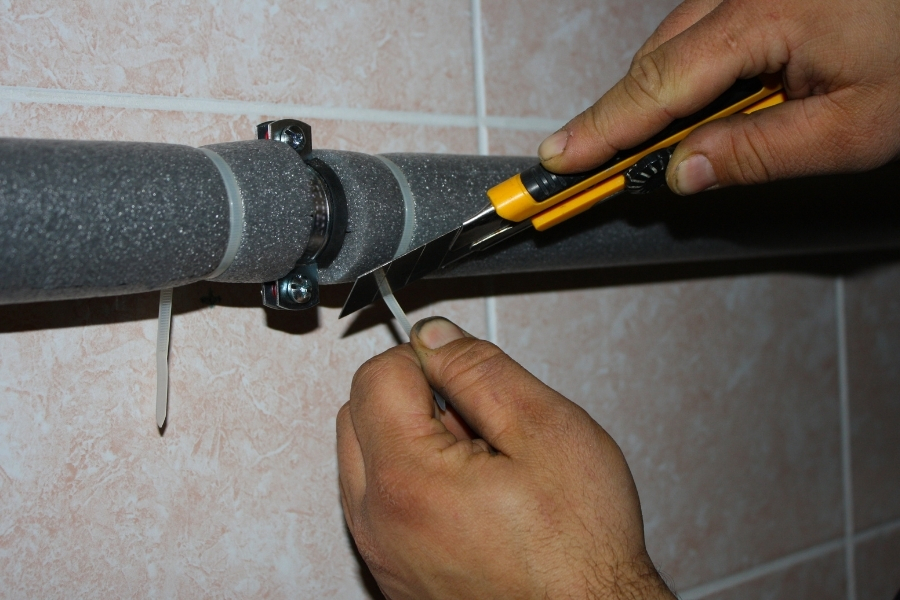
Foam pipe sleeves on exposed lines are a cheap fix that prevents an expensive flood.
Heading out of town for a while? For a deeper walkthrough, our guide on how to prepare your mountain home for winter covers vacant property prep in detail. The American Red Cross also shares solid tips for preventing frozen pipes worth a read.
Where pipes freeze first in a mountain home
Pipes freeze in the coldest, least protected parts of the house first. Knowing your weak spots tells you where to focus insulation and attention. The table below maps the usual suspects.
| Spot in the home | Why it freezes | Quick fix |
|---|---|---|
| Crawl spaces and under floors | Cold air pools and vents stay open | Sleeve the pipes, close vents |
| Exterior walls | Thin insulation, wind exposure | Open cabinets, drip the faucet |
| Attics and unheated garages | No heat source nearby | Add insulation, keep doors shut |
| Outdoor spigots and sprinklers | Direct contact with freezing air | Drain and shut off before winter |
| Vacant vacation homes | Heat off, no one watching | Hold 55 degrees or drain the system |
What to do if a pipe freezes but hasn’t burst
If a faucet trickles or stops on a cold morning, you likely have a frozen pipe that hasn’t split yet. Act quickly and gently. A slow, careful thaw can save the pipe, while heat applied the wrong way can crack it.
- Open the faucet. Leave it on so water can flow once the ice melts. Moving water speeds up thawing.
- Find the frozen section. Feel along exposed pipe for the coldest spot, often near an outside wall.
- Add gentle heat. Use a hair dryer, a heating pad, or towels soaked in warm water. Start near the faucet and work back.
- Never use an open flame. Blowtorches and propane heaters crack pipes and start fires. Skip them.
- Call a pro if it won’t thaw. If you can’t reach the pipe or nothing works, stop and get help before it bursts.
What if a frozen pipe already burst
Shut off your main water valve first, then kill power to any flooded area at the breaker. Standing water and electricity are a dangerous mix. After that, the clock starts, because wet materials fuel mold fast.
The EPA notes that mold can begin growing on damp surfaces within 24 to 48 hours. That’s why quick extraction and drying matter so much. Left alone, a burst pipe becomes both a water problem and a mold remediation problem within days.
This is where our crew comes in. We handle rapid flood damage restoration around the clock, pulling water out, drying the structure, and checking behind walls where moisture hides. Not sure what to look for? Our post on the signs of water damage behind walls walks you through it.
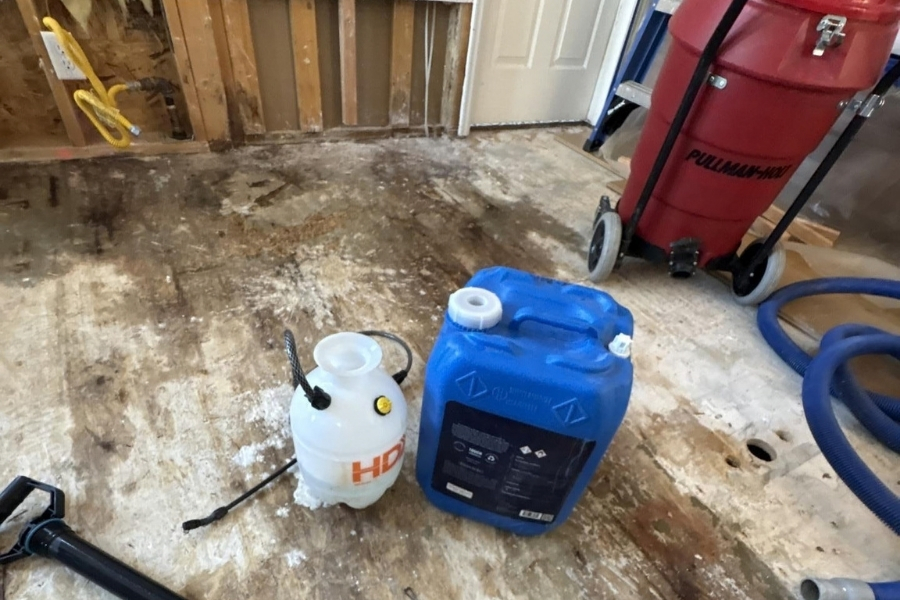
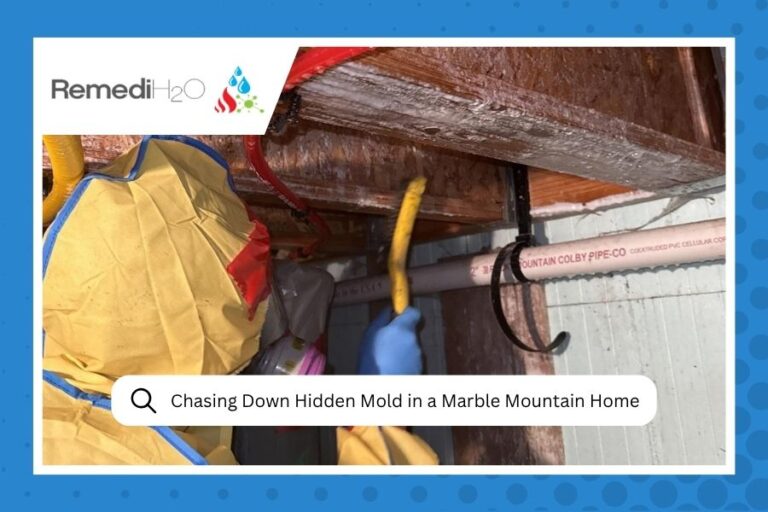
Sometimes drying means opening up walls and floors to reach the moisture trapped behind them.
We serve homeowners throughout the Roaring Fork Valley, from our home base in Silt out to Aspen, Glenwood Springs, Carbondale, Vail, and Snowmass. If a pipe lets go this winter, call us at (970) 715-6990 and we’ll respond fast, work with your insurance, and get your home back to normal.
Frequently asked questions
Does homeowners insurance cover frozen pipe damage in Colorado?
Most policies cover sudden, accidental pipe bursts when the home was heated and maintained. Damage traced to a home left unheated or neglected is often denied. Check your specific policy, since coverage varies by insurer.
At what temperature do pipes start to freeze?
Pipes are at real risk once outdoor temperatures hit about 20 degrees or lower. Wind and thin insulation drop that number fast. Exposed pipes can freeze on a night that feels mild.
Should I let my faucets drip during a hard freeze?
Yes. A slow trickle from faucets on exterior walls relieves the pressure that actually bursts pipes. It also keeps water moving, which makes freezing much less likely on the coldest nights.
How long can I leave my mountain home without heat in winter?
Not long at all in our climate. For short trips, hold the thermostat at 55 degrees or higher. For longer absences, have the water system drained so there’s nothing left inside the pipes to freeze.