A burst pipe or flooded basement never picks a good moment. When water starts spreading through your home, the crew you call first shapes how much you save and how much you spend. Solid water damage restoration keeps small problems small.
Our IICRC-certified team at RemediH2O serves Glenwood Springs and the wider Western Slope, and we have seen what separates a careful crew from a rushed one. Here is how to spot the difference before you sign anything.
Why the Right Company Matters in Glenwood Springs
The right company matters because water damage gets worse fast. In our mountain climate, snowmelt, ice dams, and frozen pipes cause much of the flooding we see each winter. A slow response lets moisture soak into drywall, subfloors, and framing. Mold can follow within a day or two.
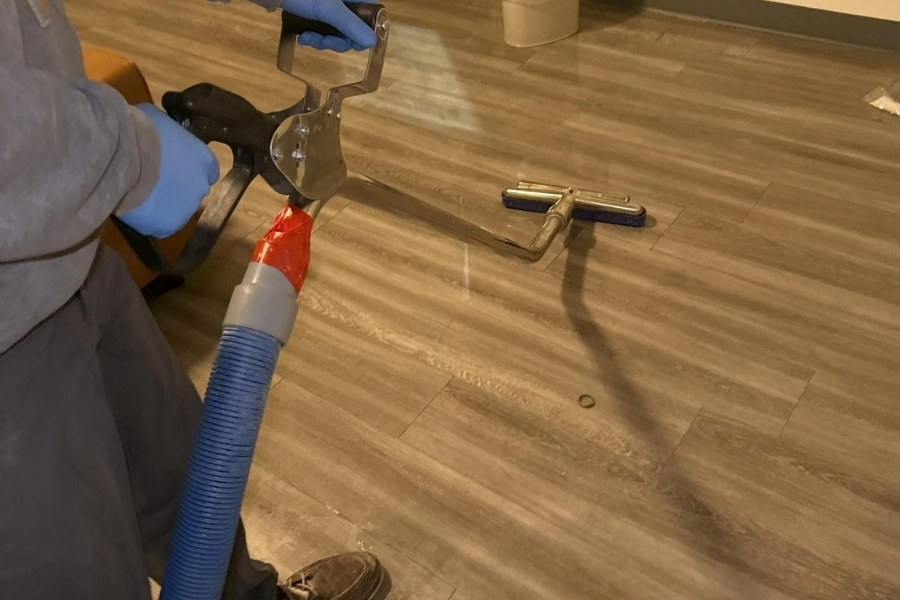
Our crew extracts standing water from a home’s flooring before the drying stage begins.
Glenwood Springs homes often have basements and crawl spaces where water likes to hide. A crew that knows the area works faster because they know where to look. That local read can be the difference between drying a room and rebuilding it. If a leak just started, our steps on how to stop water damage can limit the mess while help is on the way.
Cost is the other reason speed matters. The sooner a crew dries your home, the fewer materials they tear out and replace. Wait a week, and a simple dry-out can turn into new flooring, drywall, and a much bigger bill.
6 Signs of a Good Water Damage Restoration Company
A good restoration company shows four things clearly: proper certification, fast response, honest pricing, and real local experience. The signs below help you judge a crew before the trucks even arrive. Use them as a quick guide while you call around.
1. IICRC Certification
Certification is the first box to check. The IICRC sets the national standards for how water damage should be handled, from drying targets to sanitizing steps. A certified company follows a proven process instead of guessing. Ask for it, and move on from anyone who cannot answer.
2. Fast, Around-the-Clock Response
Water damage is a race against the clock. Mold can start growing in 24 to 48 hours, so a company that answers in the middle of the night beats one with a prettier website. We run emergency flood cleanup around the clock for that reason. Ask how quickly a crew can reach your door.
3. Real Local Knowledge
Local crews respond faster and understand mountain homes. A company based near Glenwood Springs knows the freeze cycles, the older plumbing, and the drive times across the valley. That saves time when every hour counts.
Check reviews from nearby towns like Carbondale, New Castle, and Rifle. Ask how many jobs they have handled here this year.
4. Insurance Claim Support
Handling a claim alone is stressful. Strong companies document the damage, talk directly with your adjuster, and use standard estimating software so the numbers hold up. Our guide on what water damage restoration is and whether insurance covers it in Colorado breaks the coverage question down. Ask whether a company bills your insurer or expects payment up front.
5. The Right Equipment and Process
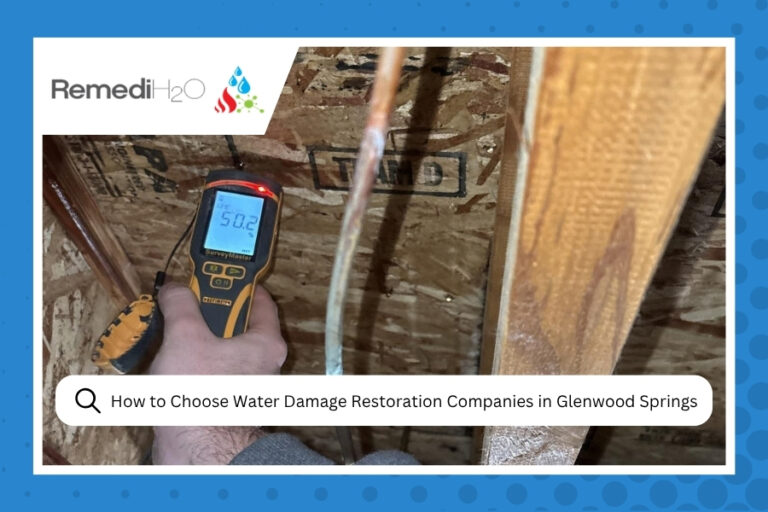
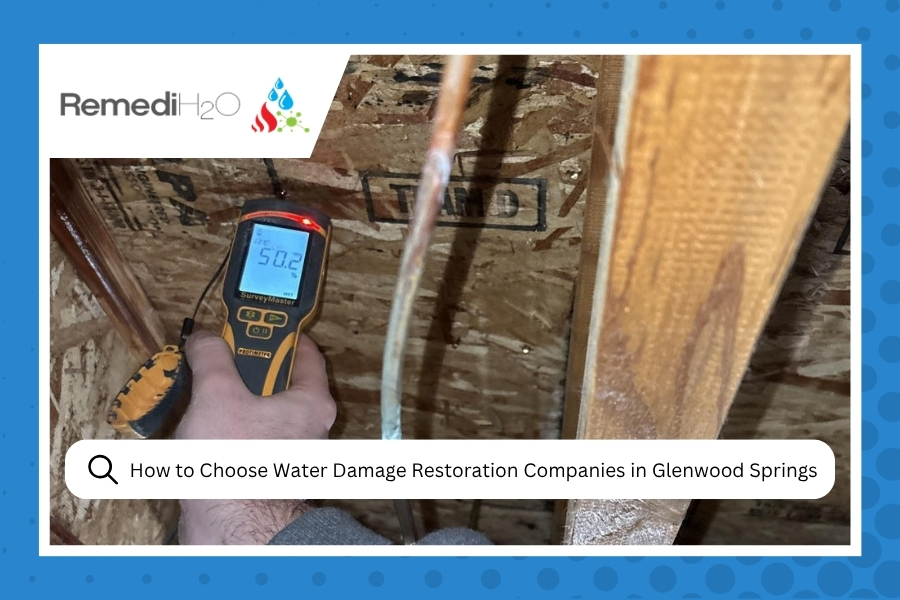
A box fan will not dry a soaked subfloor. Real restoration uses moisture meters, commercial air movers, and dehumidifiers that pull water from framing you cannot see. A moisture meter is a small tool that reads how wet a material is, even behind a wall.
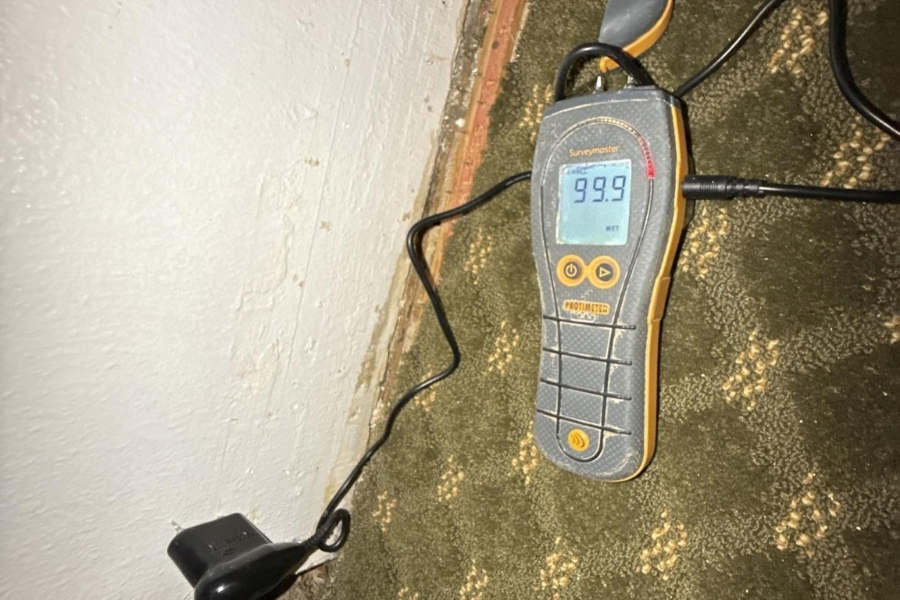
A high reading on lower walls shows water hiding where you cannot see it.
Good crews take readings every day until those numbers hit a safe target. Ask how a company confirms your home is dry. A clear answer means a real process, not a shop vac and hope.
6. They Handle Mold Too
Water and mold travel together. A company that also offers mold remediation can catch and treat growth during the same visit instead of sending you elsewhere. That saves you a second headache later. Ask if mold is part of their normal scope.
Do not wait for it to spread. Our team answers 24/7 across Glenwood Springs and the Western Slope.
Quick Hiring Checklist
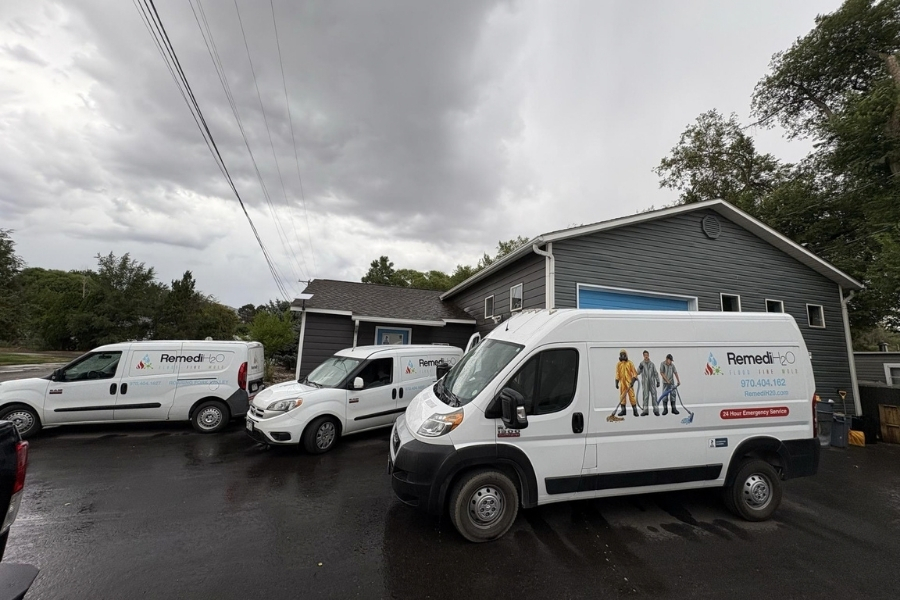
Our trucks on site at a Western Slope home, ready to dry it out and clean up.
Keep this side by side while you compare companies. Green light means keep going. Walk away means keep looking.
| Green Light | Walk Away |
|---|---|
| IICRC certified | No proof of training |
| Answers 24/7 | Office hours only |
| Local references | No nearby reviews |
| Bills your insurance | Cash up front |
| Measures dryness | Vague on process |
Read how our crew handled a Glenwood Springs home’s water damage recovery from first call to final walkthrough.
Red Flags to Avoid
Some warning signs should stop you cold. Watch for these before you hand over your home.
- No proof of certification or insurance
- Pressure to sign a contract on the spot
- A quote with no written scope or details
- No local address or phone number
- Full payment demanded before any work starts
Questions to Ask Before You Hire
A few direct questions reveal a lot. Ask these when you call around.
- Are you IICRC certified in water restoration?
- How fast can you get to my home?
- Do you work directly with my insurance company?
- How do you confirm the house is fully dry?
- Do you handle mold if you find it?
You can also learn more about our restoration services in Glenwood Springs and the towns nearby.
Frequently Asked Questions
How fast should a water damage company respond in Glenwood Springs?
Aim for a crew that can reach your home within a few hours, day or night. Water spreads fast, and mold can begin in 24 to 48 hours. A company with local trucks and 24/7 dispatch will almost always beat one based hours away.
Does homeowners insurance cover water damage in Colorado?
Most policies cover sudden, accidental water damage, like a burst pipe. Slow leaks and skipped maintenance are often left out. A good restoration company documents the damage and works with your adjuster to support the claim.
How do I know if a restoration company is qualified?
Check for IICRC certification, proof of insurance, and reviews from nearby towns. The EPA guide on mold and moisture explains why proper drying matters so much. Certified crews follow set standards instead of guessing.
Should I clean up water damage myself?
Small, clean spills on tile or vinyl can be a do-it-yourself job. Anything touching carpet, drywall, or sitting more than a day needs professional drying. Hidden moisture causes most of the long-term damage.
Water damage only gets pricier the longer it sits. If you are comparing water damage restoration companies in Glenwood Springs, use this guide to ask sharper questions and pick a crew you trust. Our team at RemediH2O stays ready 24/7 across the Western Slope and Roaring Fork Valley, from Aspen to Grand Junction. Reach out the moment you spot trouble.