The best way to test for moisture after water damage is to combine what you can see and feel with a moisture meter reading, then confirm hidden pockets with a pro. Our IICRC-certified team at RemediH2O does this daily across Colorado’s Western Slope, where the water you can see is rarely the whole story. After a leak, a burst pipe, or a slow drip behind a wall, catching trapped moisture early keeps a small problem from turning into a mold problem. That’s the heart of good water damage restoration, and it starts with knowing where the wet spots really are.
Why Testing for Moisture Matters
Moisture testing matters because water hides. It soaks into drywall, subfloor, and insulation, then sits there quietly while the surface looks bone dry. Left alone, that trapped water becomes a breeding ground for mold, warped wood, and stubborn odors.
Here’s the part most homeowners don’t expect. Mold can start growing within 24 to 48 hours of water exposure, according to EPA guidance on moisture and mold. The goal isn’t just to mop up. It’s to prove the materials underneath are dry before you patch, paint, or move the couch back.
A dry-looking baseboard can hide a soaked wall cavity. For a closer look at what hidden damage does, see our guide on the signs of water damage behind walls.
DIY Moisture Testing Methods You Can Try
You can catch a lot of moisture problems yourself with a few simple checks. None of these replace professional gear, but they’re a smart first pass after a spill or leak. Work through them from free to low-cost.
The Free Checks (Look, Touch, Smell)
- Look for stains. Yellow or brown rings on ceilings and walls mean water has passed through.
- Touch the surface. Press drywall and baseboards. Soft, spongy, or cool-to-the-touch spots hold water.
- Trust your nose. A musty, earthy smell usually means moisture is feeding something you can’t see yet.
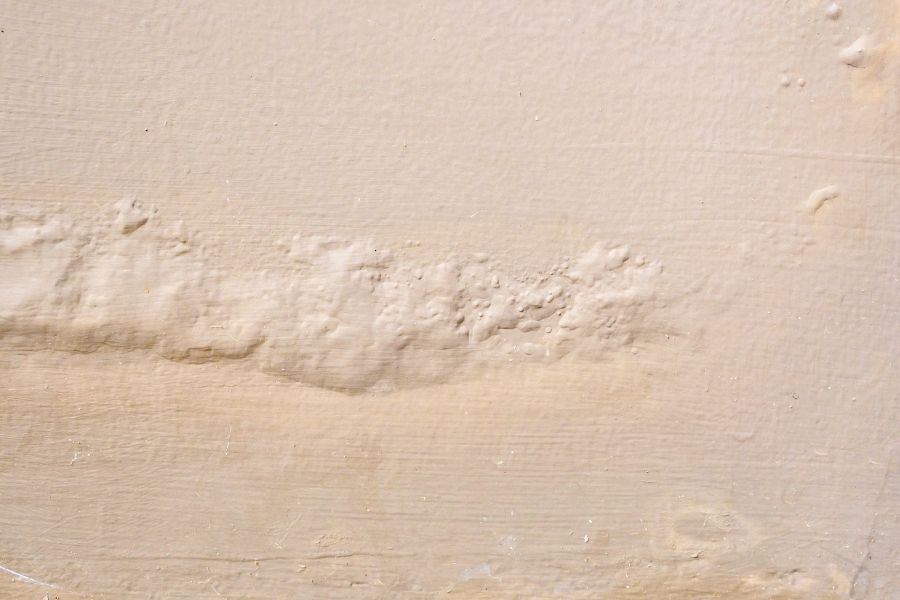
- Check for bubbling. Paint that blisters or wallpaper that peels is a classic trapped-water sign.
The Plastic Sheet Test
Tape a square of clear plastic tightly over a concrete floor or wall you suspect is damp. Leave it 24 hours. If droplets form underneath the plastic, moisture is still rising out of the material. It’s an old trick, and it works.
The Hardware-Store Moisture Meter
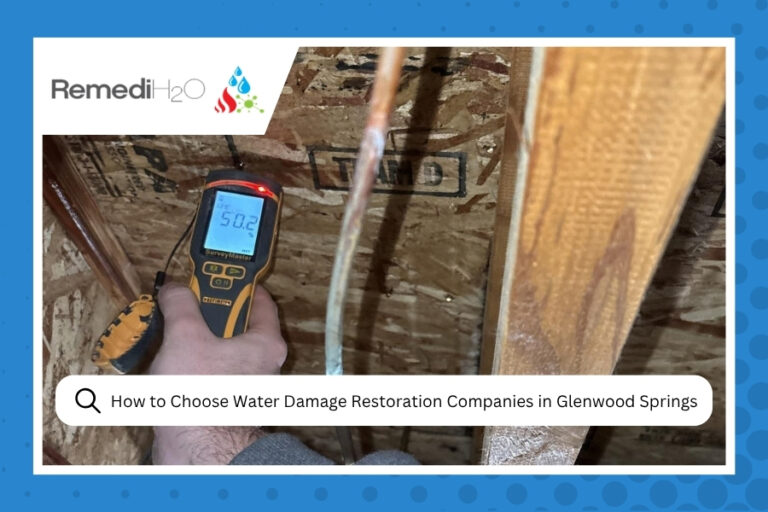
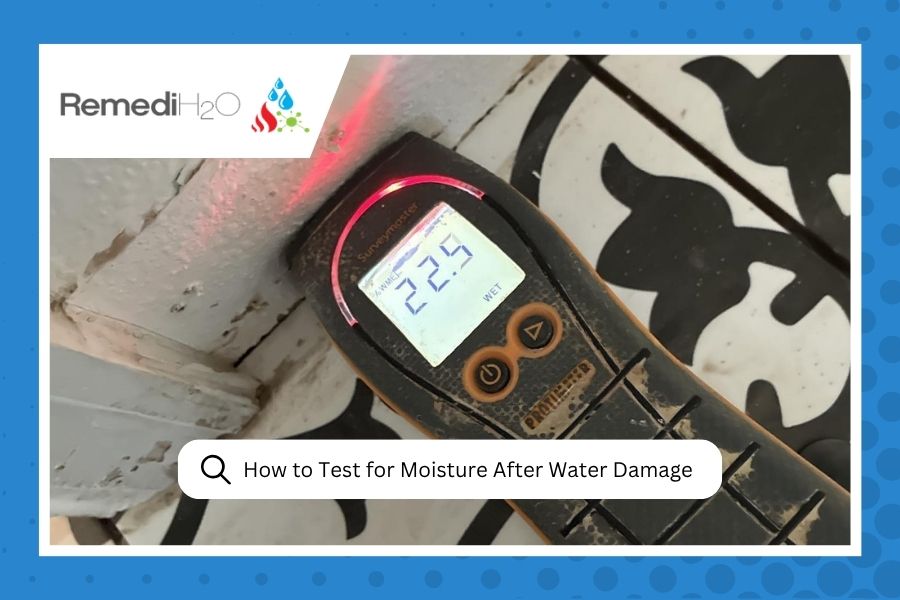
A basic pin-type moisture meter costs less than a nice dinner and gives you a real number instead of a guess. Poke the pins into drywall or wood, and it reads the moisture content as a percentage. It won’t map a whole wall cavity, but it tells you whether a spot is wet or dry, which is often all you need.
Not sure if your walls are actually dry? A wrong guess now can mean mold later. Our certified crew reads moisture the right way, so you’re not repainting over a wet wall.
Professional Moisture Detection Tools
Professional moisture detection uses tools that see through surfaces without tearing anything apart. Where a DIY meter checks one spot, our gear maps moisture across whole rooms and finds water hiding inside walls and under floors. That’s the difference that stops mold before it starts.
The Pro Moisture Toolkit
💧 Pinless Moisture Meters scan behind surfaces without leaving holes, reading moisture through drywall and flooring.
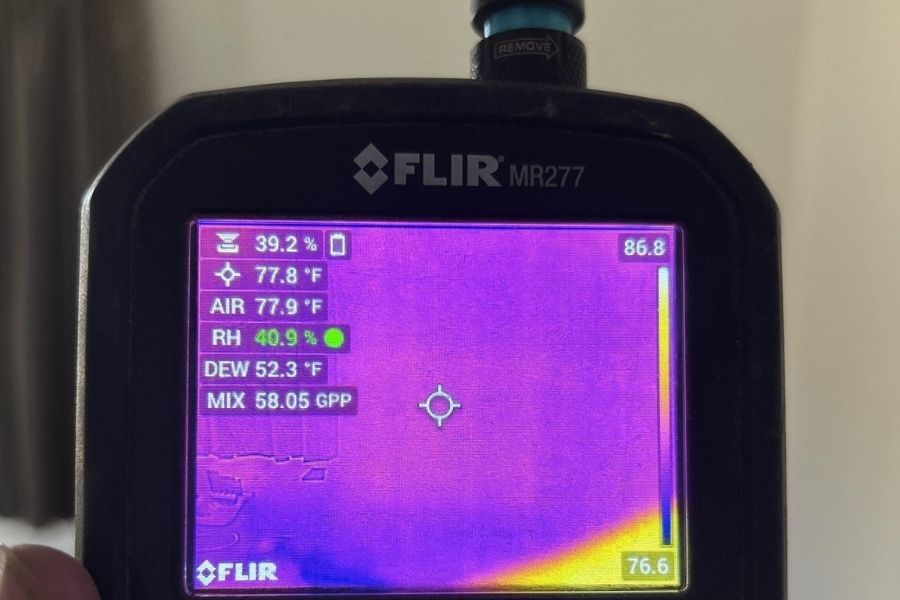
🔥 Thermal Imaging Cameras spot temperature differences, since wet materials read cooler than dry ones.
🌡️ Hygrometers measure humidity in the air to confirm a room is truly drying out.
🔍 Borescopes slip a tiny camera into a wall cavity to inspect without demolition.
Thermal cameras are the crowd favorite, but they need a trained eye. A cool spot might be moisture, or it might be a draft or a pipe. Reading it right is where our certification earns its keep. The same technology guides our mold remediation work, because you can’t remove mold safely until you know how far the moisture spread.
How to Read Your Moisture Numbers
A material is generally dry when its moisture content sits in its normal range. Drywall over 1 percent or wood over 15 percent usually signals a problem. Use the quick reference below to read your meter numbers.
| Material | Normal (Dry) | Likely Wet |
|---|---|---|
| Drywall | Under 1% | Above 1% |
| Wood framing | 6% to 15% | Above 15% |
| Concrete | Under 4% | Above 4% |
One reading alone can fool you. Always compare a suspect spot to a dry area of the same material nearby. If the wet reading is higher than the dry baseline, you’ve found trapped water. If the number won’t drop after a few days of drying, call for help.
When to Call a Professional
Call a professional when moisture reaches porous materials, when water sat for more than 24 hours, or when the source was anything but clean water. DIY checks are great for small, fresh spills. Bigger jobs need equipment and training you can’t buy at the hardware store.
Here in the mountains, freeze-thaw cycles and sudden monsoon storms make hidden moisture especially sneaky. If you’ve dealt with a burst pipe, review our emergency steps to stop water damage first, then let us verify the dry-out. Homeowners across Silt, Glenwood Springs, Rifle, and Aspen count on our fast response, and you can reach our Silt-based restoration team around the clock.
We follow the IICRC S500 standard for every dry-out, which means we don’t call a job finished until the numbers say so. If a soaked wall has already started to smell, it may be more than water. Learn how black mold forms after water damage so you know what you’re up against.
Water Damage Doesn’t Wait, and Neither Do We
Available 24/7 across Colorado’s Western Slope and Roaring Fork Valley. Locally owned, insurance-friendly, and certified to get your home dry the first time.
Frequently Asked Questions
How soon after a leak should I test for moisture?
Test as soon as the visible water is cleaned up, ideally within the first few hours. Mold can take hold in 24 to 48 hours, so the sooner you confirm materials are drying, the better your odds of avoiding a bigger repair.
Can I trust a cheap moisture meter from the hardware store?
Yes, for a basic wet-or-dry answer on a single spot. A budget pin meter tells you whether one area holds water. It won’t map a wall cavity or catch moisture behind tile, which is where professional pinless and thermal tools come in.
What moisture reading means my walls are finally dry?
Drywall is generally dry under 1 percent and wood framing under 15 percent. The most reliable test is comparison: your repaired area should match a known dry section of the same material before you consider the job done.
Do I really need a pro if my meter says it’s dry?
Sometimes. Surface readings can miss water trapped deeper inside walls or under floors. If the leak was large, sat overnight, or involved dirty water, a professional scan confirms the hidden areas are dry too.