A Kitchen Floor That Would Not Stop Lifting
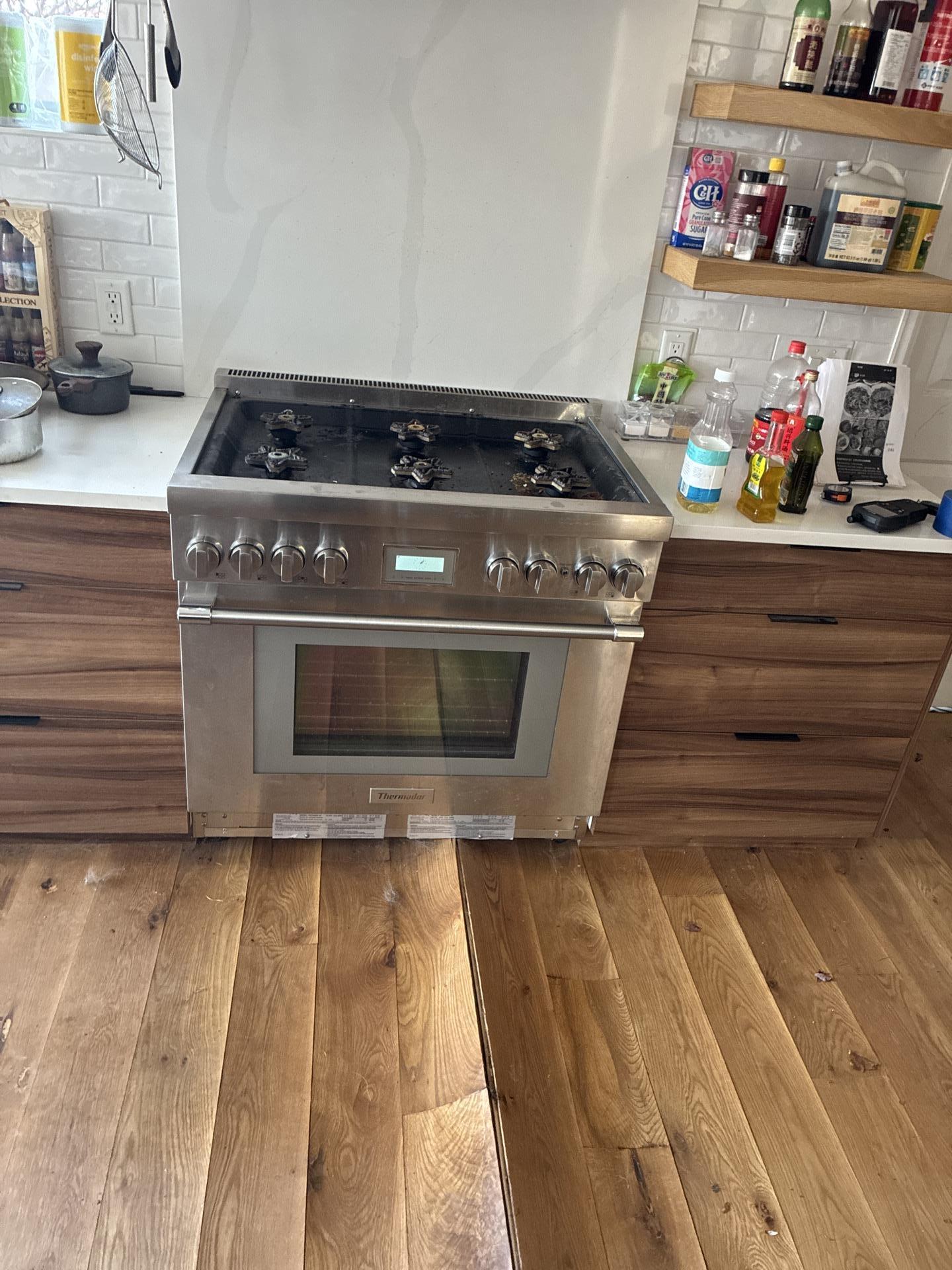
When a Grand Junction homeowner noticed his kitchen floor starting to buckle, he figured a board had warped. He had no idea the water behind it was coming from a pipe nobody knew was still connected. That is the kind of call our team at RemediH2O gets more often than you would think, and it is exactly why fast emergency water damage restoration matters. By the time we arrived, water had reached the crawlspace and the hardwood was lifting off the subfloor.
The Call: Standing Water and a Mystery Leak
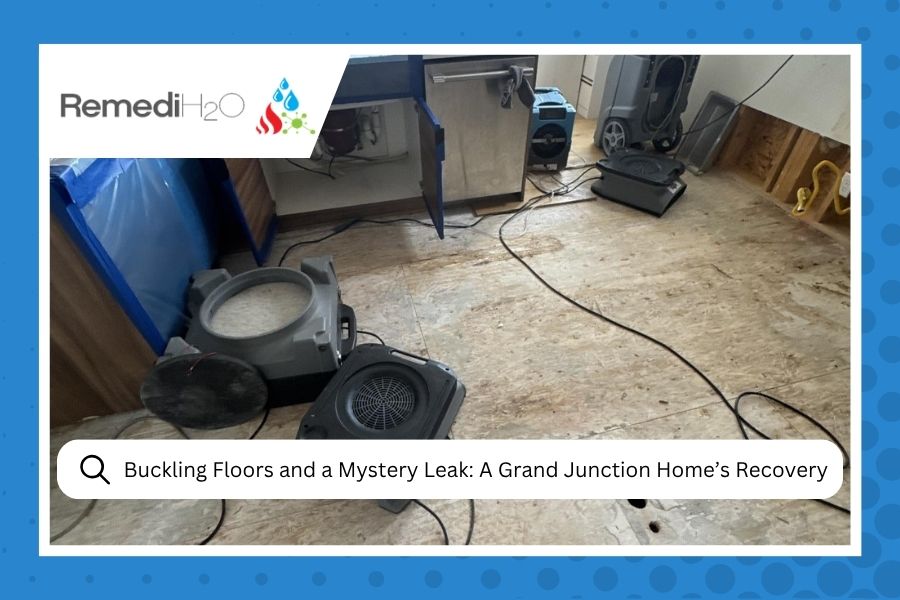
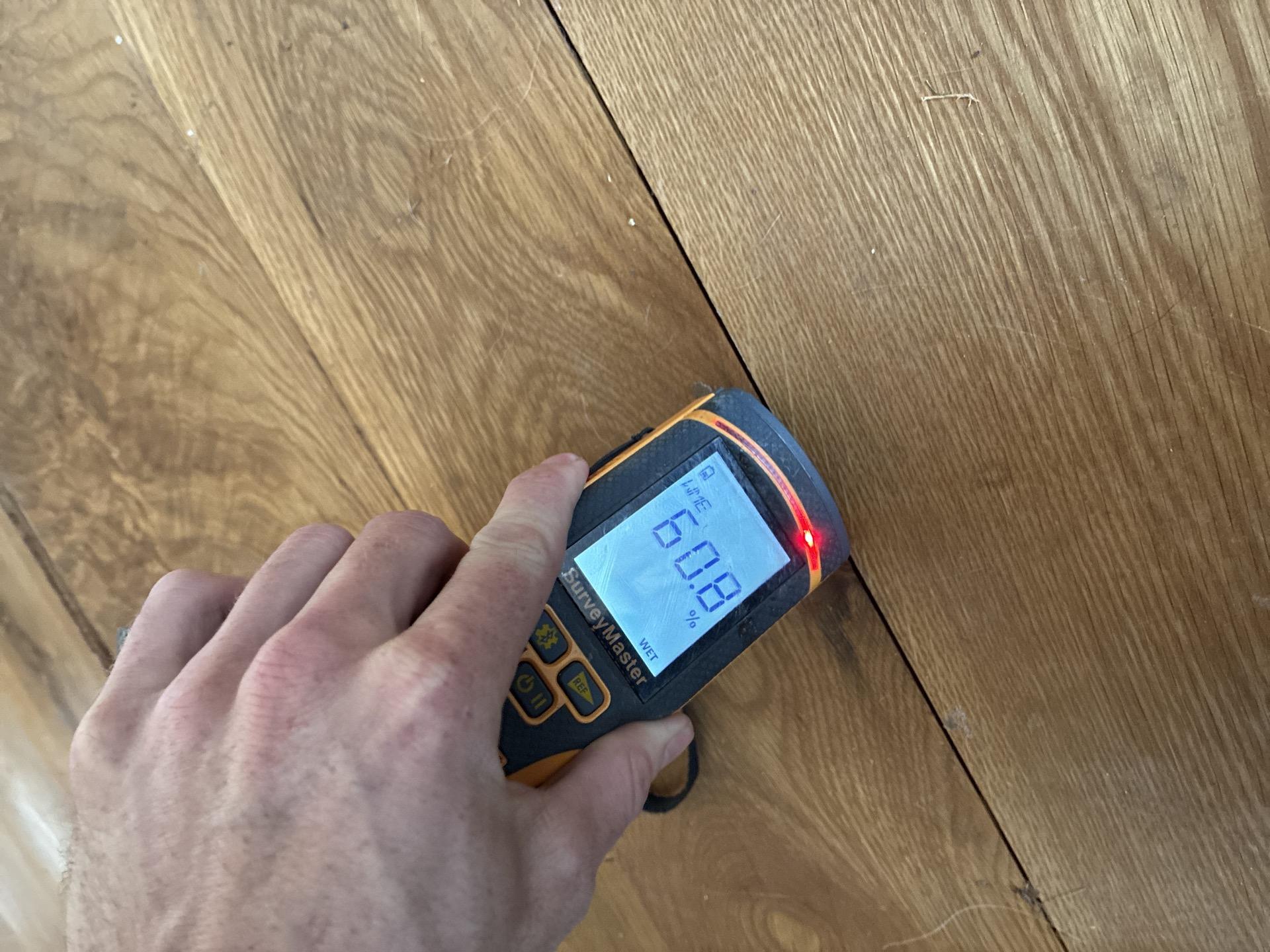
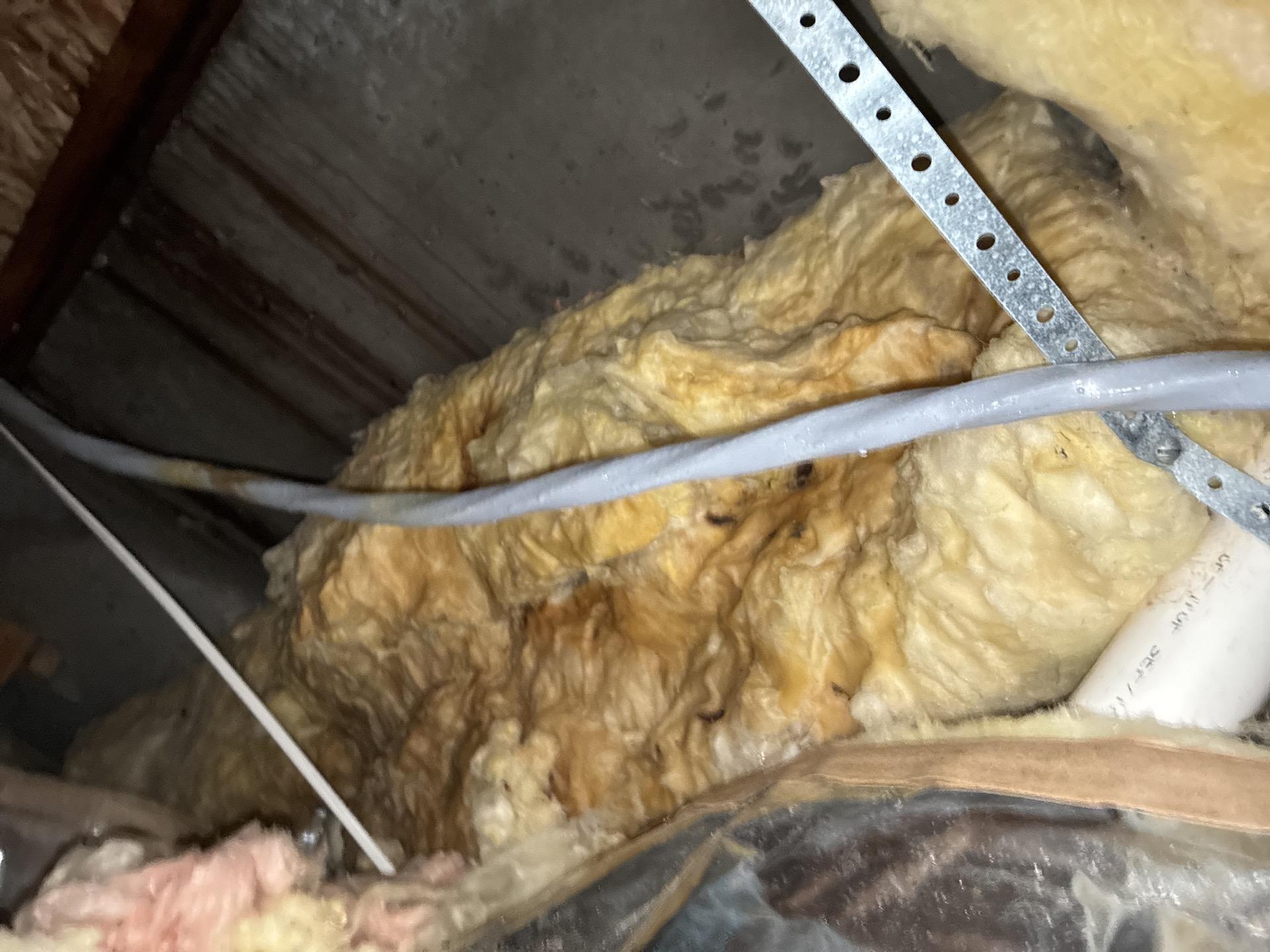
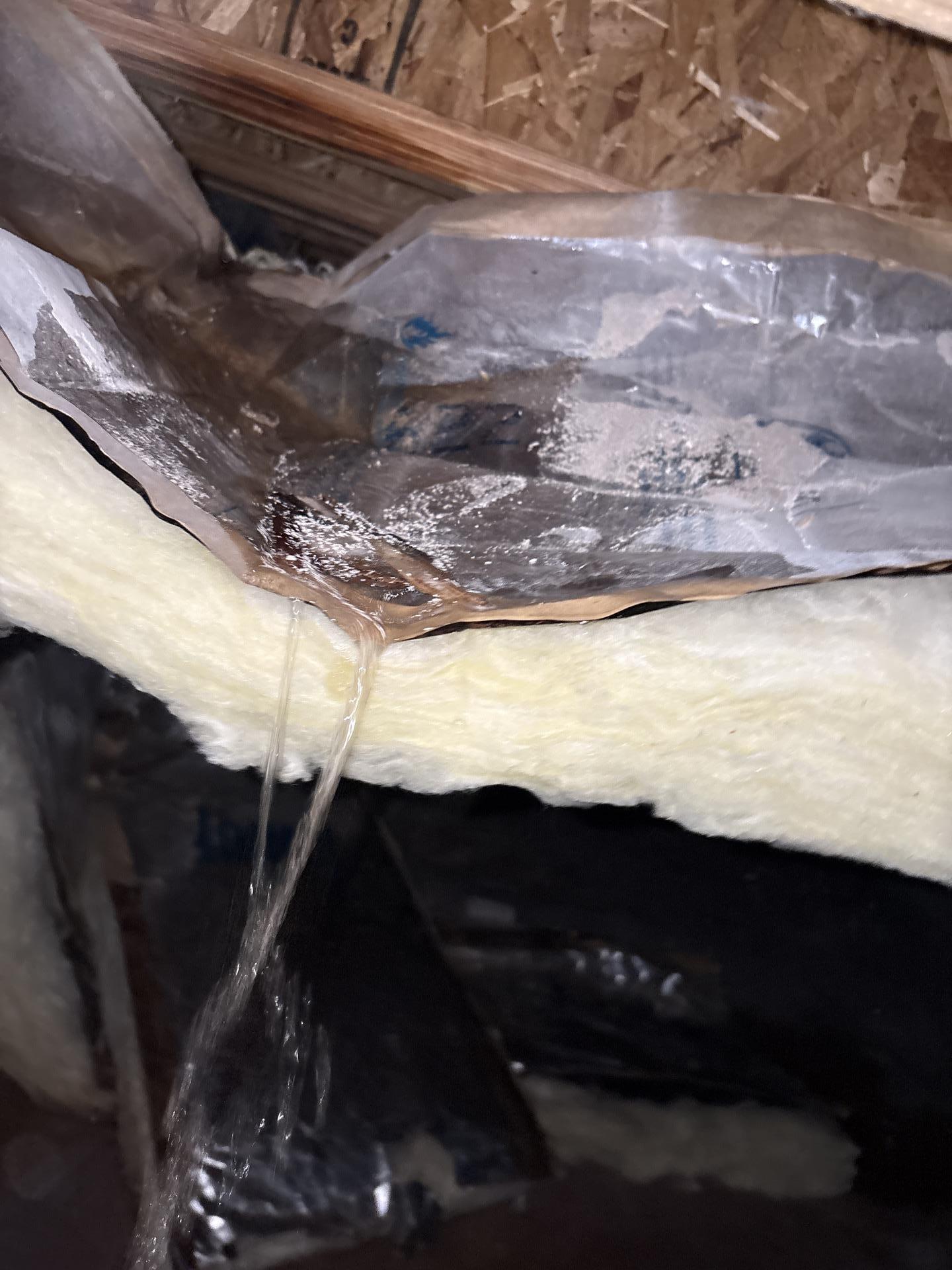
The homeowner called in with a leak he could not locate. The kitchen floor was buckling, the crawlspace had standing water, and the insulation underneath was soaked. He had not been down there himself, so nobody knew how bad it really was. Tough spot to be in: you can see the damage, but the source is hidden where you cannot reach it.
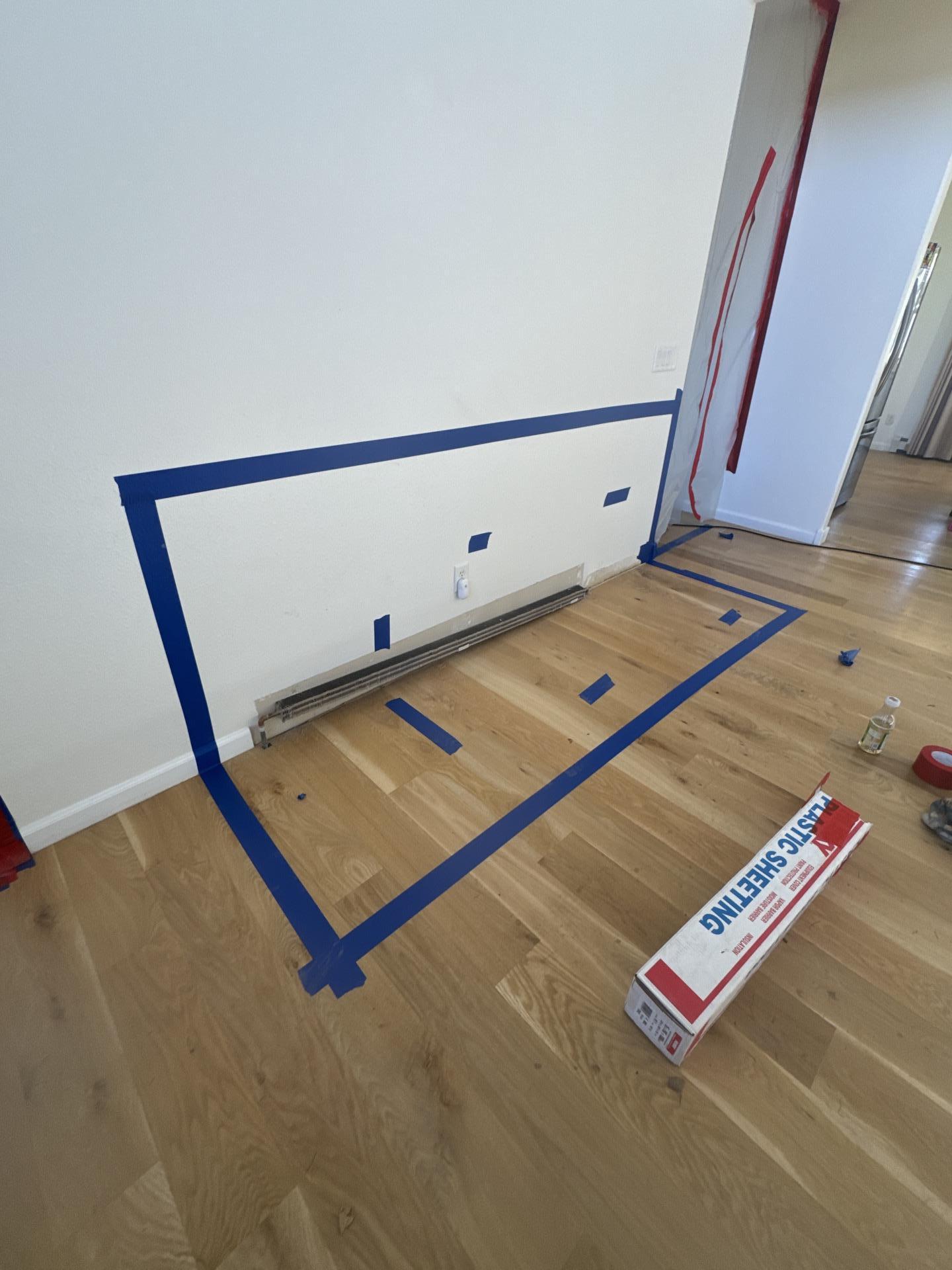
First look at the buckled floor and the soaked crawlspace below.
 |  |  | |||
 |  | ||||
Finding the Real Culprit
After tracing the moisture back to its origin, we found the source beneath the oven: an old refrigerator supply line that had been abandoned but never capped. Somehow it had been turned on, and the water had nowhere to go but into the floor. Of course the one line everyone forgot about is the one that lets loose.
Why Category 1 Water Still Caused This Much Damage
Supply line water starts out clean, which makes it a Category 1 loss under IICRC S500 water damage standards. But clean water that sits long enough still wrecks materials. This one had soaked deep into the subfloor and structural components, pushing it to a Class 4 loss, the category for bound water that clings to dense materials and takes serious drying to release.
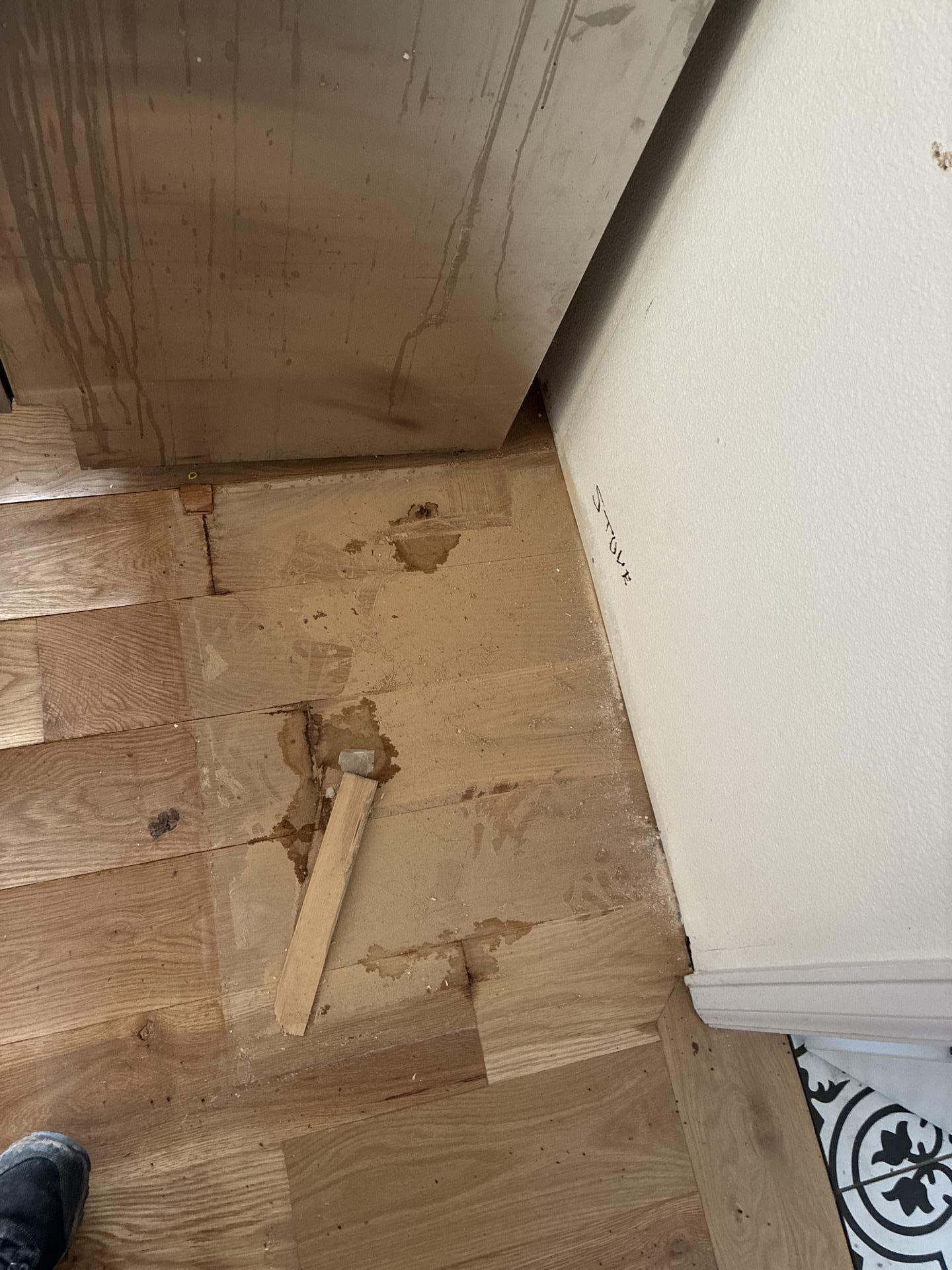
The flooring had swelled so much it displaced the range and crept under the refrigerator. When we opened up the assembly, we found suspect microbial growth underneath. Trapped moisture plus time is all mold needs, which is why the EPA recommends drying wet materials quickly.
Containment, Testing, and Careful Demolition
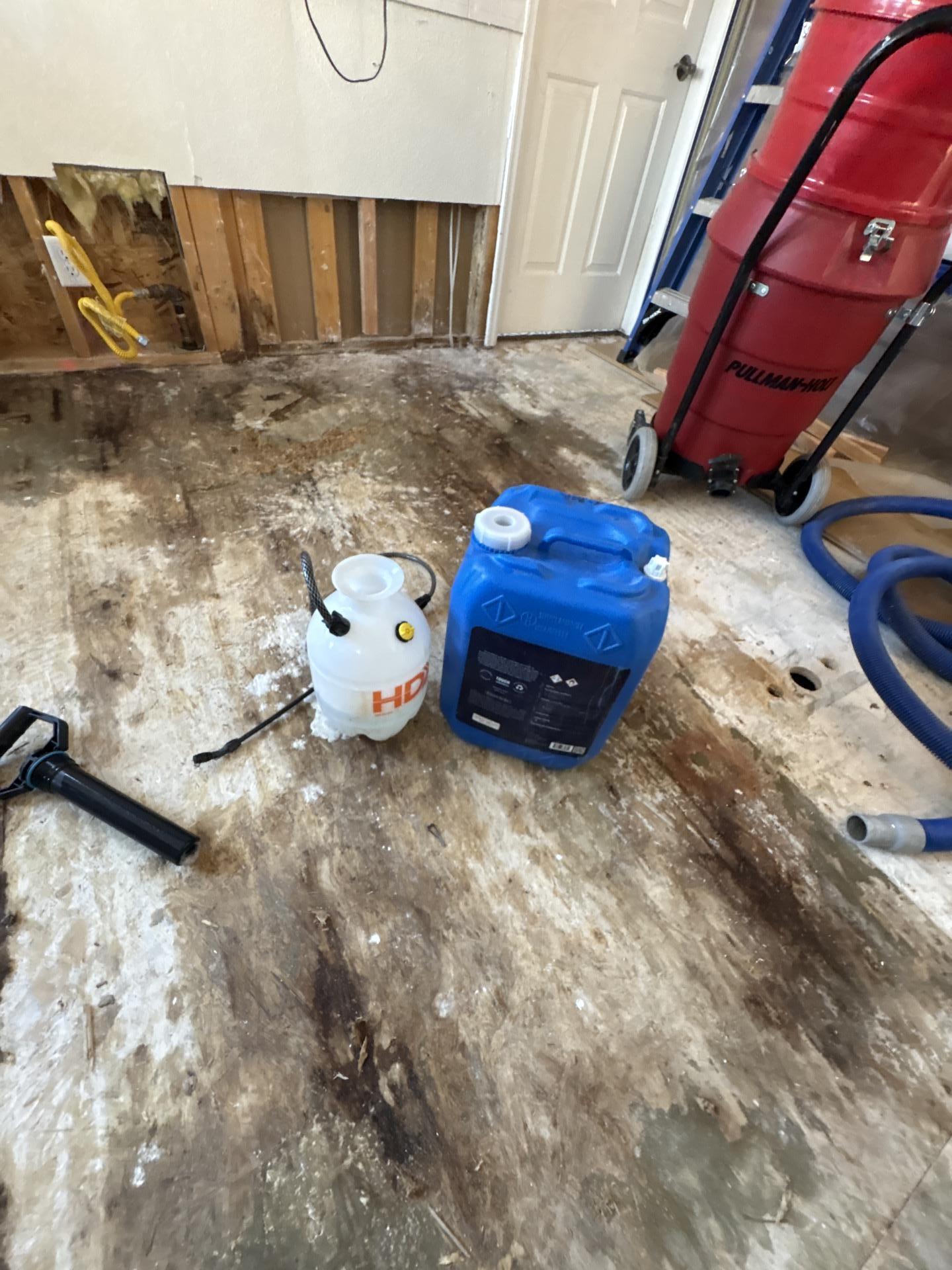
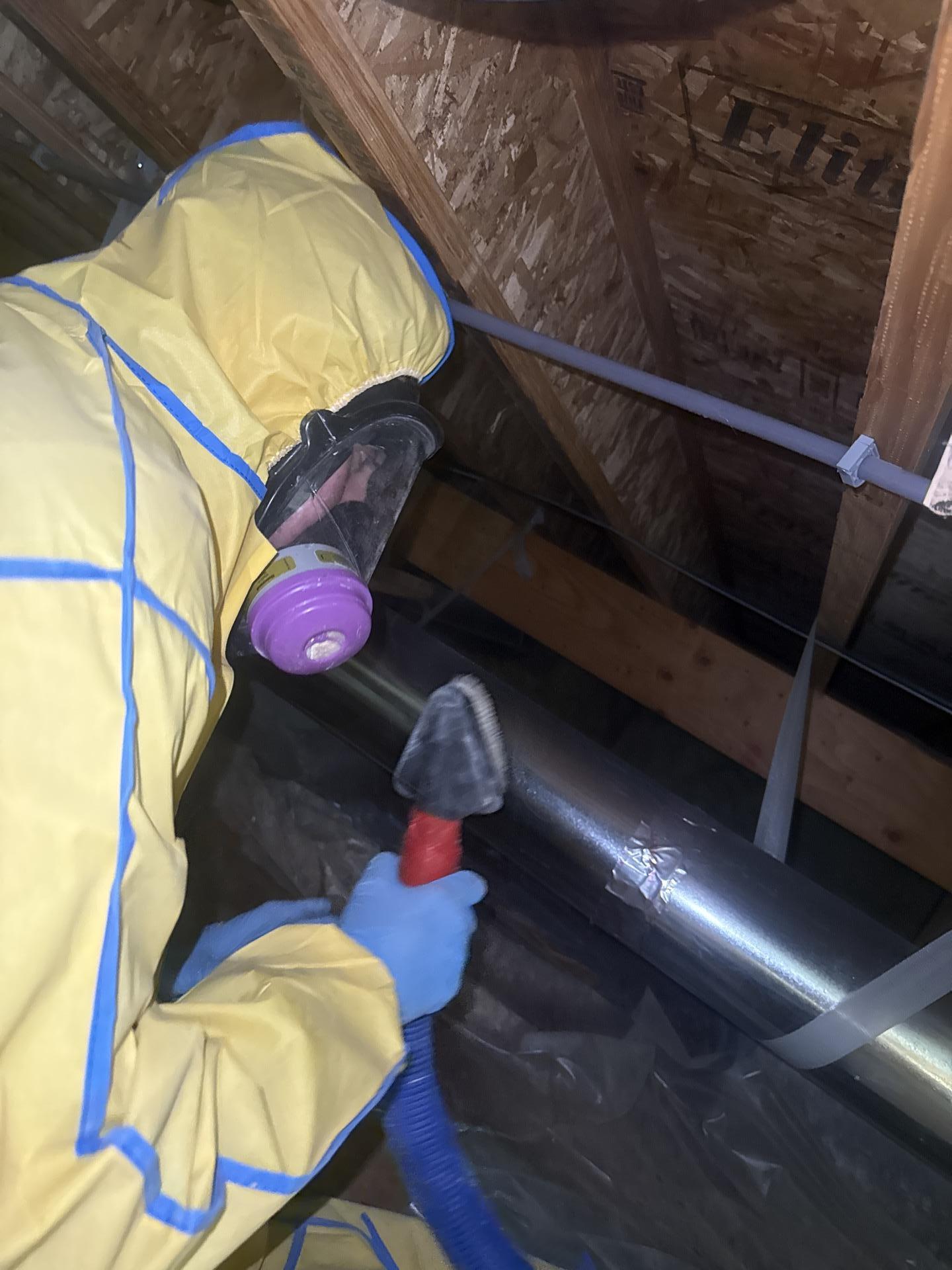
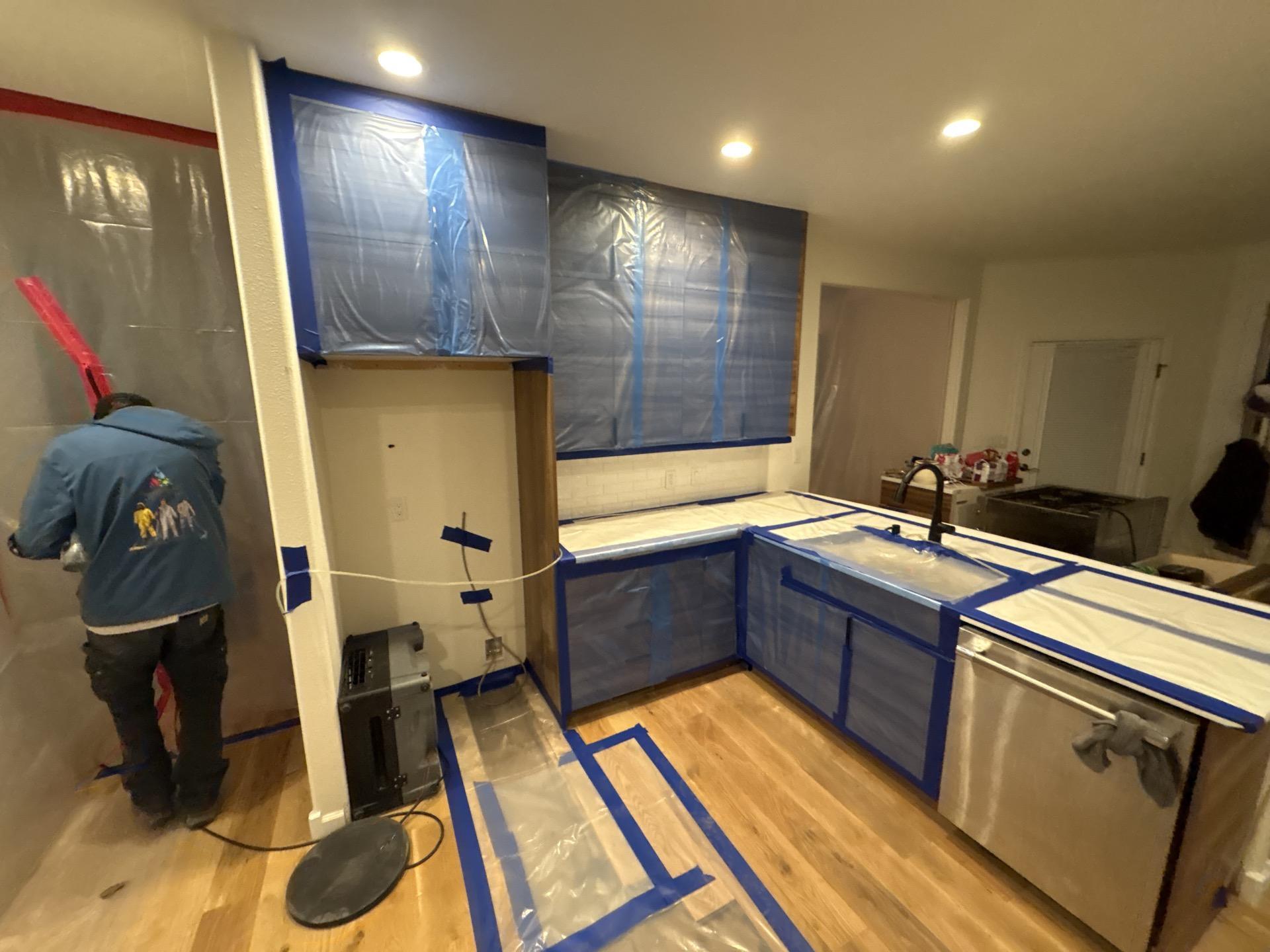
Before any demolition started, we built full containment around the work area. That step keeps dust and any disturbed spores from drifting into clean parts of the home, and it is required practice when mold is in the picture. We also coordinated asbestos testing through a licensed environmental partner first. Those results came back non-detect, so we got the green light.
From there, the work was methodical:
- Removed the stove and the cabinets on each side of the range for safe access
- Pulled the swollen, non-salvageable hardwood to stop further expansion
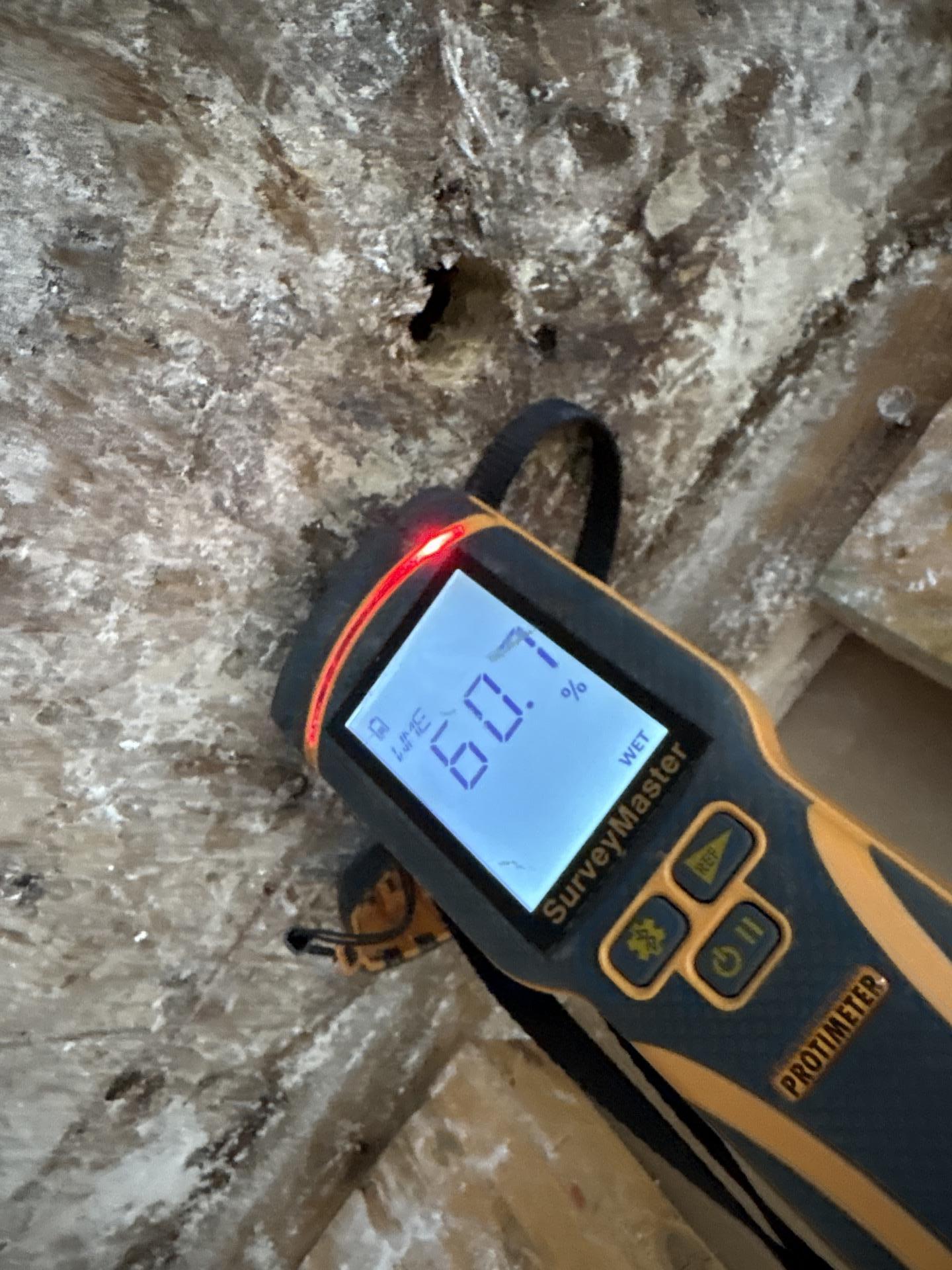
- Applied a peroxide-based antimicrobial to the exposed OSB subfloor
- HEPA vacuumed and sanded the affected surfaces
- Removed the damaged drywall and insulation
Because microbial growth was involved, our mold remediation protocols guided every step, from containment to cleanup.
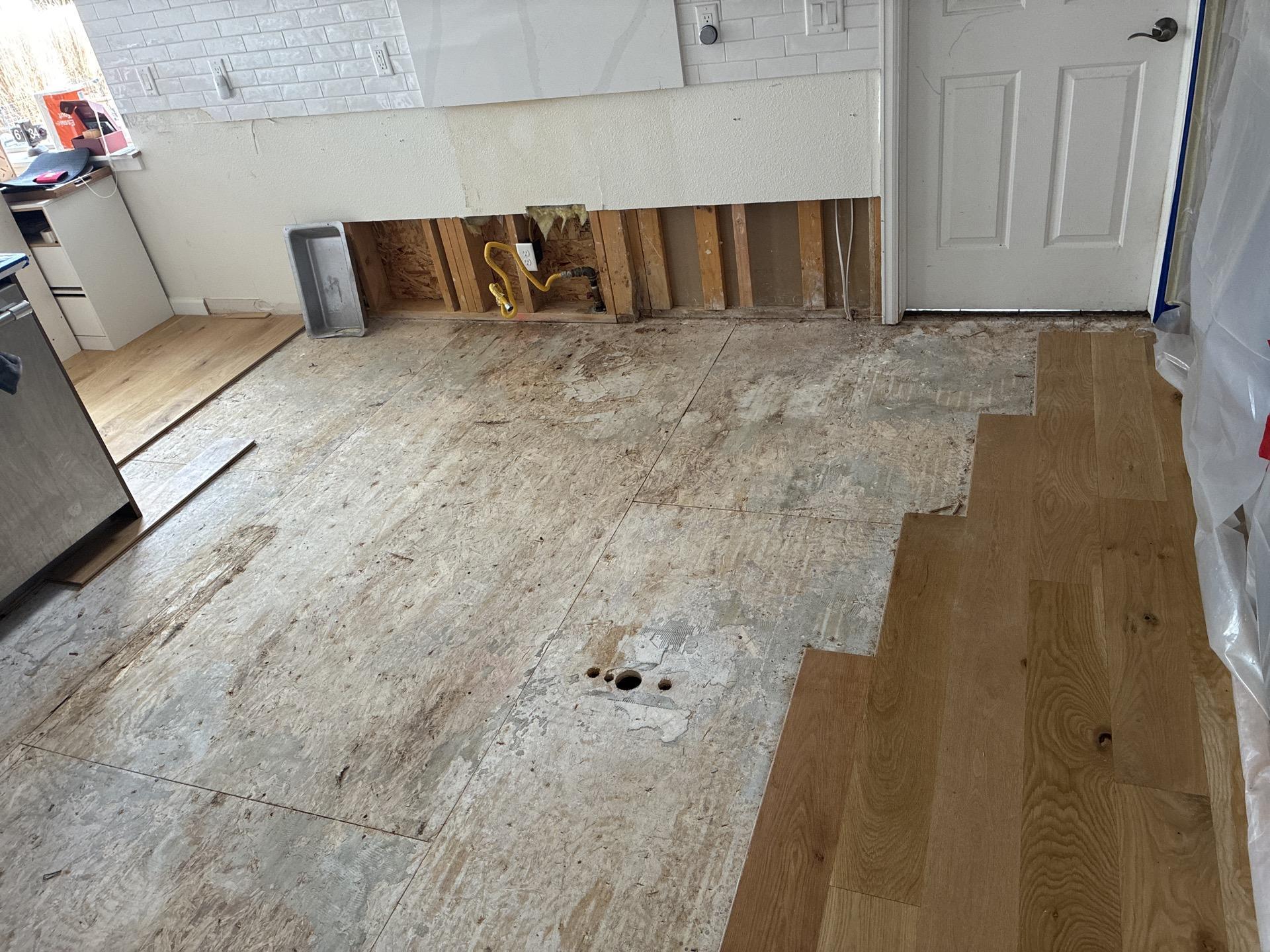
Containment up, flooring out, subfloor treated and ready to dry.
 |  |  | |||
 |  | ||||
The Rooms You Cannot See
Water rarely stays where it starts. This loss had migrated into three more areas, each needing a different approach.
Living Room
We caught moisture under the sill plate next to the refrigerator wall before the flooring swelled. Since the materials were still sound, we dried them in place with contained dehumidification, no demolition needed.
Laundry Room
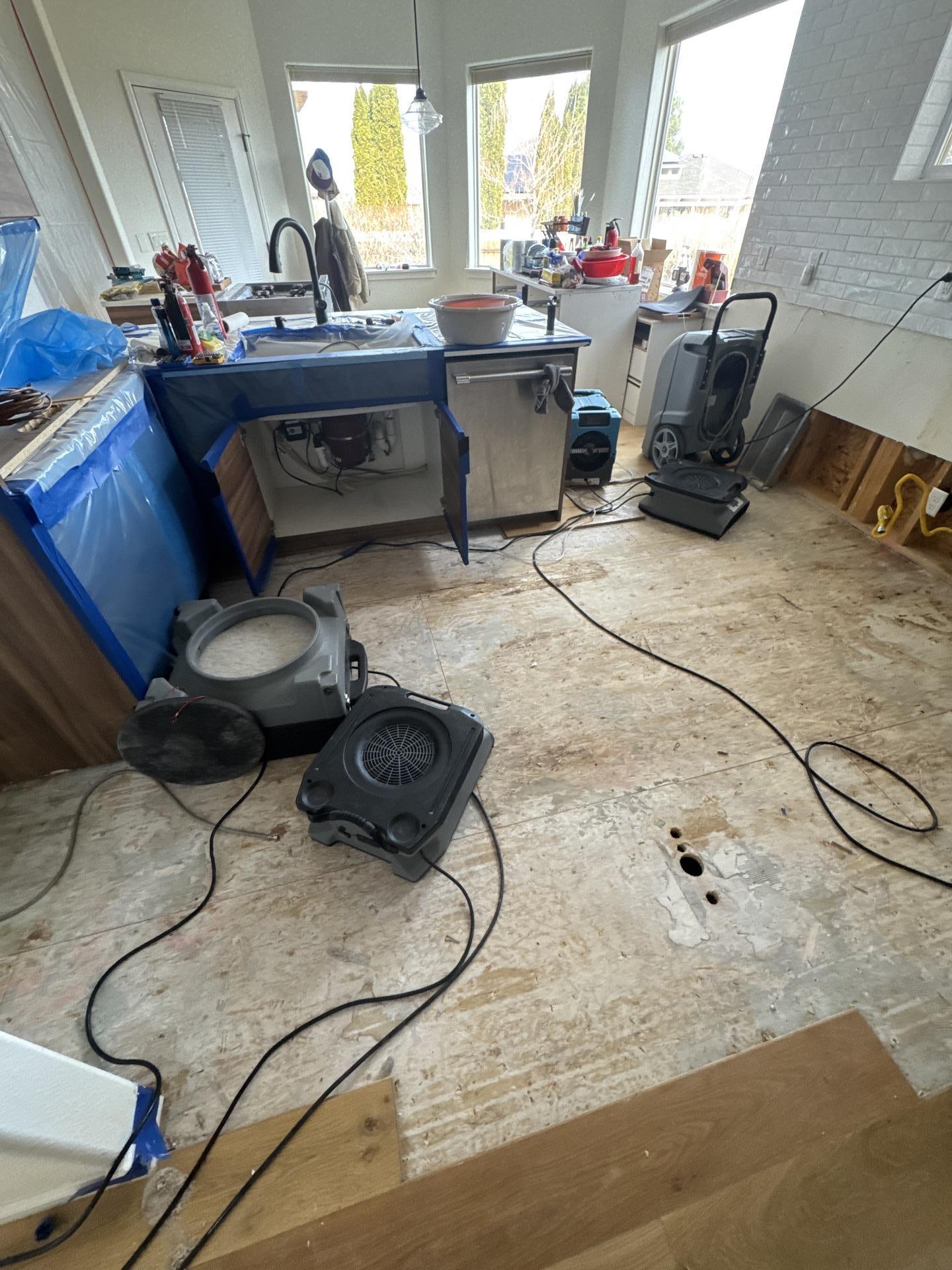
The wall shared with the kitchen had taken on water behind the range, and the ceramic tile was saturated. We isolated the section, ran a dehumidifier in the containment, and dried it until readings matched unaffected areas.
Crawlspace
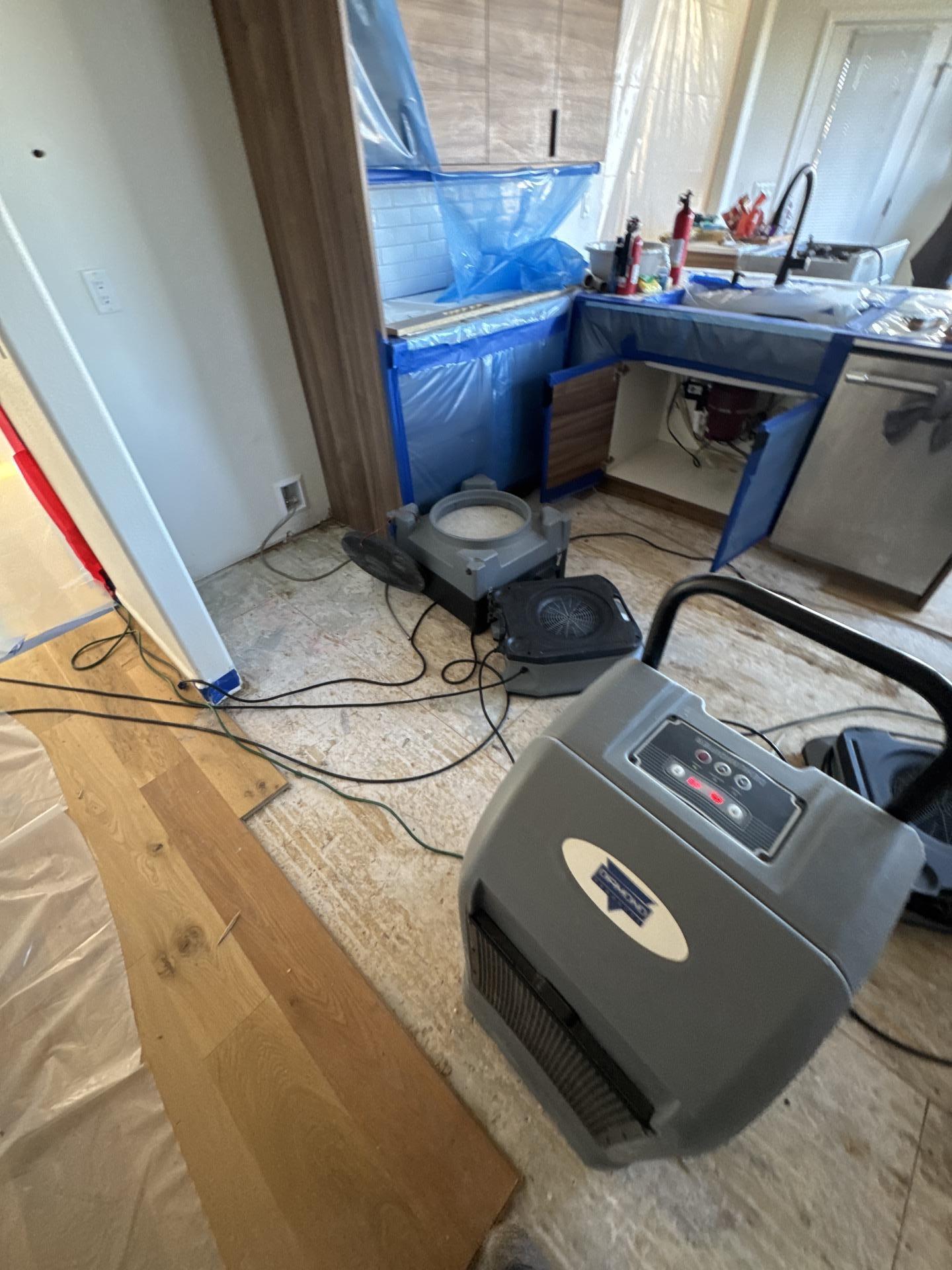
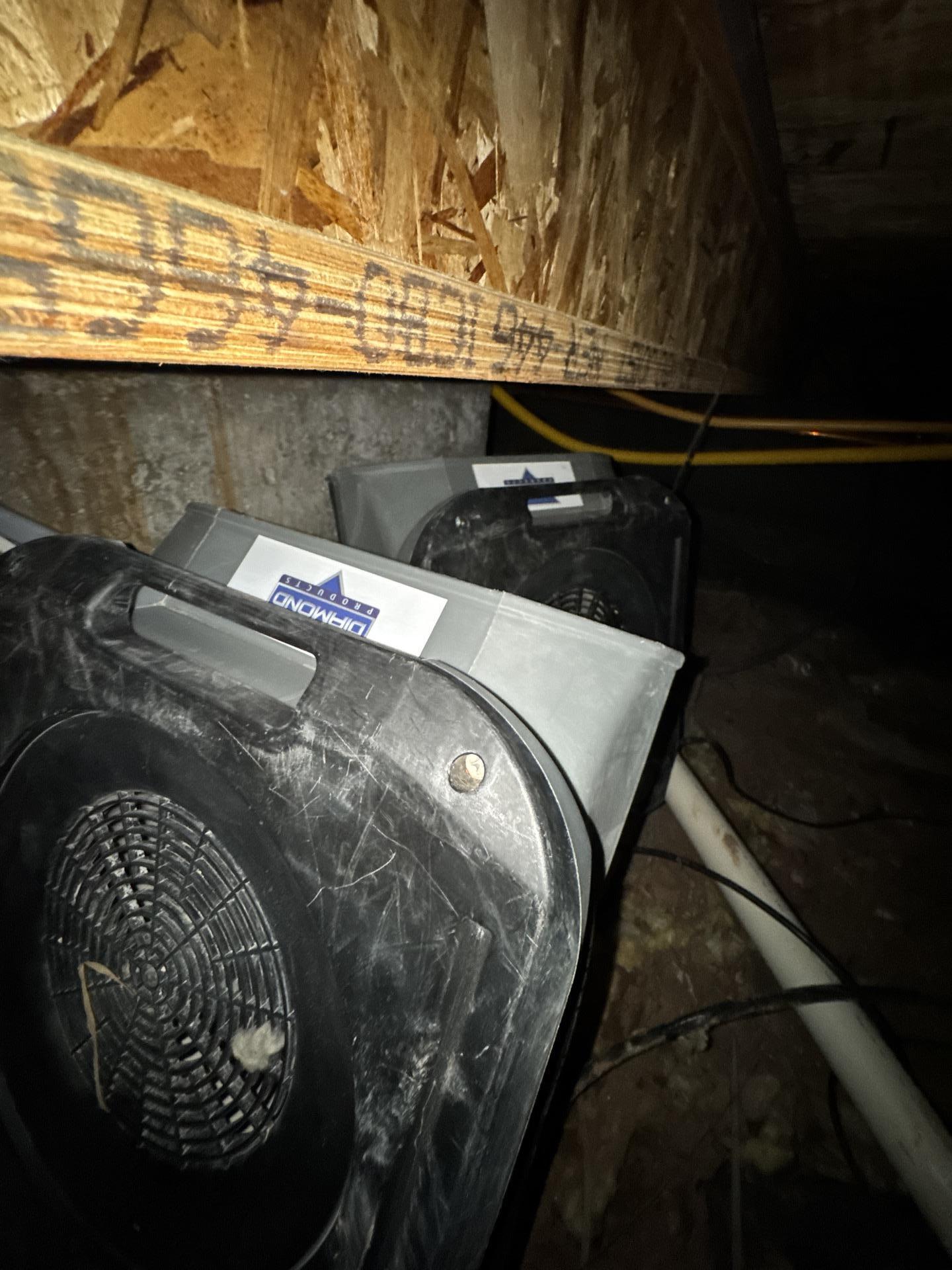
This was the slow one. Standing water and soaked insulation, plus cold temperatures that fight against drying. We removed the affected insulation to open up airflow and left equipment running longer than the rest of the home. Crawlspace losses test your patience, which is one reason knowing where your water shutoff valves are can save you trouble. Our wider flood damage restoration work runs into hidden spaces like this constantly.
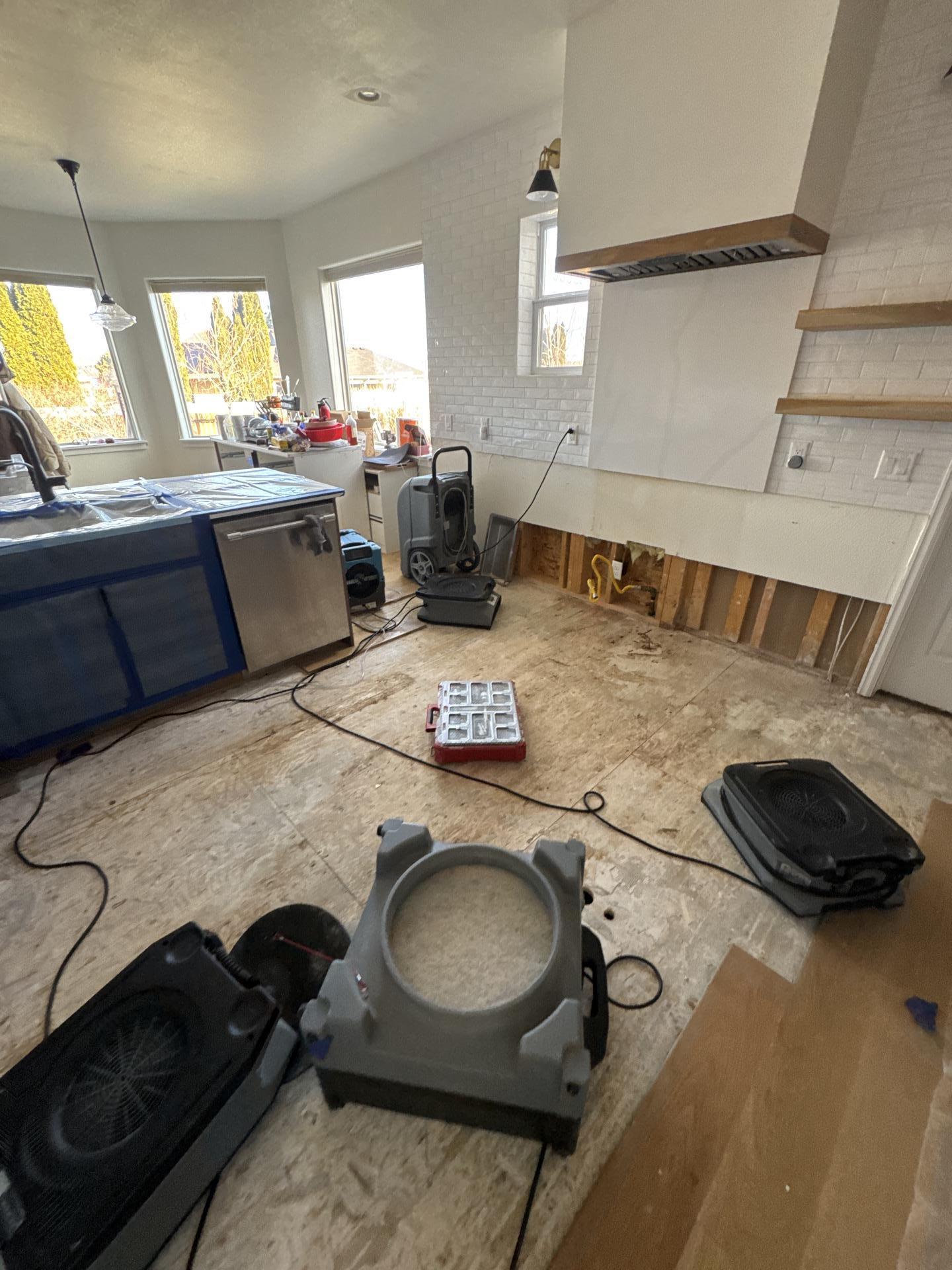
Monitored drying across the home, crawlspace to living space.
 |  |  | |||
 |  | ||||
What Homeowners Can Take From This
Here is what this one drives home for Western Slope homeowners:
- Cap any supply line you stop using. An abandoned line is still live until someone shuts it off for good.
- Buckling floors are a symptom. The real problem is usually underneath.
- Crawlspaces hide damage. If a space stays wet and cold, mold follows.
- Speed wins. The faster clean water gets dried, the fewer materials you lose.
For a similar job elsewhere, our Glenwood Springs water damage recovery story walks through the same step-by-step approach.
Water Where It Should Not Be? We Move Fast.
Our IICRC-certified team handles water mitigation, mold cleanup, and structural drying across Grand Junction and Colorado’s Western Slope, 24/7. If your floor is buckling or your crawlspace is wet, the sooner we are on site, the more we can save.
Frequently Asked Questions
Is clean water damage really a big deal?
Yes. Clean supply line water starts as a Category 1 loss, but if it sits long enough it soaks into subfloors and framing and can push the job to Class 4. Left alone, clean water also breeds mold within a couple of days.
Why is containment needed before demolition?
Containment keeps dust and any disturbed mold spores from spreading into clean parts of the home during demolition. It protects the rest of the house and is standard practice whenever microbial growth is suspected.
Why does a crawlspace take longer to dry?
Crawlspaces trap moisture and often sit at cold temperatures that slow evaporation. We frequently remove saturated insulation to open up airflow and leave equipment running longer there than in the main living areas.
Do you handle the insurance side?
We document moisture readings and the full scope of work throughout the job and communicate directly with insurance companies, so the claims process stays as stress-free as possible for the homeowner.