Talk to a Top-Rated Flood, Fire and Mold Remediation Expert 24/7

Talk to a Top-Rated Flood, Fire and Mold Remediation Expert 24/7
remedi h2o
Kitchens concentrate more plumbing, appliances, and water sources than any other room in the house, but the real challenge with kitchen water damage restoration isn’t what’s visible on the floor. It’s what’s happening inside the cabinets, beneath the hardwood, and behind the drywall. RemediH2O’s IICRC-certified approach focuses on finding and eliminating all hidden moisture, not just cleaning up the surface. That distinction is what prevents a straightforward cleanup from turning into a mold problem three weeks later.
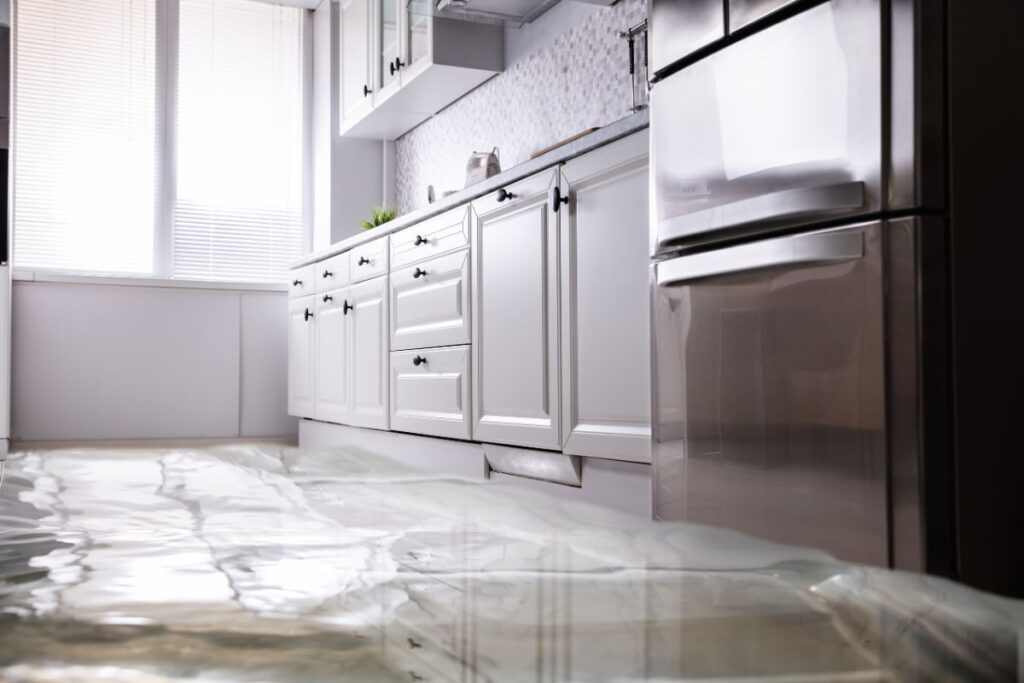
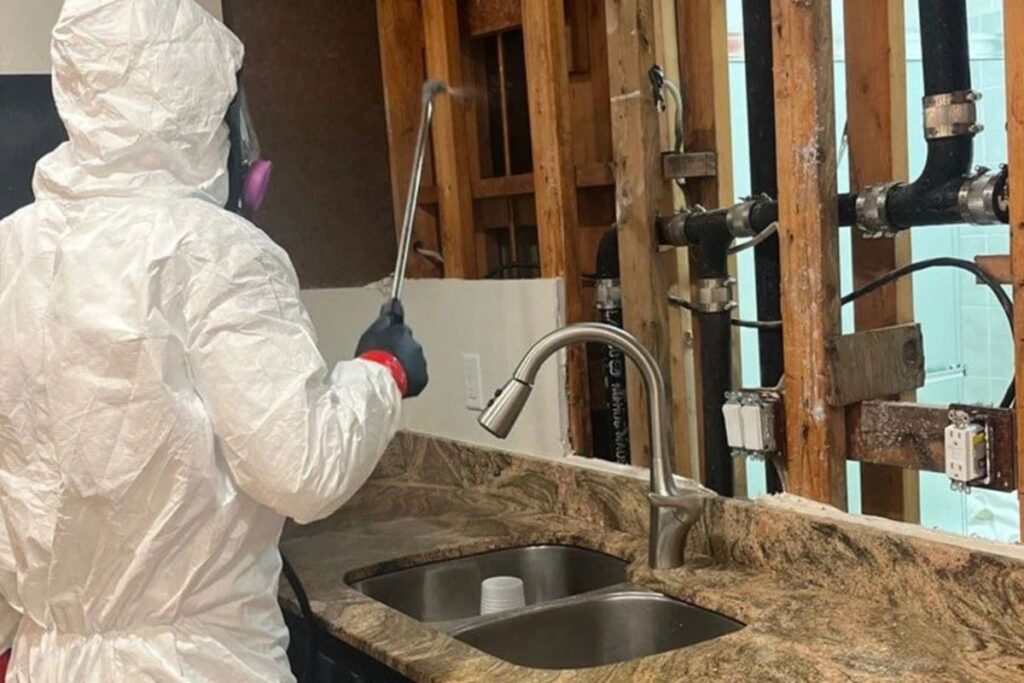
The kitchen is typically the most expensive room in a home to restore. Custom cabinetry, hardwood floors, stone countertops, and high-end appliances represent significant investment. Water damage that’s addressed slowly or incompletely puts all of it at risk.
Beyond materials, water that migrates into kitchen wall cavities and subfloor layers creates mold conditions within 24–48 hours. Kitchen spaces, with ambient warmth and organic material in cabinet interiors, are particularly hospitable to mold once moisture is present. Our approach treats every kitchen water damage job as a structural drying project, not a surface cleaning task.
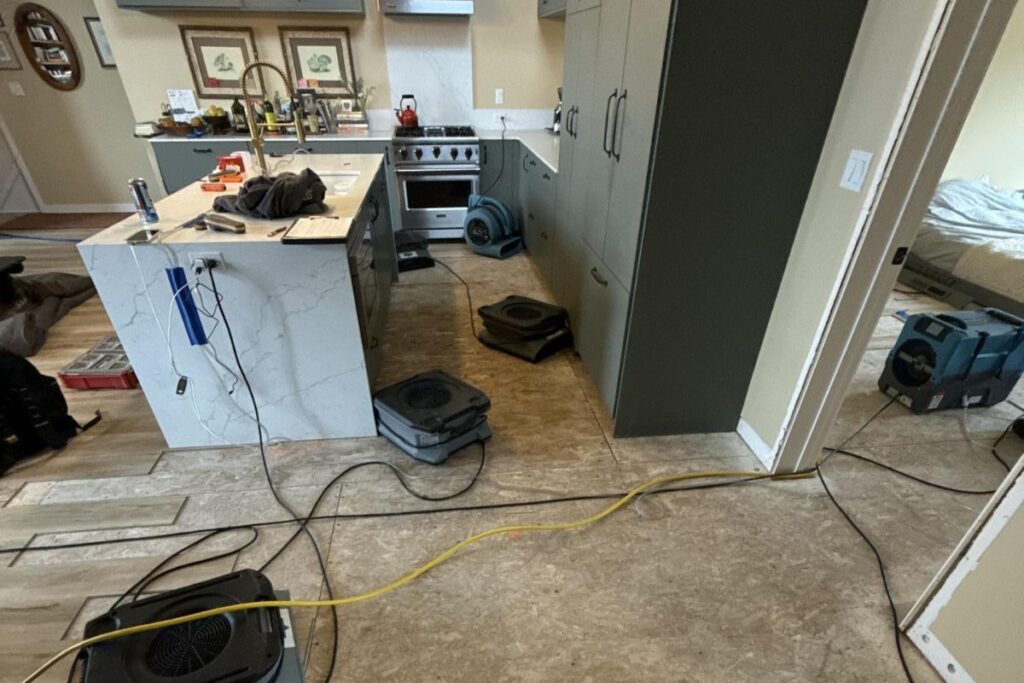
When you call RemediH2O about kitchen water damage, the process unfolds in three connected phases. In the first phase, we arrive, shut off any active water source, and conduct a full moisture assessment using meters and thermal imaging. This maps where the water actually went, which is almost always further than it looks.
In the second phase, we extract standing water, remove moisture from porous materials, and deploy commercial-grade drying equipment inside cabinet bases and under flooring assemblies. We monitor and adjust equipment daily.
In the third phase, we verify dryness with instrument readings, clean and sanitize affected surfaces, and document the completed work for insurance review.
Kitchen water damage is among the more common insurance claims homeowners file, and the paperwork and documentation requirements can feel overwhelming when you’re already dealing with a disrupted home. At RemediH2O, we work directly with insurance companies to document the damage, provide required estimates, and communicate on your behalf throughout the process. We use Xactimate for pricing, which is the industry standard accepted by most carriers.
Call us at (970) 715-6990 or reach our team online to get kitchen water damage restoration started.
Request Your Free Inspection


This site uses cookies and tracking technologies including Google Tag Manager, Google Maps, and YouTube. You can accept, reject non-essential tracking, or manage your preferences.