Talk to a Top-Rated Flood, Fire and Mold Remediation Expert 24/7

Talk to a Top-Rated Flood, Fire and Mold Remediation Expert 24/7
remedi h2o
A water stain on the ceiling is a sign of water damage and means something is wrong above it. The stain itself is just a symptom, not the real problem. By the time discoloration appears, the drywall above has already absorbed moisture, the insulation above that is likely saturated, and whatever caused the leak has probably been working longer than you’d want to know. At RemediH2O, we handle ceiling water damage repair from moisture assessment through complete structural drying, serving Silt, Aspen, and Colorado’s Western Slope.
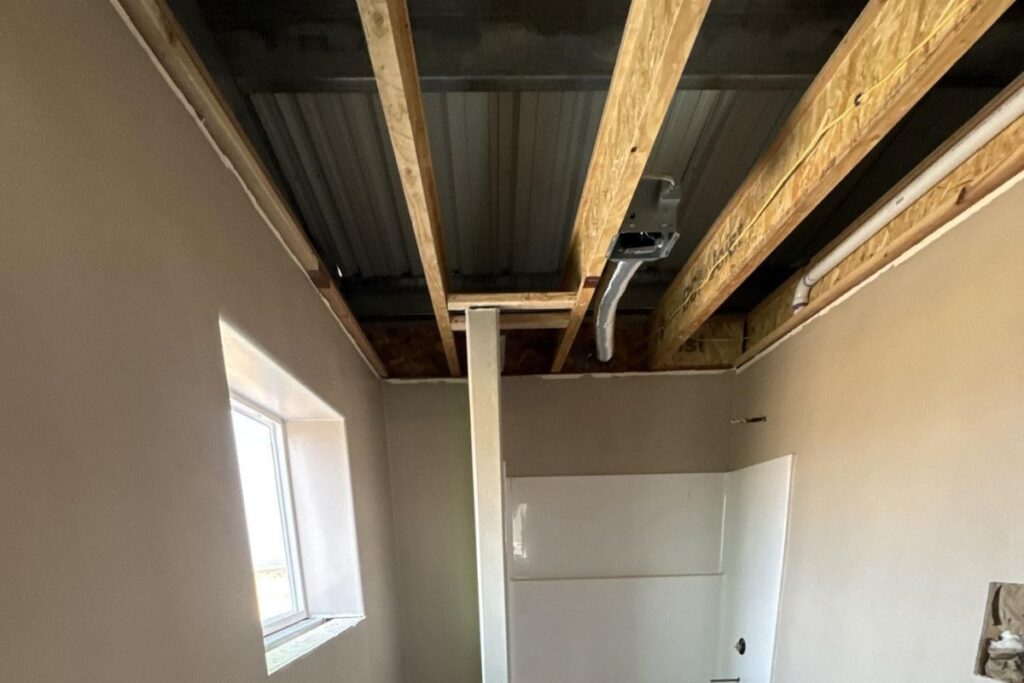
Extracting water that has pooled above the ceiling membrane and drying the affected assembly before it fails further.
Saturated ceiling drywall loses structural integrity and must be dried promptly or removed and replaced to prevent collapse.
A ceiling stain that looks cosmetic frequently involves significant hidden damage above it. Insulation above a wet ceiling acts as a moisture reservoir, releasing water slowly into the drywall for days after the original leak. Ceiling joists that stay damp develop mold growth on their surfaces. And a ceiling dried on its own, without addressing moisture in the structural assembly, will often stain again because the underlying problem was never resolved.
Ceiling water damage repaired within 24–48 hours costs substantially less than the same ceiling repaired after drywall has softened, insulation has become a mold substrate, and joists have begun showing microbial growth.
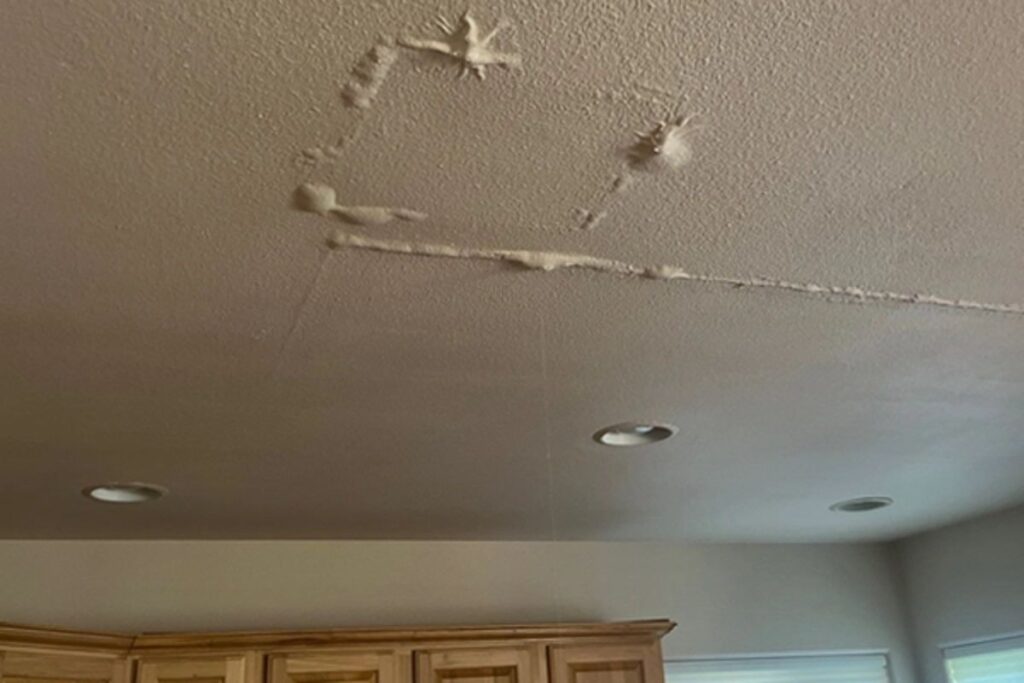
Your ceiling shows a stain, soft spot, or visible dripping. The source above may still be active or may have dried while the structure remains saturated.
Our technicians begin with a moisture assessment that maps saturation in the ceiling assembly using meters and thermal imaging. We identify the source above if still active, set up drying equipment below, and where needed, access from above to dry insulation and structural members directly. We monitor moisture readings daily and adjust equipment as drying progresses.
Moisture readings confirm all materials are at acceptable levels. Materials that dried successfully are ready for cosmetic repair. Compromised materials are documented, and we coordinate on removal and replacement options. Insurance documentation is complete and ready for the adjuster.
When you call RemediH2O, you’ll speak with a restoration specialist who can walk you through what to do right now (including whether to catch dripping water and which areas to avoid) and schedule an assessment at the earliest available time. We don’t just take a message – we give you real guidance while you wait.
Our team serves the full Western Slope and Roaring Fork Valley, including same-day response for active leaks. Reach us at (970) 715-6990 or fill out our contact form.
Request Your Free Inspection