Sometimes water damage doesn’t announce itself with a dramatic flood. A homeowner in Carbondale discovered this the hard way when they noticed water dripping from their garage ceiling. By the time our team at RemediH2O arrived on site, the damage had already traveled through multiple rooms. This is exactly why fast emergency water damage restoration matters so much in Colorado’s mountain communities.
The Discovery: Hidden Water Behind the Walls
The homeowner had done what many people do when they spot a ceiling leak. They cut out a section of drywall to investigate. Smart move. But what they found underneath was worse than expected.
Water was pouring down from the master bathroom above. We documented everything with photos and headed upstairs to assess the full extent of the problem. The shower bench showed obvious moisture. Even the drywall on the outside of the shower was wet to the touch.
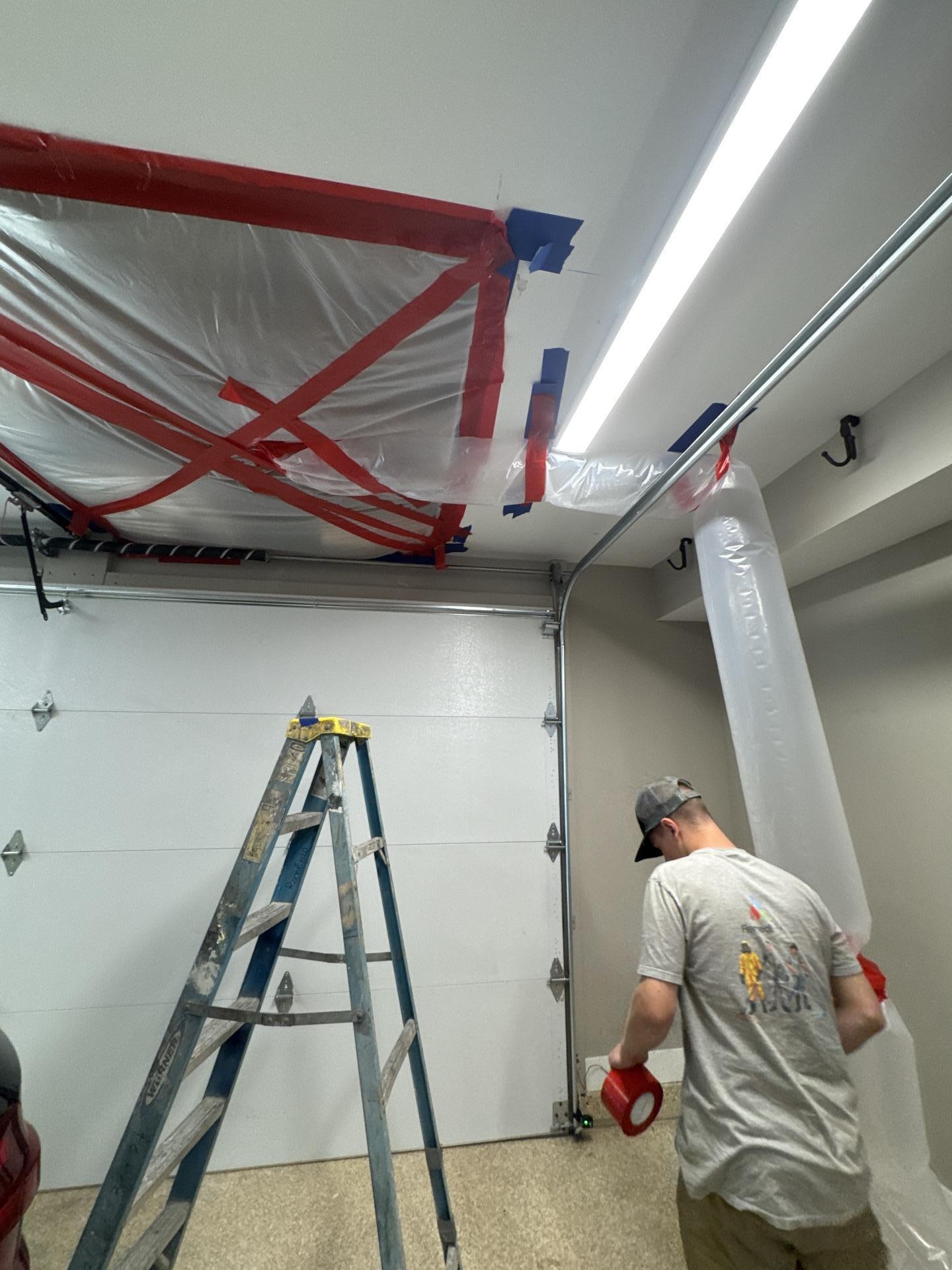
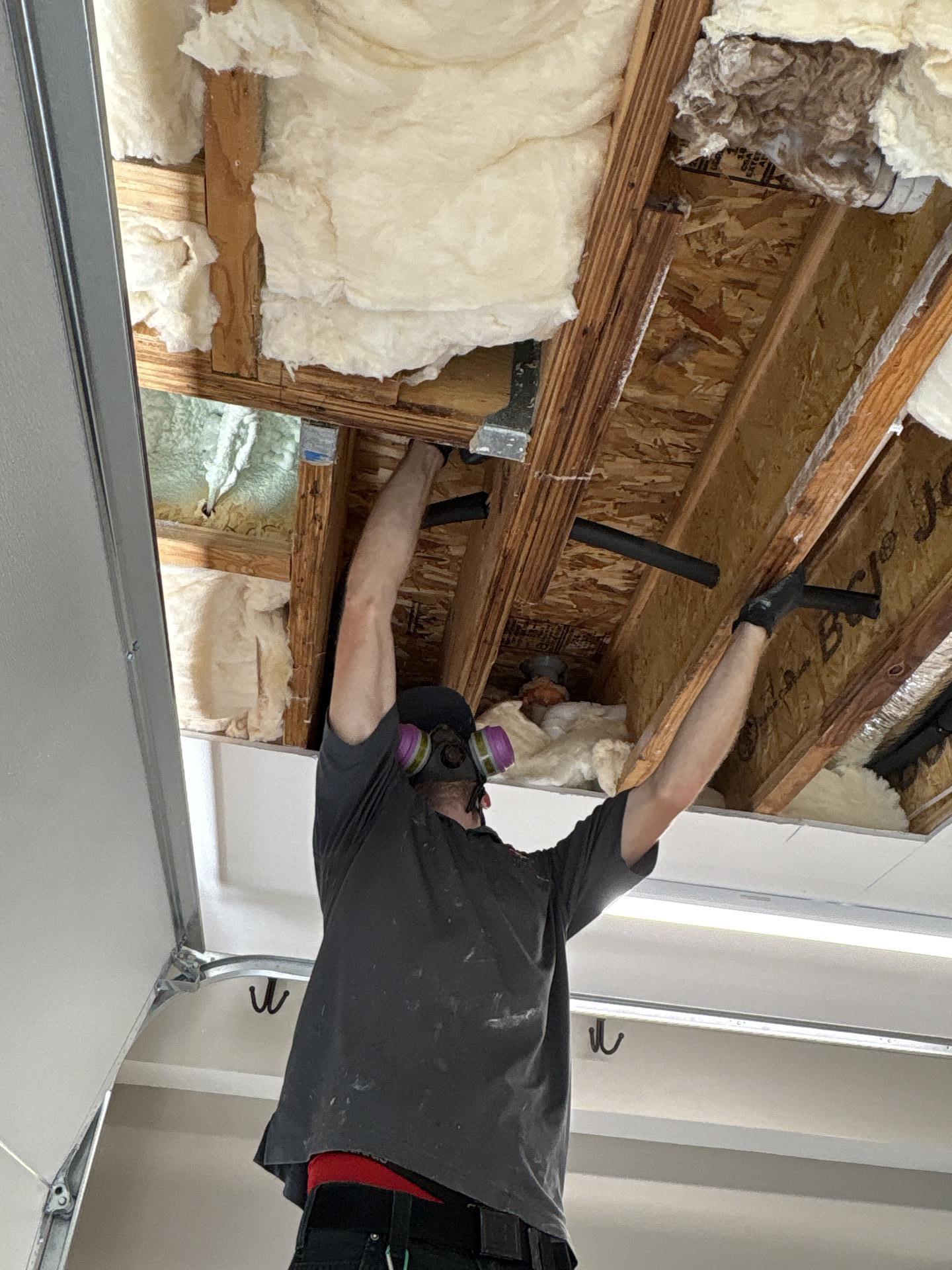
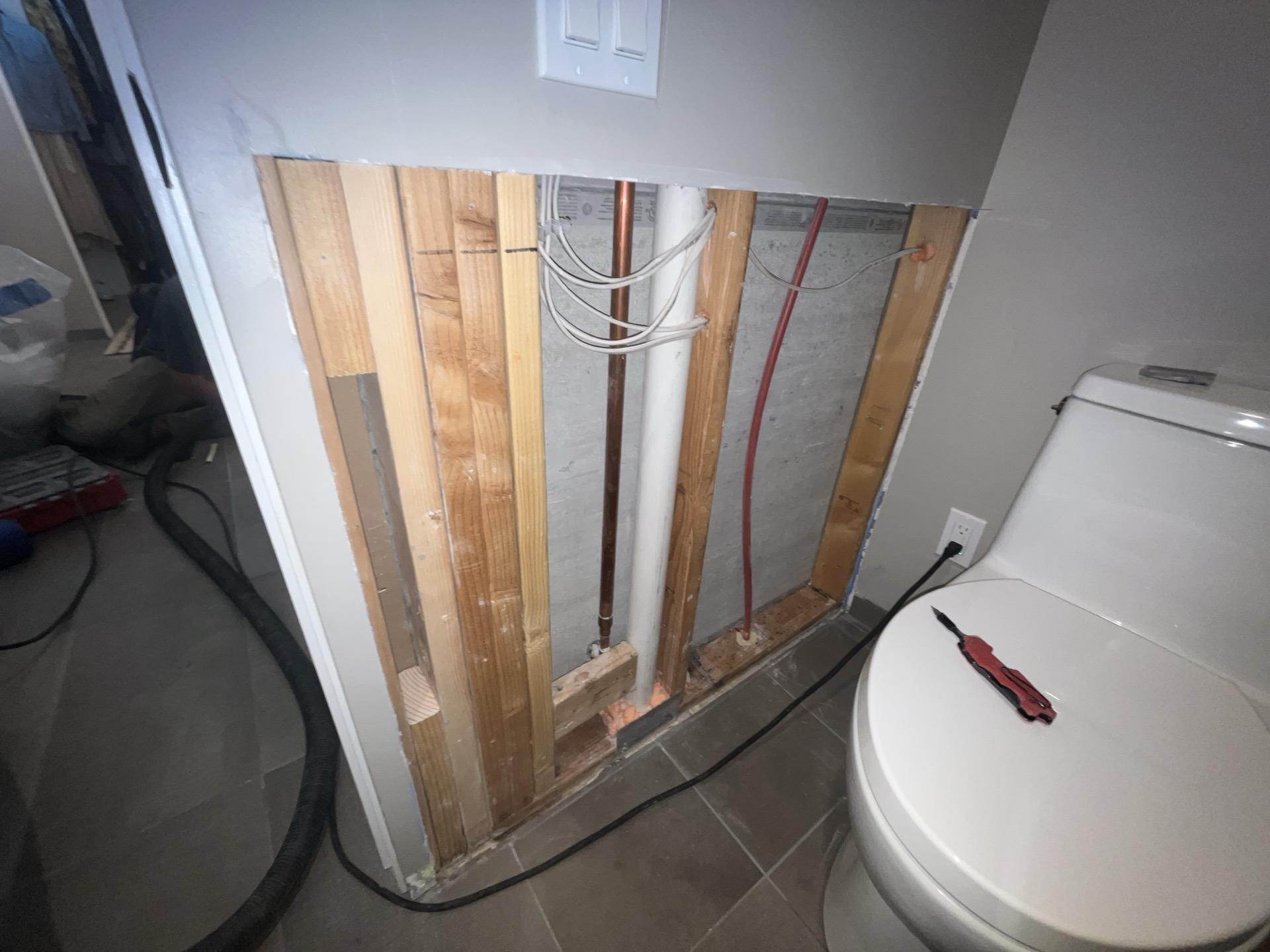
Initial assessment revealing hidden moisture migration throughout multiple rooms
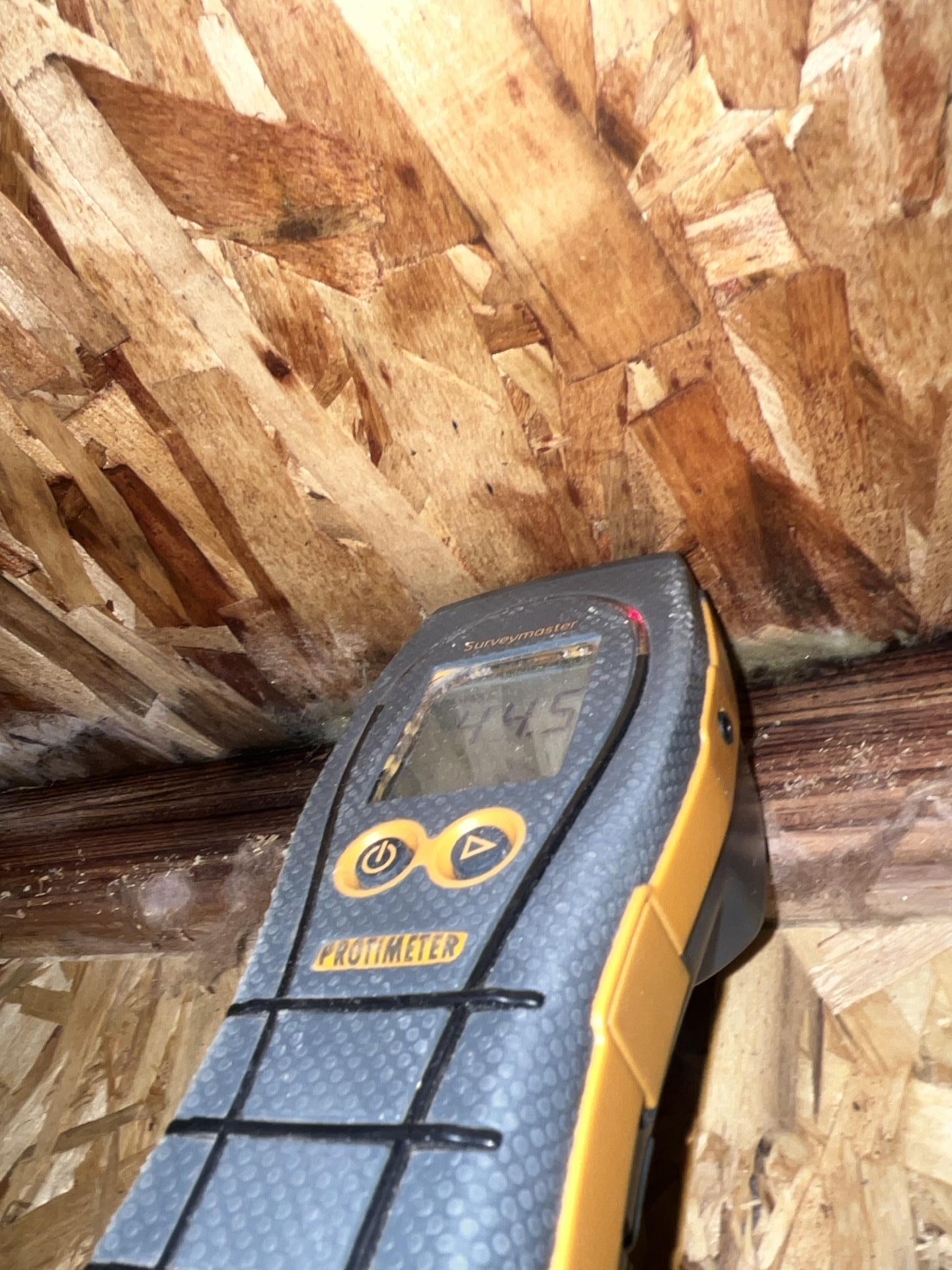
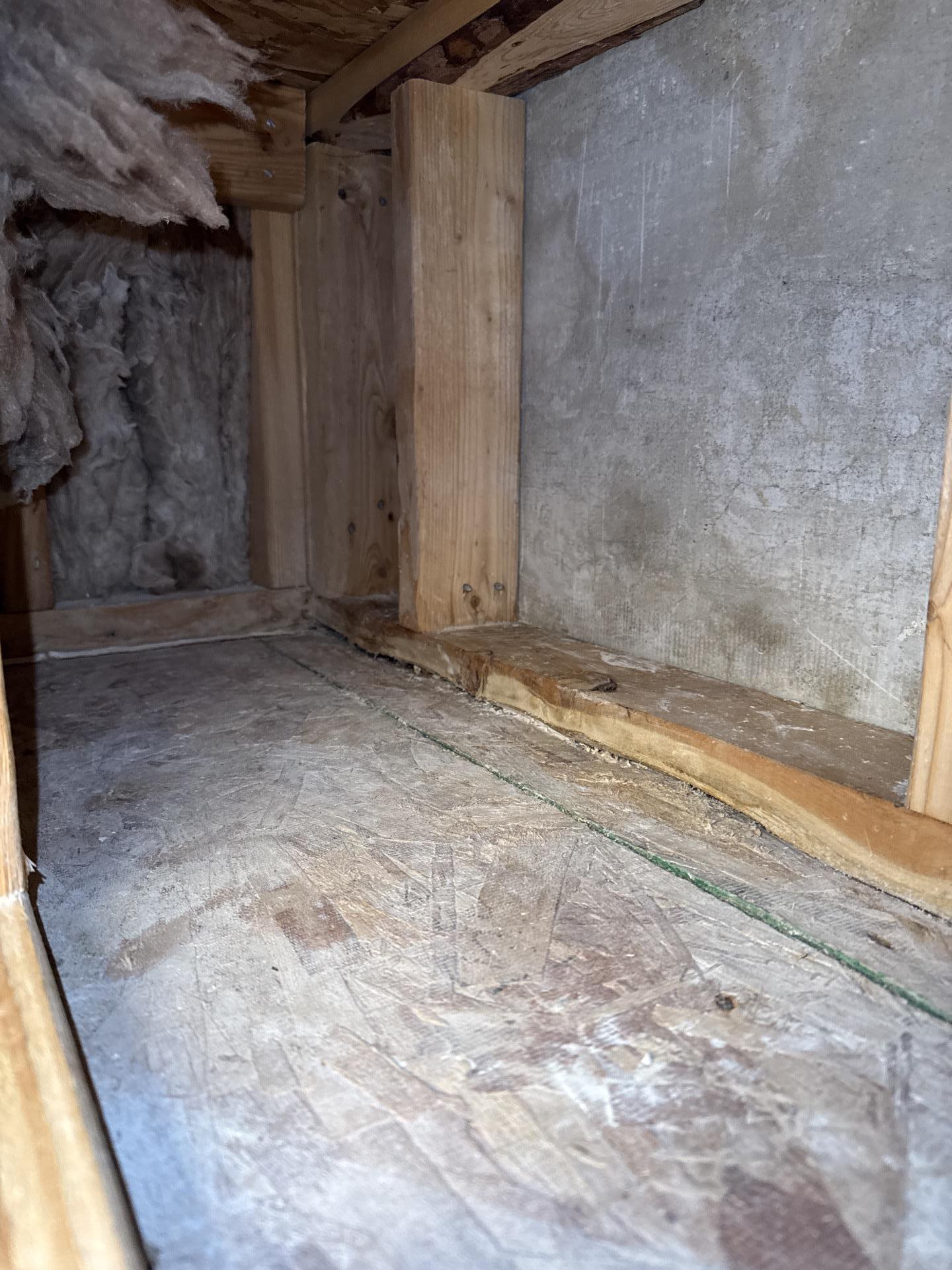
We got readings at the shower entrance too. Inside the exploratory cut, we found visible staining on the framing. The moisture meter confirmed what we suspected: water had saturated the cavity between floors.
According to EPA guidelines, moisture trapped in building cavities creates perfect conditions for mold growth within 24 to 48 hours. We needed to act quickly.
Emergency Stabilization: Stopping Further Damage
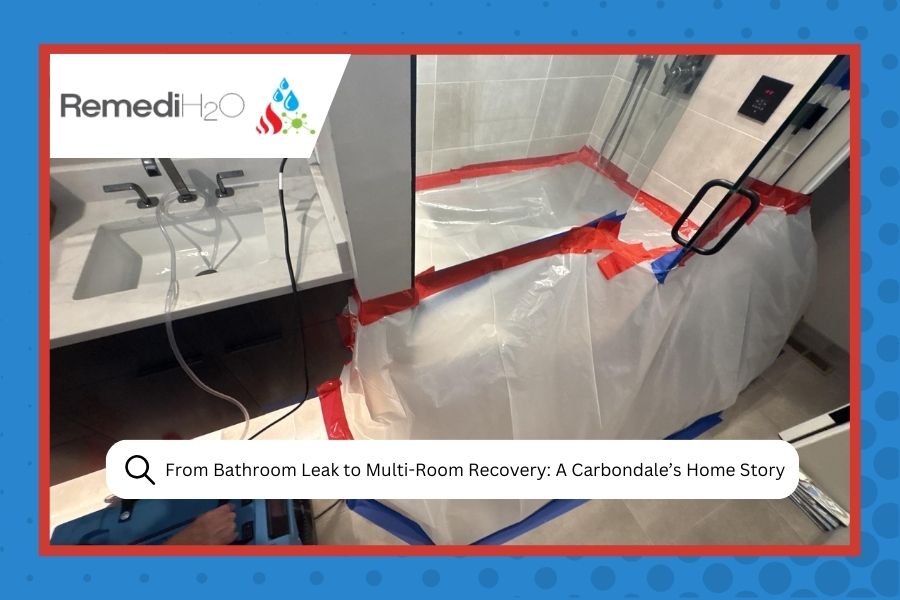
First night? We focused on containment. We placed a commercial dehumidifier to start pulling moisture from the affected areas. This gave us time to return the next day for a complete damage assessment without things getting worse overnight.
The subfloor beneath the shower bench was still saturated. The framing showed signs of prolonged moisture exposure. Interestingly, the tile in front of the shower was bone dry, reading just 16 on the moisture meter, our baseline for normal conditions.
The Thermal Imaging Advantage
This is where technology saves the day. We brought in thermal imaging cameras to map exactly where moisture was hiding. The bathroom’s OSB subfloor showed elevated readings. Even the ceramic tile inside the shower pan registered moisture.
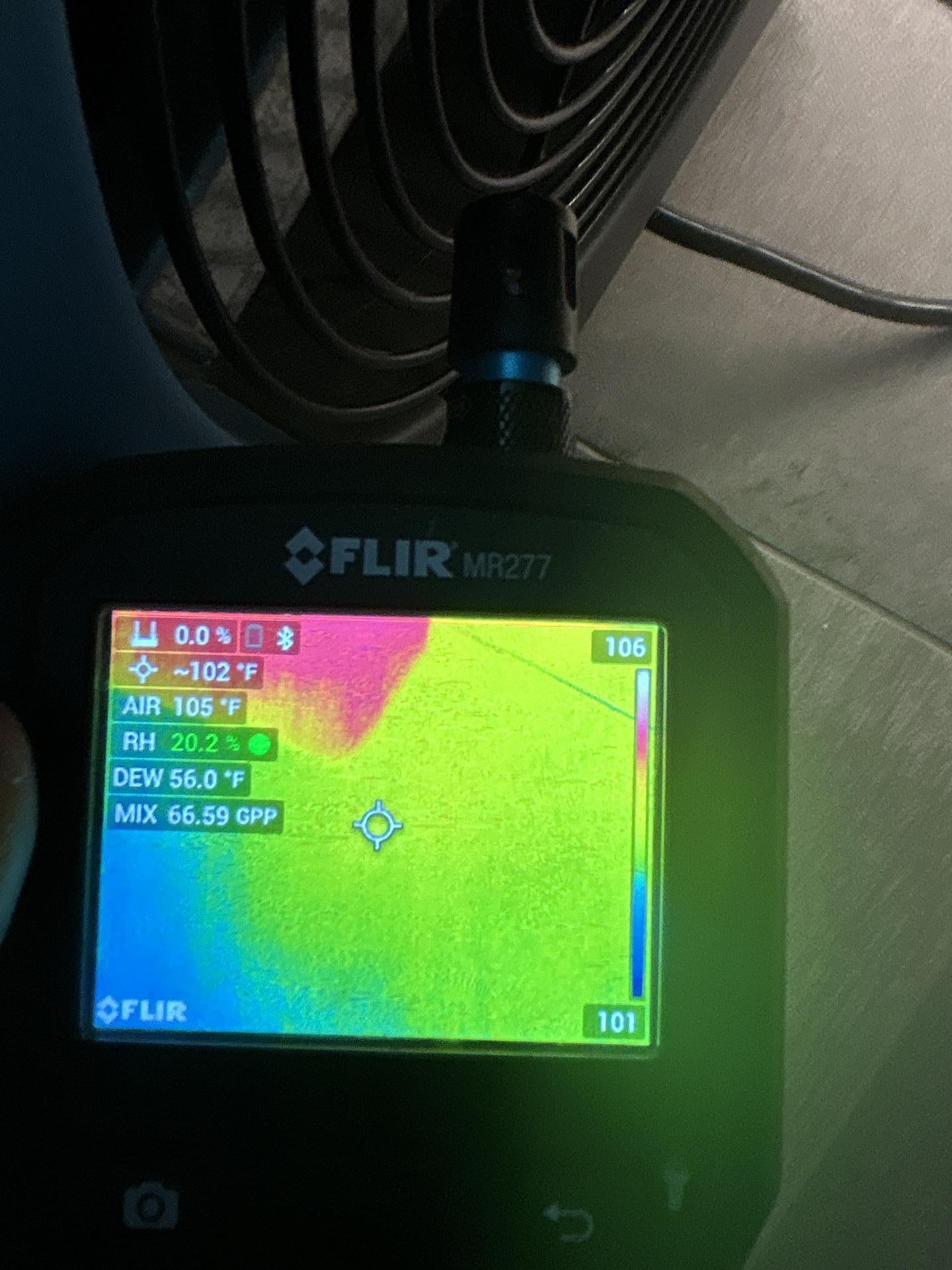
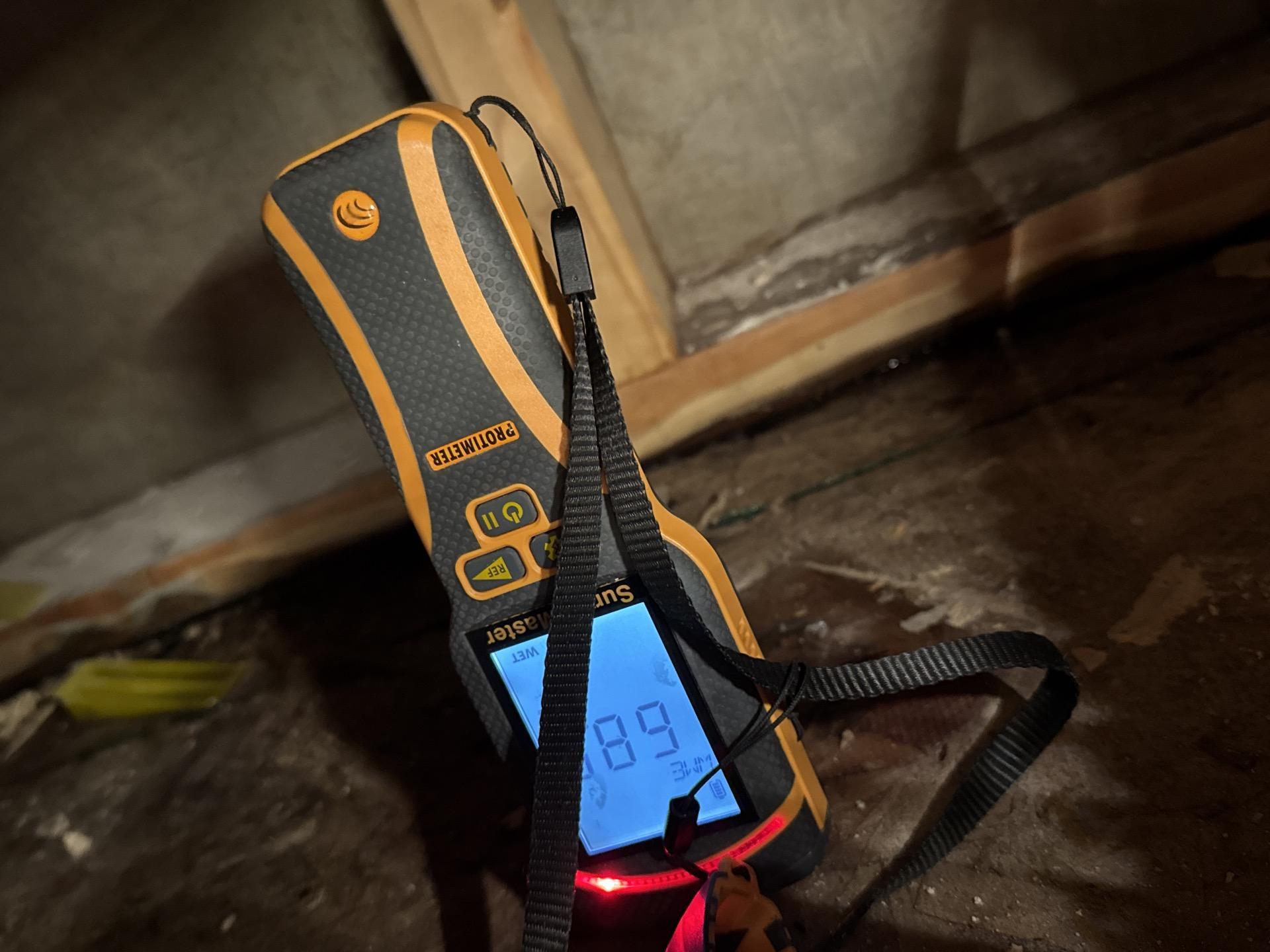
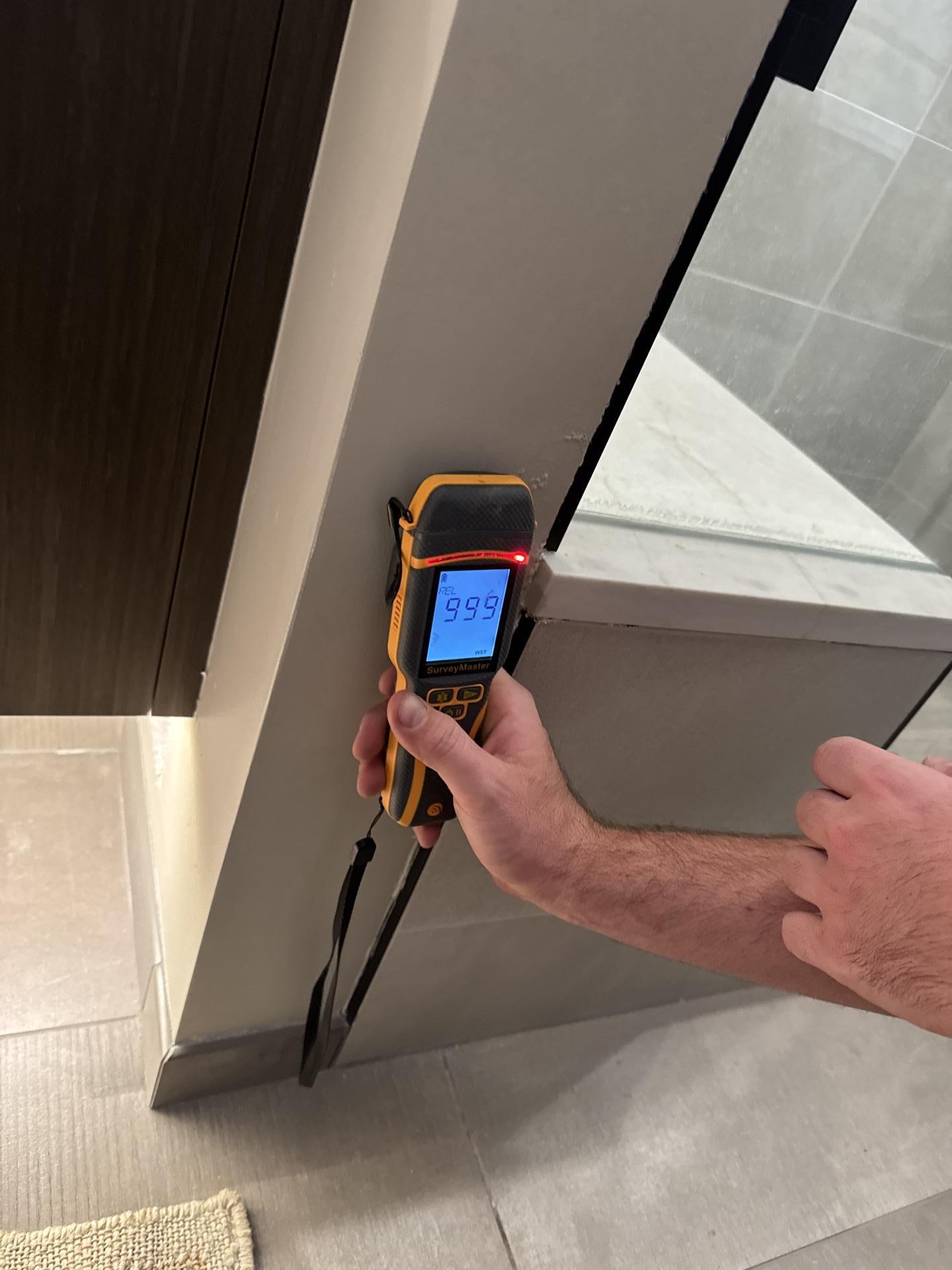
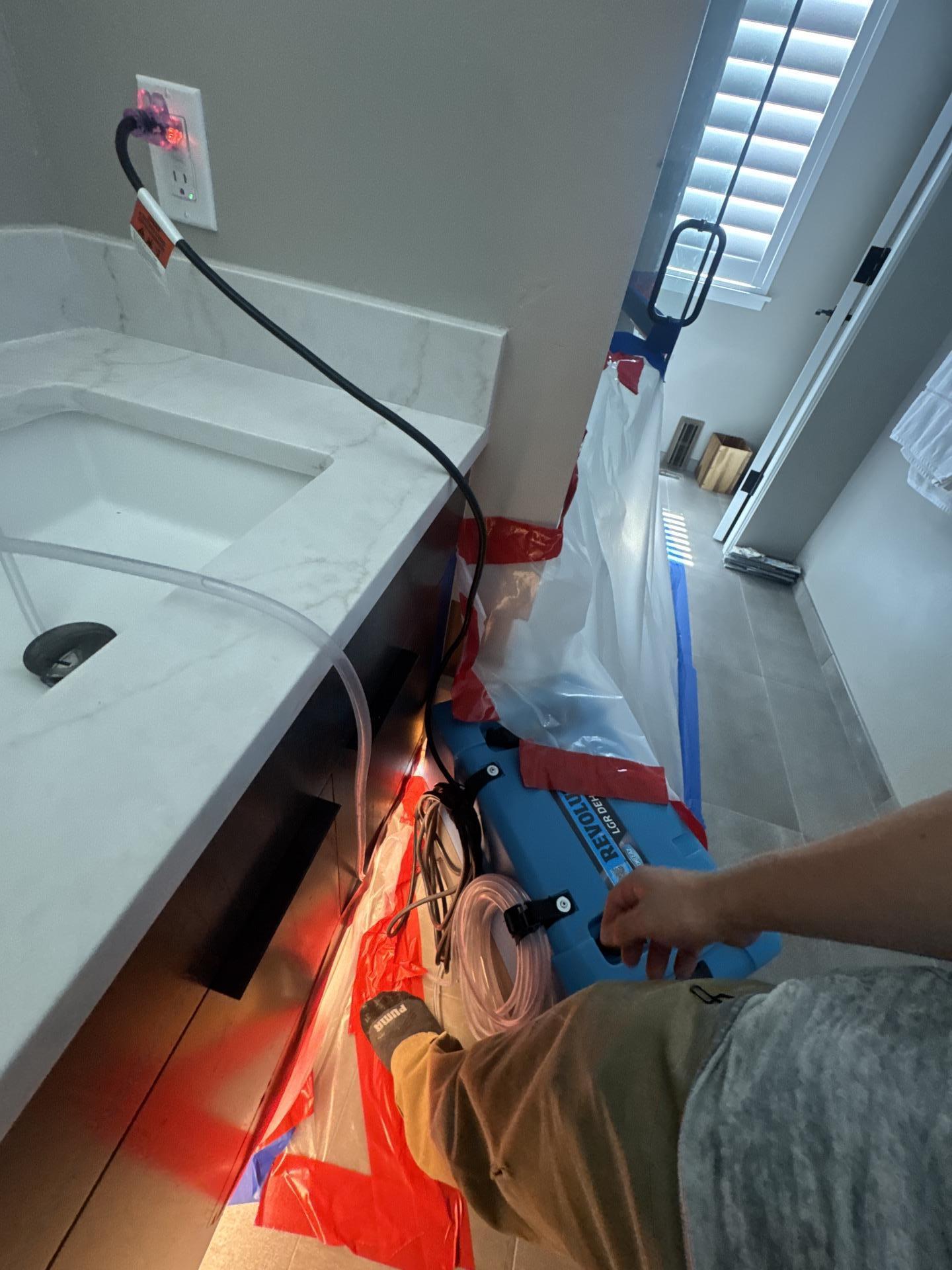
Advanced moisture detection technology identifying all affected materials
The tile right under the vanity? Almost dry. We got an “at risk” reading, meaning it was on the borderline. We added extra poly sheeting to seal the containment area and prevent moisture from escaping into unaffected spaces.
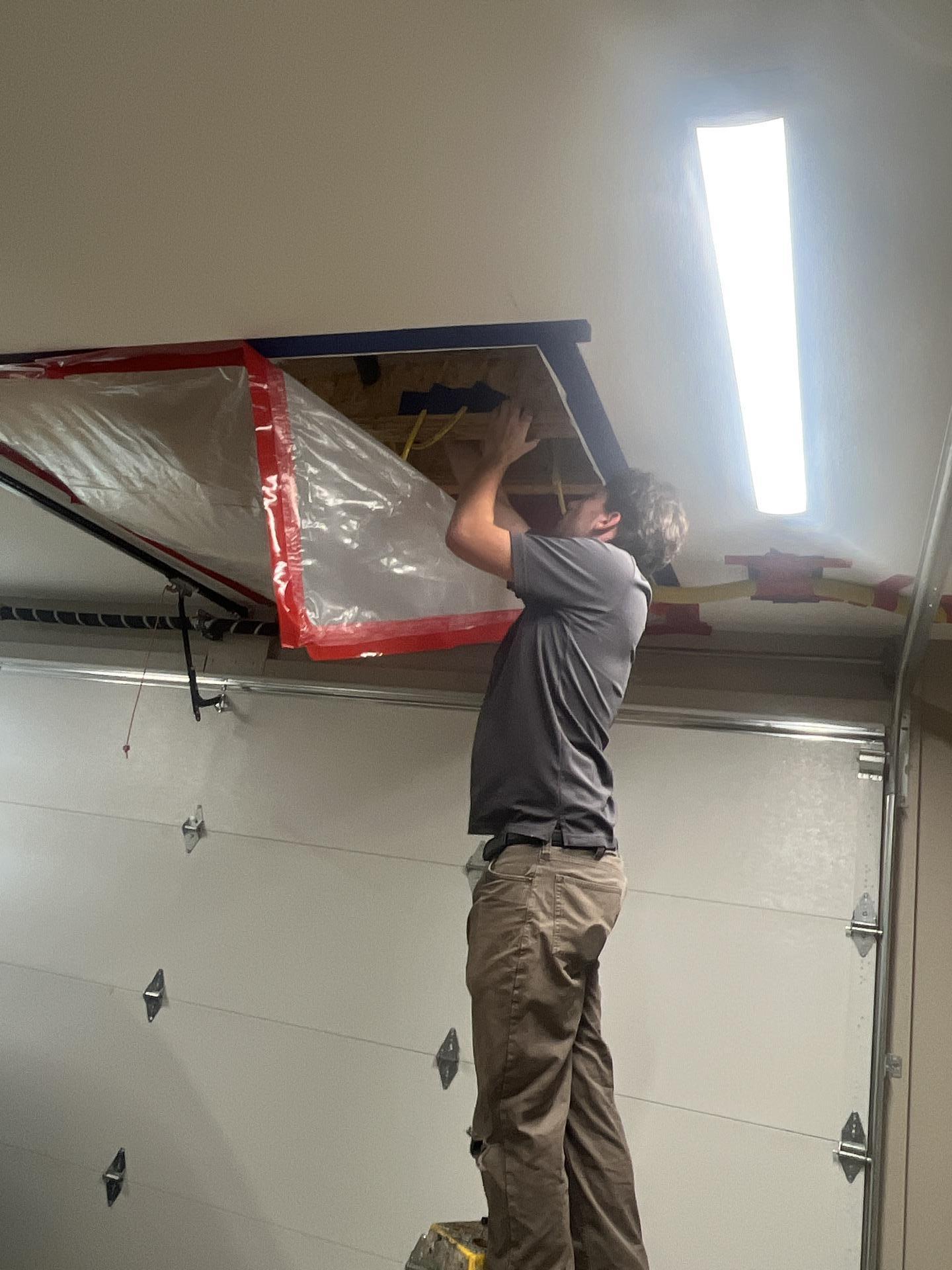
Down in the garage, the OSB was soaked. We ducted lay-flat hose from the dehumidifier directly into the containment zone. This created negative air pressure, forcing moisture-laden air through our drying equipment.
The Drying Process: Precision and Patience
Day three brought good news. The OSB in the cavity hole below the shower bench finally read dry. But the shower pan itself? Still reading 170 on the grout line. Our dry standard for that material is 169, so we pulled the equipment from the master bath.
The garage wasn’t ready yet. The subfloor was reading 20, still above our threshold. We left the equipment running. This is typical for water damage restoration in Carbondale where homes sit at higher elevation and humidity levels fluctuate with mountain weather patterns.
Why Professional Equipment Matters
Homeowner fans and household dehumidifiers can’t match commercial restoration equipment. Our units move thousands of cubic feet of air per minute. They’re designed specifically for structural drying, not comfort.
The moisture levels were trending down, exactly what we wanted to see. Each day’s readings confirmed we were on track, but rushing the process could have left hidden moisture that would cause problems later. As we’ve seen in previous Carbondale mold remediation cases, patience during the drying phase prevents bigger headaches down the road.
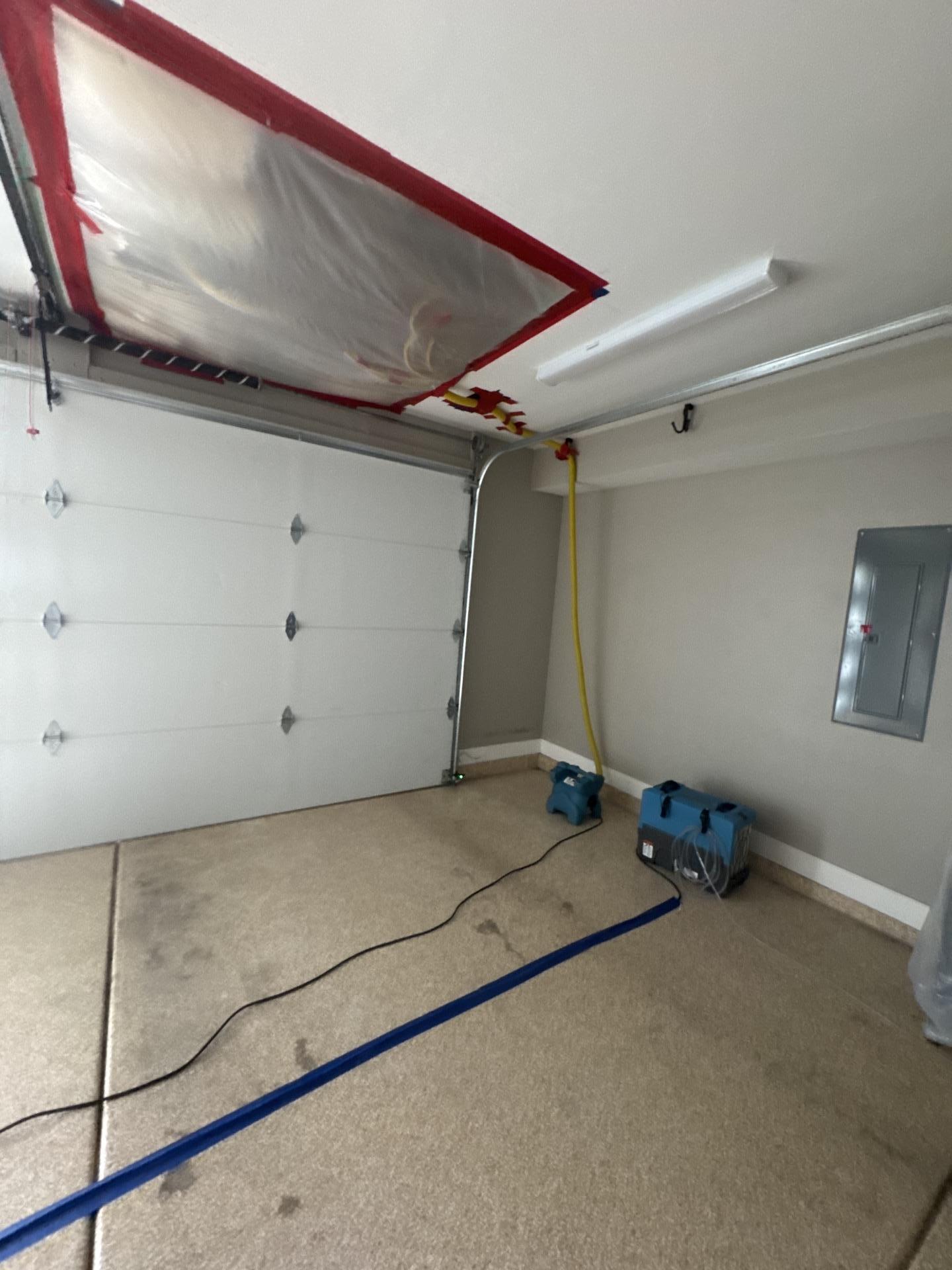
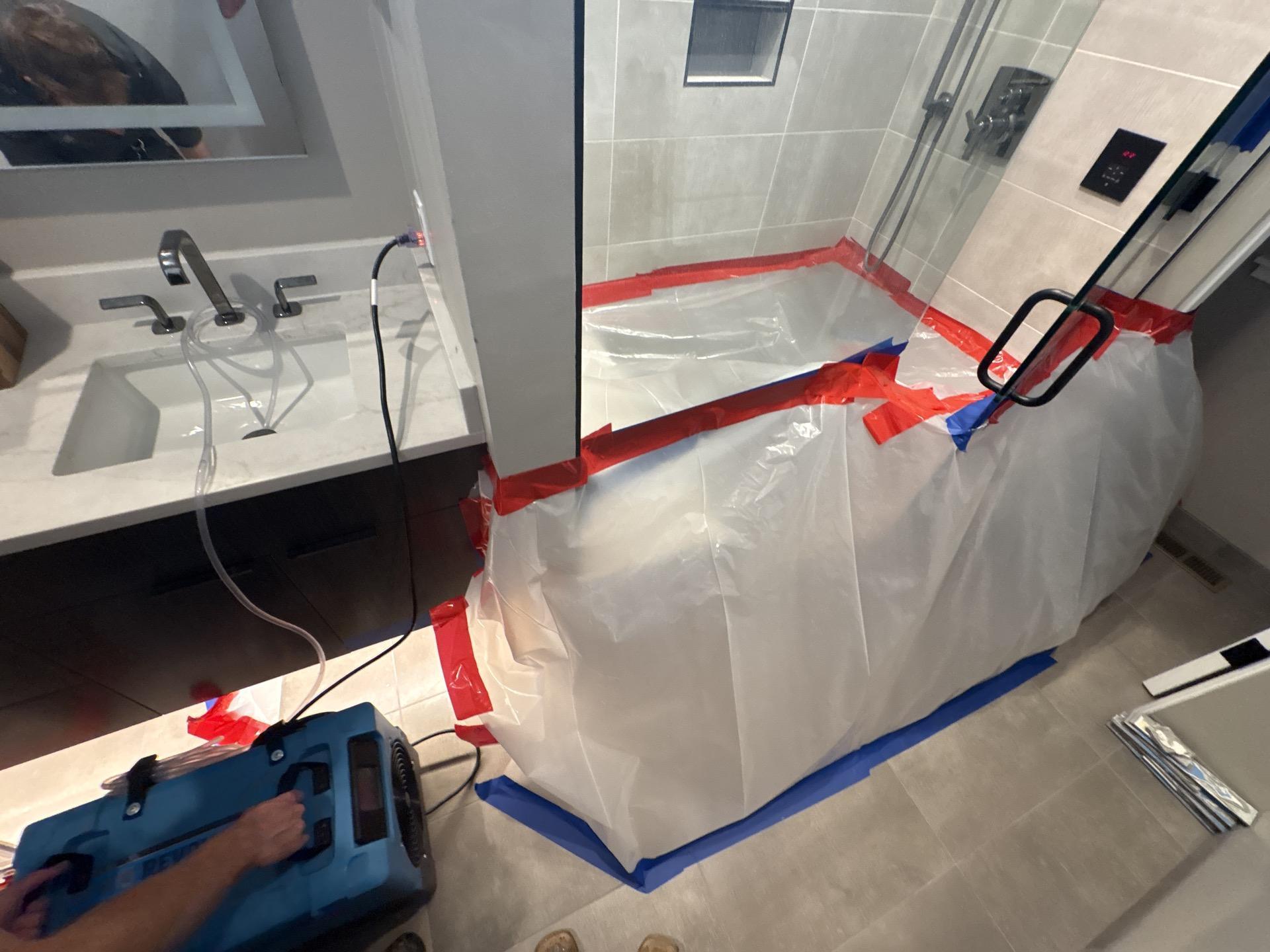
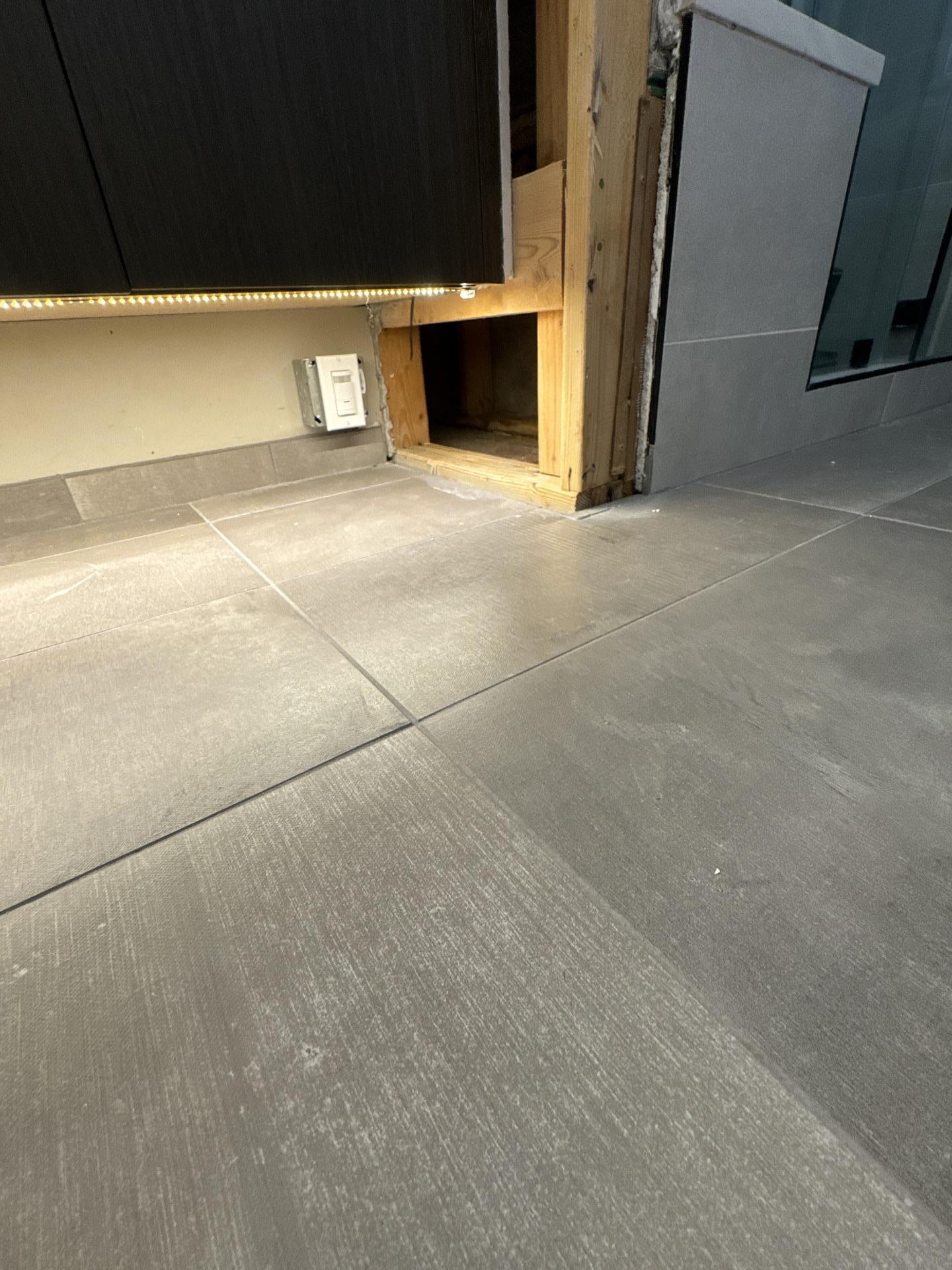
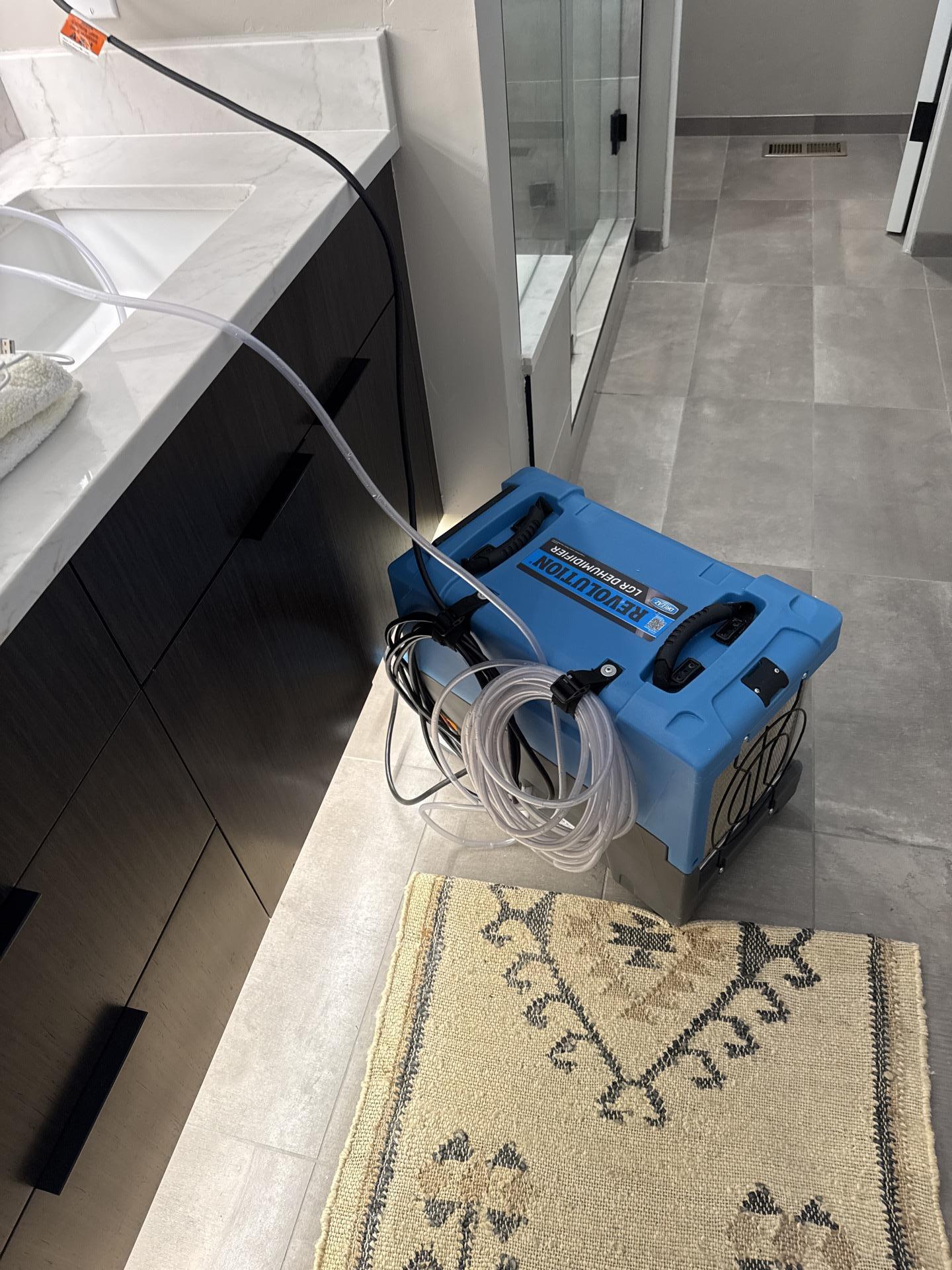
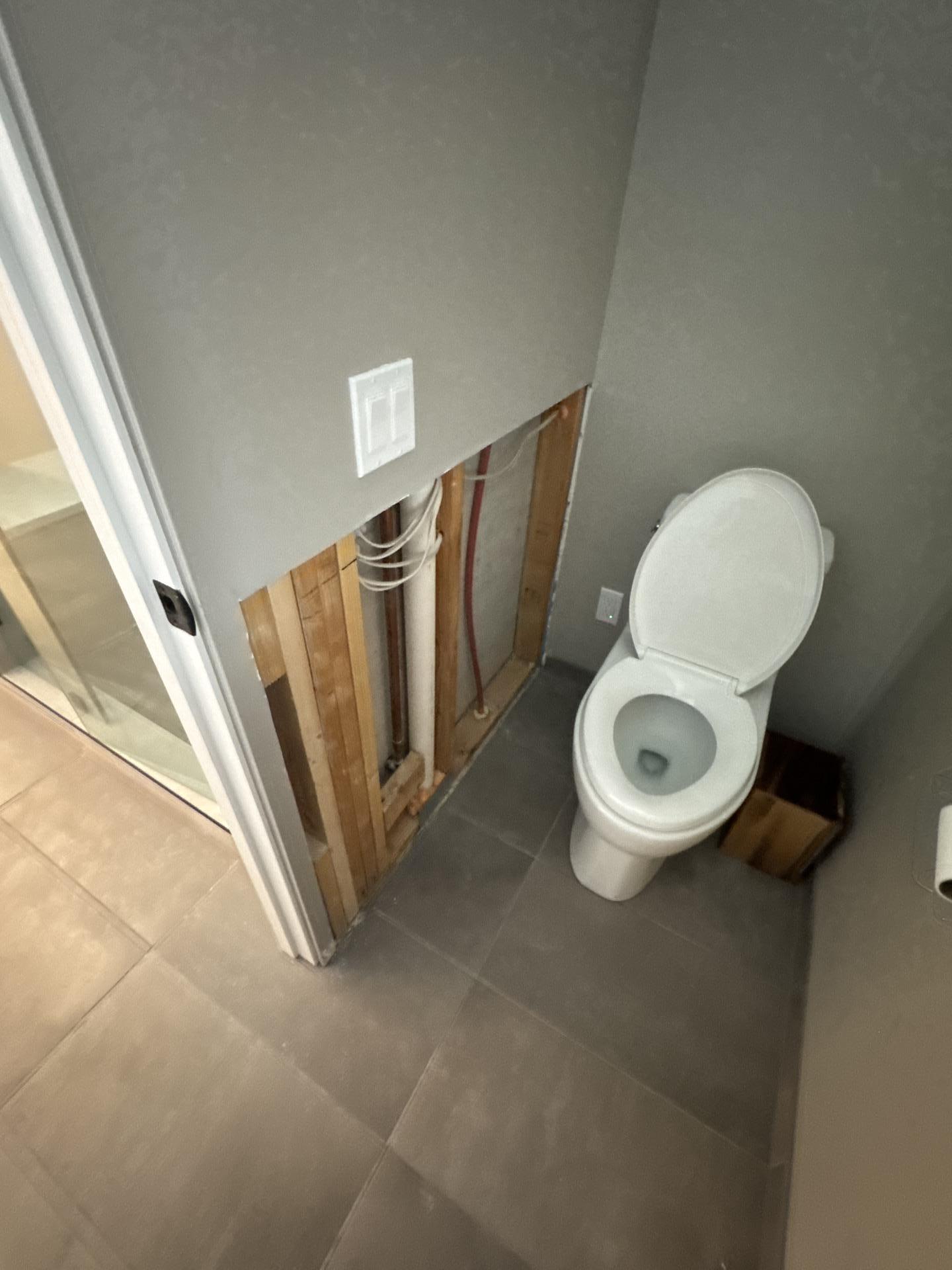
Commercial-grade drying equipment strategically placed for maximum efficiency
Final Verification: Making Sure It’s Actually Dry
Day four recheck showed continued improvement. The garage subfloor was still showing signs of moisture, but the levels were dropping steadily compared to the previous day. This gradual decline tells us the drying is working properly without being rushed.
We’re not done until readings hit our dry standards consistently. That’s the difference between restoration done right and restoration done fast. Every material has specific moisture content targets. We don’t guess. We measure.
What This Homeowner Learned (And You Should Too)
Water rarely stays where it starts. This leak began in the bathroom but traveled down through the subfloor, across framing members, and into the garage below. By the time you see water, it’s usually been traveling for a while.
Hidden moisture is the real enemy. Surface dampness dries on its own, but water trapped in wall cavities, subfloors, and framing needs professional extraction. Otherwise, you’re looking at mold growth and structural damage.
Don’t wait to call for help. This homeowner discovered the leak and called us the same day. That quick response meant we could stabilize the situation before mold had a chance to establish. For tips on preventing similar issues, check out our guide on emergency water shutoff locations every homeowner should know.
Need Emergency Water Damage Help in Carbondale?
Water damage spreads quickly in Colorado’s mountain climate. Our IICRC-certified team responds 24/7 to protect your home from further damage. We handle everything from initial assessment to final verification, working directly with your insurance company to make the process stress-free.
Call RemediH2O at (970) 715-6990 for immediate assistance.
Frequently Asked Questions
How long does water damage restoration typically take?
Most residential water damage restoration projects take 3 to 5 days for the drying phase alone. Complex cases involving multiple rooms or saturated structural materials may require a week or more. We monitor moisture levels daily and only consider the job complete when all affected materials reach our dry standards.
Will my insurance cover water damage restoration?
Coverage depends on the cause of the water damage and your specific policy. Sudden and accidental water damage from burst pipes or appliance failures is typically covered. We work directly with insurance companies and provide detailed documentation to support your claim. Learn more about coverage specifics in our article on insurance coverage for water damage restoration in Colorado.
Can I stay in my home during water damage restoration?
In most cases, yes. We use containment barriers to isolate affected areas from the rest of your home. However, if water damage is extensive or involves contaminated water sources, temporary relocation may be necessary for your safety. We assess each situation individually and provide honest recommendations.
What happens if water damage isn’t addressed quickly?
Mold can begin growing within 24 to 48 hours in moisture-rich environments. Prolonged moisture exposure also weakens structural materials, damages flooring and drywall, and can lead to wood rot. The longer water sits, the more extensive and expensive the restoration becomes. Quick response significantly reduces overall damage and restoration costs.