Jump To:
Winter on Colorado’s Western Slope brings stunning mountain views and some serious threats to your home’s plumbing. When temperatures plunge below freezing in Aspen and Glenwood Springs, pipes become vulnerable. When pipes fail, emergency water damage restoration becomes a necessity rather than an option.
At RemediH2O, our IICRC-certified team responds to plumbing-related water damage throughout the Roaring Fork Valley all winter. Most of these disasters are preventable once you know what to watch for.
Frozen Pipes and Burst Lines
This is the big one. Frozen pipes cause more winter water damage in mountain communities than any other plumbing issue. Water expands about 9% when it freezes, creating pressure that can reach 25,000 pounds per square inch.
No pipe can withstand that kind of force for long.
The pipes most at risk are in unheated spaces like crawl spaces, attics, and garages. Even pipes in kitchen cabinets on outside walls can freeze if cabinet doors stay closed. The American Red Cross recommends keeping faucets dripping during extreme cold and opening cabinet doors to circulate warm air.
Warning Signs Your Pipes Are Freezing
- Reduced water pressure or flow from faucets
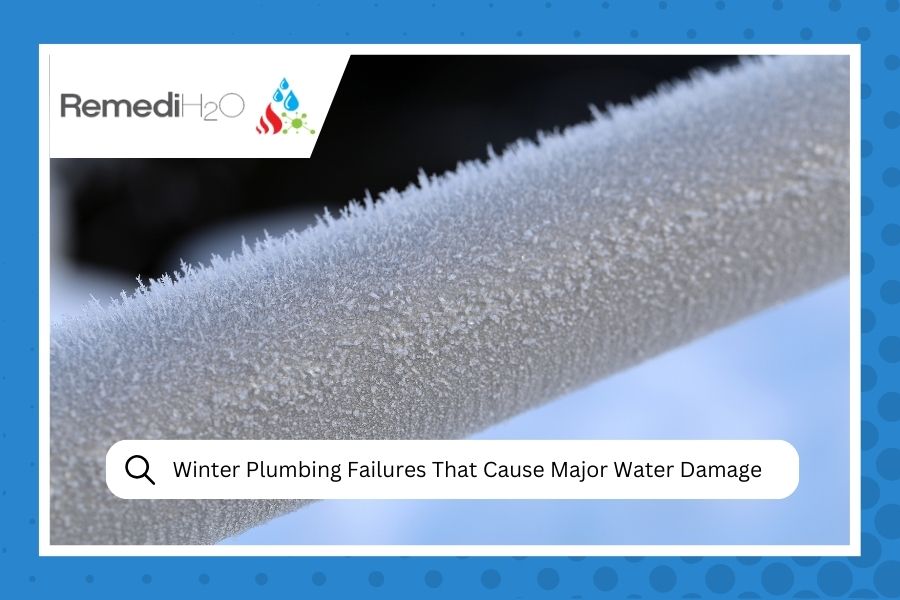
- Frost visible on exposed pipes
- Strange odors coming from drains
- No water at all from certain fixtures
Water Heater Failures
Your water heater works harder during winter than any other season. Ground temperatures drop, meaning incoming water is colder. Your heater works overtime, and this extra stress can push aging units past their breaking point.
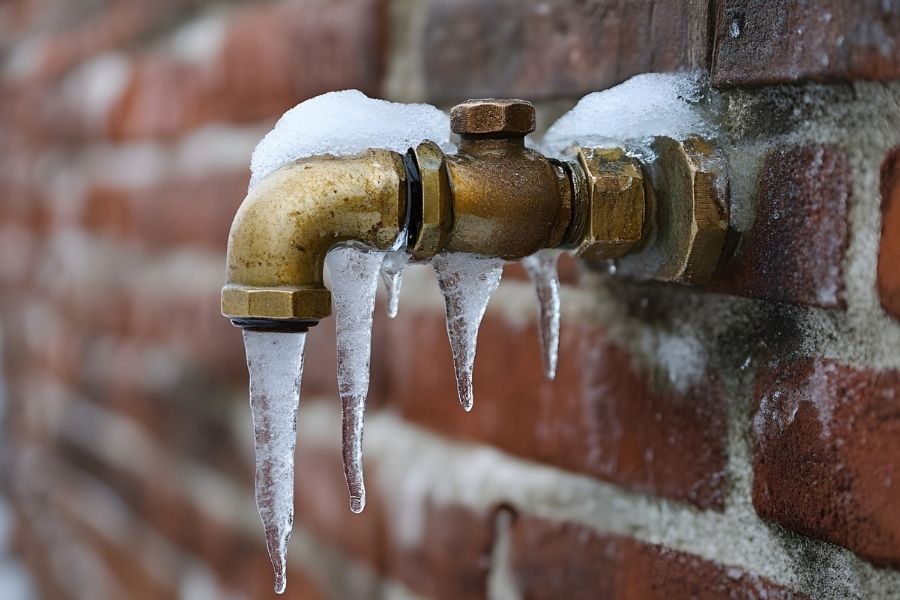
Outdoor faucets left unprotected during winter can freeze and cause pipes to burst inside your walls.
Tank-style water heaters typically last 8-12 years. If yours is approaching that age, winter might be when it finally gives out. When water heaters fail, they can leak gallons of water before you notice.
Dealing With Winter Water Damage?
Our team at RemediH2O responds 24/7 to water emergencies throughout Colorado’s Western Slope.
Ice Dams and Roof Leaks
Ice dams form when heat escaping from your attic melts snow on your roof. That water runs toward the eaves, where it refreezes. This creates a dam of ice that traps water, forcing it under your shingles and into your home.
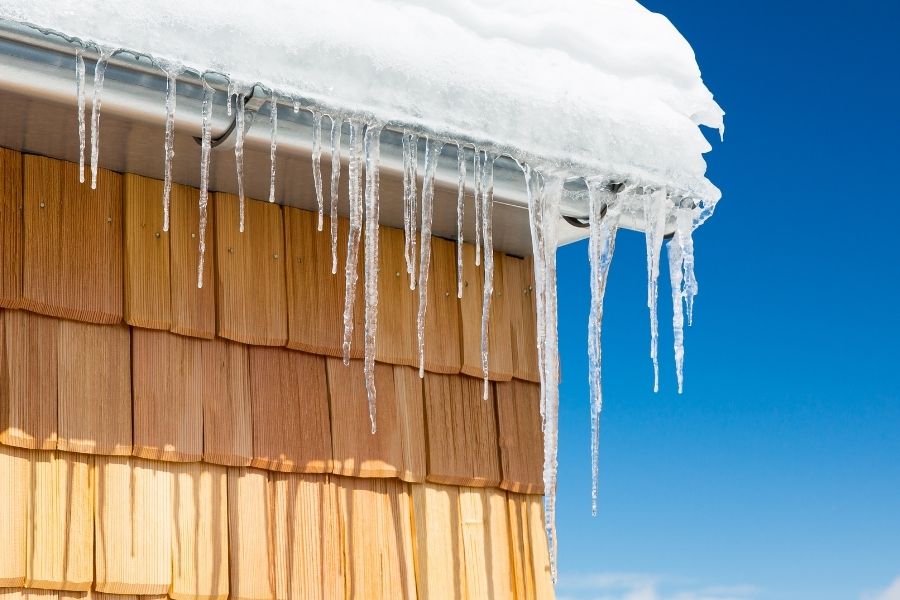
Ice dams trap water on your roof, forcing it under shingles and into your home’s interior.
Ice dam damage often goes unnoticed until water stains appear on ceilings. By then, moisture has likely been soaking into insulation, creating conditions for mold growth.
Outdoor Faucet Disasters
Outdoor hose bibs are often forgotten until spring. These faucets connect to pipes running through your exterior walls. When these pipes freeze, the burst often happens inside your wall.
You won’t see water spraying outside. Instead, it floods into your wall cavity, soaking insulation and drywall. Knowing where your emergency water shutoff valves are located can save you thousands.
Winter Plumbing Failure Risk Checklist
| Risk Factor | Danger Level | Prevention Action |
|---|---|---|
| Pipes in unheated spaces | High | Insulate pipes, add heat tape |
| Water heater over 8 years old | High | Schedule inspection |
| Poor attic insulation | Medium | Add insulation, improve ventilation |
| Outdoor faucets not winterized | High | Shut off interior valve, drain line |
How to Protect Your Home This Winter
Prevention beats restoration every time. Our team at RemediH2O would much rather see you avoid water damage than have to clean it up.
Keep your home warm. Set your thermostat no lower than 55°F, even when you’re away. This is especially important for vacation homes in Vail and Snowmass that may sit empty for weeks.
Insulate vulnerable pipes. Foam pipe insulation costs just a few dollars per foot and takes minutes to install. Heat tape provides extra protection for pipes in extremely cold areas.
Monitor your home remotely. Smart water sensors can alert you to problems before they become disasters. Some can even automatically shut off your water supply if they detect a leak.
Frequently Asked Questions
How quickly can frozen pipes cause water damage?
Damage begins the moment a pipe bursts. A typical burst pipe can release 4-8 gallons of water per minute. In just 20 minutes, that’s enough water to soak through flooring and into structural materials.
At what temperature do pipes freeze in Colorado homes?
Pipes can begin to freeze when outside temperatures drop to around 20°F, though unprotected pipes in unheated spaces can freeze at temperatures closer to 32°F.
Will insurance cover winter plumbing water damage?
Most homeowners insurance policies cover sudden and accidental water damage from burst pipes. However, coverage may be denied if damage resulted from lack of maintenance or failure to maintain adequate heat.
Winter plumbing failures don’t have to catch you by surprise. A little preparation goes a long way toward keeping your home safe. But if disaster does strike, our team at RemediH2O is available 24/7 to help homeowners throughout Colorado’s Western Slope recover quickly. We’ve helped families in Glenwood Springs, Aspen, Rifle, and beyond get their homes back to normal after winter water damage.
Need Emergency Water Damage Help?
RemediH2O provides 24/7 emergency response throughout Aspen, Glenwood Springs, Vail, and all of Colorado’s Western Slope.