Jump To:
Fire damage restoration costs in Colorado’s Western Slope typically range from $4,000 to $75,000 for complete home restoration in 2026. The exact price depends on fire severity, structural damage extent, smoke penetration, and water damage from firefighting efforts. Professional fire damage restoration involves assessment, debris removal, structural repairs, smoke odor elimination, and contents cleaning.
Most homeowners think about the visible damage first. The charred walls, the melted fixtures, the soaked carpets. But here’s what catches people off guard: smoke particles can travel through your entire HVAC system, contaminating rooms that never saw flames. Water from fire hoses can seep into wall cavities and create mold problems within 48 hours. And soot? It’s acidic and continues damaging surfaces even after the fire’s out.
We’re RemediH2O, and we’ve been handling fire restoration across Aspen, Glenwood Springs, and Grand Junction for years. Our IICRC-certified team has seen everything from small kitchen fires to complete structure losses. What we’ve learned is this: understanding the true scope of fire damage, and its associated costs, helps you make informed decisions when you’re already dealing with enough stress.
What Affects Fire Restoration Costs?
Fire restoration pricing isn’t straightforward. Three homes with similar fire sizes can have wildly different restoration bills.
The biggest cost driver? Structural damage. When fire compromises load-bearing walls, roof trusses, or floor joists, you’re looking at significant reconstruction. A small kitchen fire that spreads to attic spaces can require $30,000+ in structural repairs alone. Compare that to a contained bedroom fire with minimal structural impact, which might cost $8,000-$12,000 total.
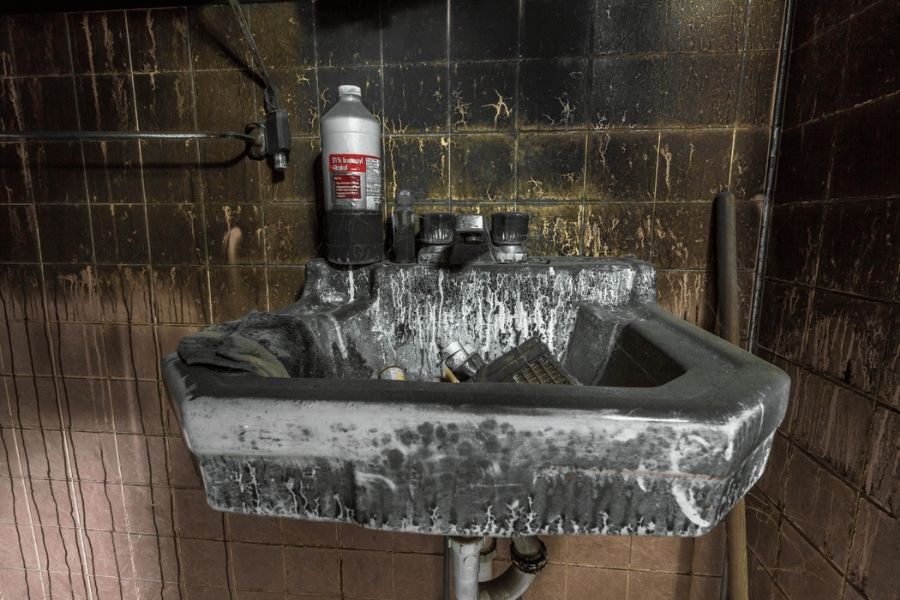
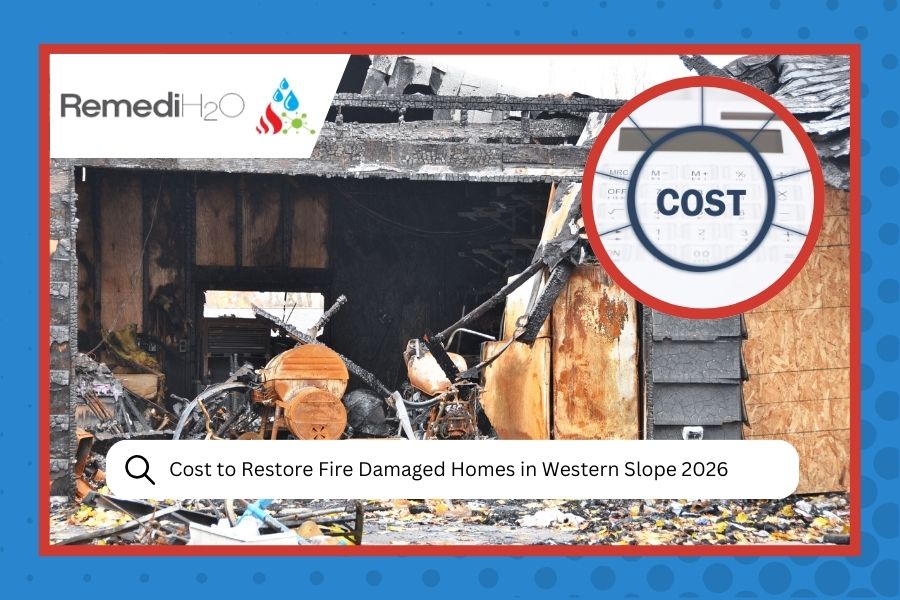
Soot penetration extends far beyond visible damage and requires specialized cleaning techniques to prevent permanent staining.
Smoke damage is sneaky. It doesn’t respect boundaries. Smoke travels through air ducts, settles into fabrics, and embeds itself in porous materials. The EPA notes that smoke particles are incredibly fine and can penetrate deep into materials, requiring professional equipment to remove completely. Treating smoke damage throughout a 2,000 square foot home typically runs $3,500-$8,000.
Here’s what determines your final bill:
- Fire classification: Class A (wood/paper), B (flammable liquids), or C (electrical) fires each require different cleanup approaches and equipment
- Affected square footage: Restoration companies charge $4-$12 per square foot for fire and smoke damage, with prices rising for extensive damage
- Soot type: Wet soot (from smoldering plastic) is harder to clean than dry soot (from burning wood) and increases labor costs by 30-40%
- Water damage severity: Firefighting efforts often cause as much damage as the fire itself, particularly in mountain homes with wood framing
- Contents restoration: Cleaning and restoring furniture, clothing, and personal items adds $2,000-$15,000 depending on what’s salvageable
Need Emergency Fire Restoration?
Our certified team responds 24/7 to fire emergencies across Colorado’s Western Slope. We’ll assess damage, secure your property, and provide a detailed restoration estimate.
Cost Breakdown by Damage Type
Let’s talk real numbers. These ranges reflect what homeowners in the Roaring Fork Valley and Western Slope actually pay in 2026.
| Restoration Service | Average Cost Range | What’s Included |
|---|---|---|
| Emergency Response | $500-$2,000 | Board-up, tarping, property securing, initial assessment |
| Smoke & Soot Removal | $3,500-$8,000 | HEPA vacuuming, chemical cleaning, thermal fogging |
| Water Extraction & Drying | $2,000-$6,500 | Extraction, dehumidification, moisture monitoring |
| Odor Elimination | $1,500-$4,000 | Ozone treatment, hydroxyl generators, sealing |
| Contents Cleaning | $2,000-$15,000 | Pack-out, cleaning, storage, restoration |
| Structural Repairs | $5,000-$50,000+ | Framing, drywall, flooring, roof repairs (requires contractor) |
Small fires confined to one room? You’re typically looking at $4,000-$12,000 total. This covers smoke cleaning, minor repairs, and odor removal. Medium fires affecting multiple rooms or floors run $15,000-$35,000. Large fires requiring extensive reconstruction can easily exceed $75,000.
Kitchen fires are the most common we handle. They account for nearly 50% of our residential fire calls. A typical kitchen fire with moderate smoke damage costs $8,000-$18,000 to restore completely. That includes cleaning cabinets, replacing affected drywall, eliminating smoke odor, and addressing any water damage from firefighting efforts.
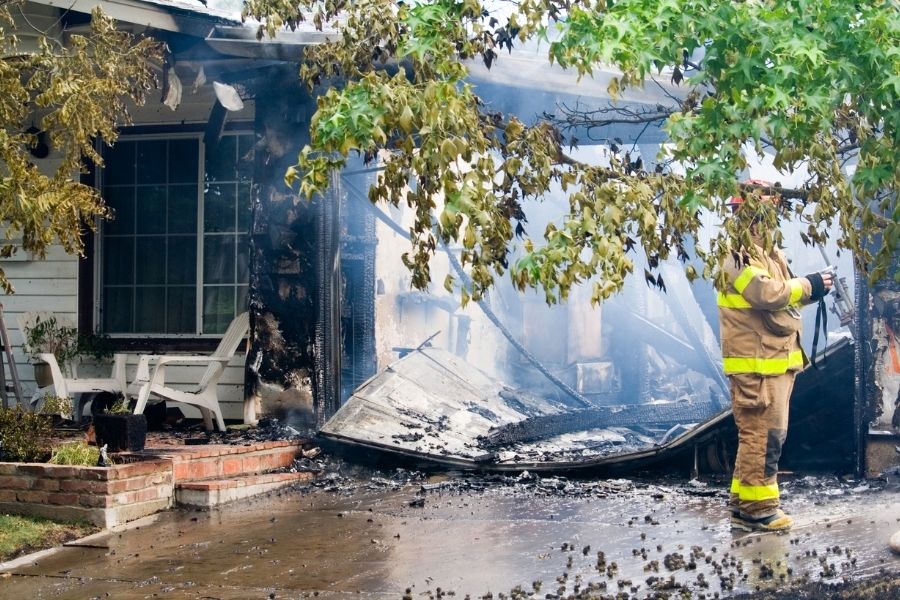
Firefighting water often causes secondary damage requiring immediate extraction and drying to prevent mold growth.
Why Western Slope Costs Differ
Mountain homes present unique challenges. Higher elevations mean longer drying times due to lower air pressure. Remote locations increase equipment transport costs. And many older properties in Aspen or Glenwood Springs have unique construction details that complicate repairs.
We’ve restored Victorian-era homes in downtown Aspen where matching original materials tripled the reconstruction budget. Meanwhile, newer construction in Rifle or Silt typically allows for more straightforward, cost-effective repairs.
Working With Insurance Companies
Most homeowners insurance policies cover fire damage. That’s the good news.
The complicated part? Understanding what’s actually covered and navigating the claims process while your home is uninhabitable. Standard policies typically cover structure repair, personal property replacement, and additional living expenses while you’re displaced. They don’t usually cover neglect or pre-existing issues that the fire exposed.
Insurance adjusters evaluate damage using software like Xactimate, which is the same system we use at RemediH2O. This creates alignment between our estimates and what insurers expect to pay. When we document fire damage for insurance purposes, we photograph everything, measure precisely, and categorize damage by severity level.
Here’s what helps your claim move faster:
- Contact your insurance company immediately, ideally within 24 hours of the fire
- Document everything with photos and detailed notes before cleanup begins
- Keep receipts for emergency expenses like hotel stays and replacement clothes
- Work with a restoration company experienced in insurance claims
- Understand your policy’s depreciation terms and replacement cost coverage
Most fire damage claims take 30-90 days to settle, depending on complexity. During this time, your insurer should advance funds for emergency mitigation to prevent further damage. We work directly with insurance adjusters to ensure nothing falls through the cracks and you’re not stuck covering costs that should be paid by your policy.
💡 Insurance Tip
Your policy’s “actual cash value” coverage pays depreciated value, while “replacement cost” coverage pays for new items at today’s prices. The difference can be thousands of dollars on a major fire claim. Check your policy details before filing.
Hidden Expenses to Consider
The restoration estimate covers the obvious work. But fire damage creates cascading expenses that catch people unprepared.
Temporary housing tops the list. If your home is unlivable for two months, that’s $4,000-$12,000 in hotel or rental costs in resort communities like Aspen or Vail. Some policies cap this at 20% of your dwelling coverage, which might not stretch as far as you think in high-cost areas.
Food and daily expenses increase when you’re displaced. You can’t cook at home. You’re eating out for every meal. Those costs add up fast, often hitting $100-150 per day for a family.
Storage fees for your belongings during restoration? That’s another $200-500 monthly. We pack out salvageable contents, clean them at our facility, and store them until your home is ready. But extended projects mean extended storage bills.
Permit fees and inspection costs vary by county. Eagle County charges different rates than Mesa County. Budget $500-2,000 for permits, depending on repair scope. And if the fire revealed code violations, you might be required to bring systems up to current standards before you can move back in.
Landscaping and exterior damage often get overlooked in initial estimates. Fire departments trample gardens, equipment damages driveways, and emergency access creates unexpected repair needs. Set aside 5-10% of your restoration budget for these surprises.
Restoration Timeline and Costs
Time is money in fire restoration. The faster you start, the less you ultimately pay.
Emergency response happens immediately. We’re on-site within hours to board up openings, tarp damaged roofs, and prevent theft or weather damage. This costs $500-2,000 but saves thousands in prevented secondary damage. According to the U.S. Fire Administration, securing your property promptly reduces total restoration costs by an average of 20-30%.
Assessment and documentation take 1-3 days. Our team measures damage, tests air quality, identifies hazards, and creates a detailed scope of work. This phase costs nothing separately since it’s included in the overall project, but rushing through it leads to change orders later.
Cleaning and mitigation happen over 1-2 weeks for typical fires. We remove soot, extract water, set up drying equipment, and treat for odors. This is when you’re paying for daily equipment rental, labor, and specialized cleaning products. Rushing this phase risks leaving behind damage that resurfaces later.
Reconstruction is the longest phase, taking 4-12 weeks depending on severity. This is where you wait for permits, subcontractors, and materials. Mountain area material availability can extend timelines, particularly for specialized items. While RemediH2O handles mitigation and cleanup, we refer reconstruction work to trusted contractors who understand local building requirements.
Timeline Impact on Costs
| Immediate response (Day 1): | Prevents 20-30% additional damage |
| Delayed response (Week 1+): | Smoke becomes permanent, mold develops, costs increase 40-60% |
| Cleanup within 2 weeks: | Optimal cost control |
| Reconstruction delays: | Extended living expenses add $2,000-6,000 monthly |
How to Choose a Restoration Company
Not all restoration companies operate the same way. Price matters, but it shouldn’t be your only consideration when your home’s at stake.
Start with certifications. IICRC certification means technicians have completed formal training in fire restoration standards. We maintain certifications in Fire & Smoke Restoration (FSRT) because it demonstrates our team knows industry best practices, not just basic cleanup.
Experience in your specific area matters more than you might think. Fire damage in a 1960s ranch house in Grand Junction differs from damage in a modern mountain home in Vail. Different construction methods, materials, and code requirements all affect how restoration proceeds. Look for companies that have worked extensively in your region.
Insurance experience saves you hassle. Companies that work regularly with insurance adjusters know how to document damage properly, submit thorough estimates, and communicate effectively with claims departments. This keeps your project moving instead of stalling over paperwork disputes.
Get detailed written estimates. Verbal quotes mean nothing when disputes arise. A proper estimate breaks down labor, materials, equipment, and timeline. It should specify what’s included and what’s not. If a company won’t put their estimate in writing, keep looking.
Check references from recent fire restoration projects. Anyone can claim expertise, but talking to homeowners who actually went through restoration with that company reveals the truth. Ask about communication, timeline accuracy, and how the company handled unexpected issues.
We’ve been serving Grand Junction and surrounding communities since 2023, though our team brings over 25 years of combined experience. We’re locally owned, family operated, and available 24/7 because fires don’t wait for business hours.
Frequently Asked Questions
Does homeowners insurance cover fire restoration costs?
Most standard homeowners insurance policies cover fire damage restoration including structure repairs, contents cleaning, smoke odor removal, and additional living expenses while your home is uninhabitable. However, coverage varies by policy, and deductibles apply. Policies typically don’t cover pre-existing damage the fire revealed or damage from neglect. Review your specific policy details and contact your insurance company immediately after a fire to start the claims process.
How long does fire damage restoration take?
Fire restoration timelines vary significantly based on damage severity. Small, contained fires might take 2-4 weeks from start to finish. Medium fires affecting multiple rooms typically require 6-10 weeks. Extensive fires requiring major reconstruction can take 3-6 months or longer. The initial assessment, smoke cleaning, and water extraction happen within the first 1-2 weeks, while reconstruction and finishing work consume most of the timeline.
Can I stay in my home during fire restoration?
Staying in your home during fire restoration depends on damage severity and air quality safety. If the fire damaged essential systems like electrical, plumbing, or HVAC, or if smoke contamination poses health risks, you’ll need alternative housing. Even minor fires create air quality issues that require professional cleaning before safe occupancy. Your restoration company and insurance adjuster will help determine whether temporary relocation is necessary based on safety assessments and indoor air quality testing.
What’s the difference between fire restoration and reconstruction?
Fire restoration includes emergency response, smoke and soot removal, water extraction from firefighting, odor elimination, and contents cleaning. This brings your property back to pre-fire condition by addressing immediate damage. Reconstruction involves rebuilding structural components like walls, floors, and roofs that were destroyed or severely damaged. Restoration companies handle mitigation and cleaning, while reconstruction typically requires licensed general contractors. Many projects need both services, completed in sequence.
Fire Damage? We Respond 24/7
RemediH2O provides certified fire and smoke damage restoration throughout Colorado’s Western Slope and Roaring Fork Valley. Our experienced team responds immediately to minimize damage and get your life back to normal.
Serving: Aspen • Glenwood Springs • Grand Junction • Rifle • Silt • Carbondale • Basalt • Vail • Eagle • and surrounding areas
IICRC Certified • 25+ Years Combined Experience • Direct Insurance Billing